
0 Item(s) = $0.00 :: VIEW CART | CHECKOUT | NEW CUSTOMER | LOG IN
Home | Horse Barns | Garages | Storage Sheds | Chicken Coop | Arenas | Stock Buildings | Forum  
Customize Your Shed Color

Request a Catalog


Horizon Structures is a top Horse Barn Builder in the Atglen, Pennsylvania Horse Barn Builders guide on NewHorse.com

Site Preparation

Need help with your footers? Click Here for more infomation!

Prior to purchasing any shed or horse barn, we recommend that you check with your local government's building/code enforcement office. Building code officials, in addition to supplying the permit (for a fee that varies with the municipality), will also advise on "setback" requirements, which will determine where the shed can be placed in relation to front, side and rear property lines. Additionally, there may be any number of restrictions or requirements a property owner must meet depending on location, how your property is classified (i.e. residential, farm, etc.) and whether a shed (or barn) is designated as a "permanent" or "temporary" structure based on the size of the building or how it is constructed. Residents of subdivisions also should check any subdivision regulations concerning detached buildings.

Since all municipalities have differing regulations and requirements, we are unable to give advice on exactly what may be required of you. Taking care of these issues is the responsibility of the property owner. We are often asked to supply building specs, etc. as part of the permit process and we are happy to assist whenever possible.

Ultimately, it is your responsibility to check with all municipal agencies and obtain all necessary permits and inspections.

Click on category of interest for more detailed information...

Storage Sheds / Gazebos
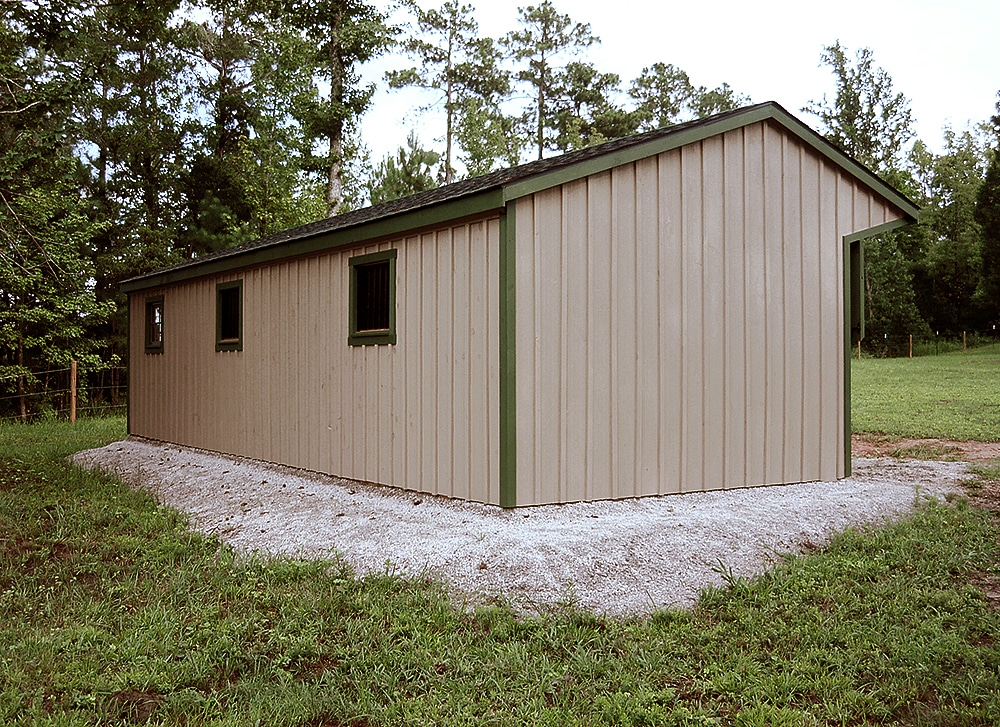
A level pad of ¾" crushed stone, 3" – 4” deep, 1' larger than the size of the shed (for example, a 10’ x 14’ building would require a pad at least 11’ x 15’). This will allow for better drainage around the perimeter of the shed for rain/snow melt dripping off the eaves - especially, if you are not planning on installing rain gutters on the shed. Water splashing directly onto the ground will, eventually, create a muddy area and splash up onto the shed walls. The gravel base prevents this to extend the life of the building.
  • To prepare a gravel base, remove the sod from an area slightly larger than the pad, level the site by removing dirt where necessary, and spread the gravel to a depth of about three or four inches. Tamp the gravel down with a piece of 4-by-4 or metal tamper until it is evenly distributed and the site is flat and level.
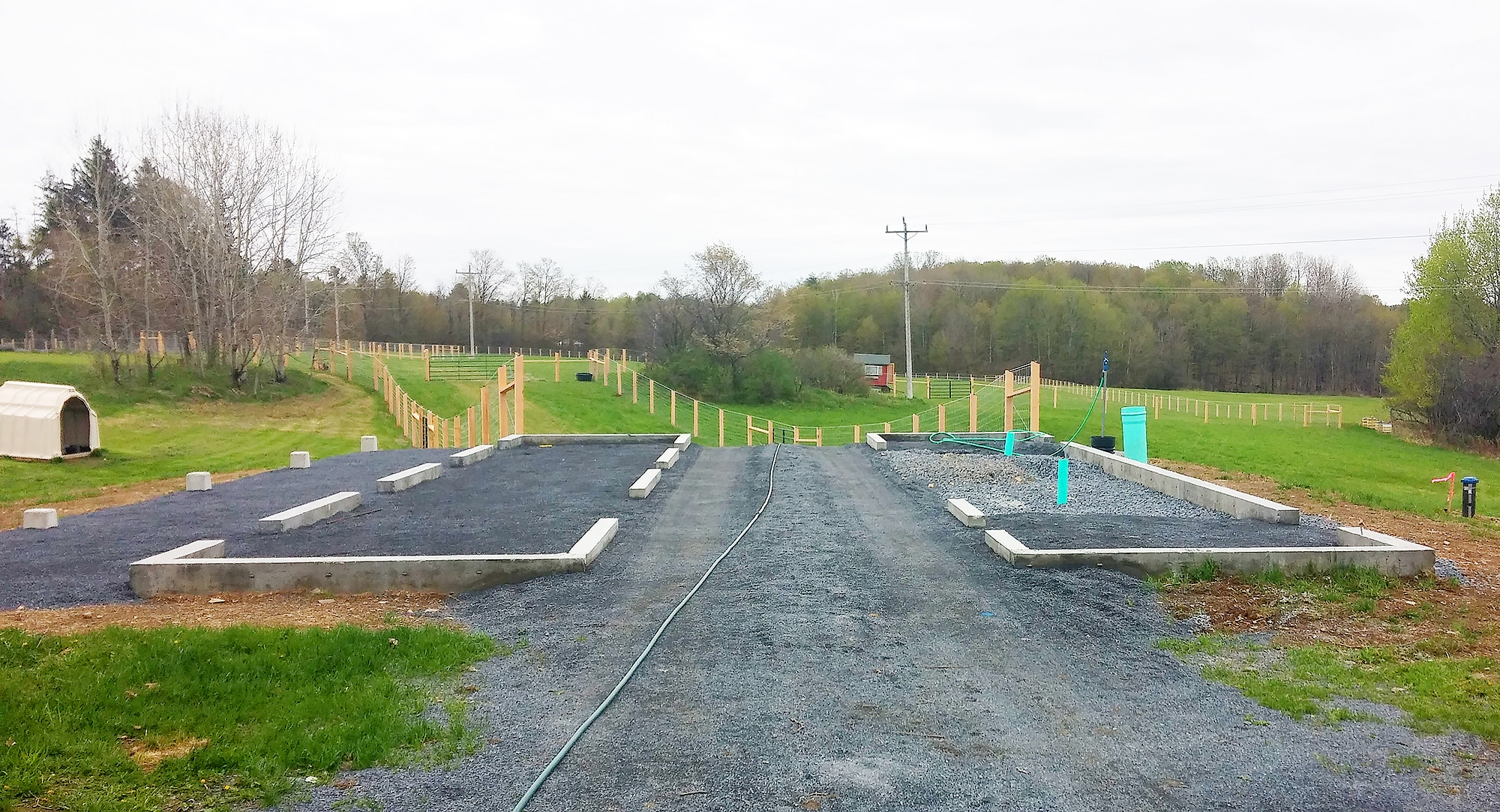
  • A "frame" of pressure-treated 4x4's or cement block will help keep the stone in place and create a neater appearance; however, it is not required.

OR

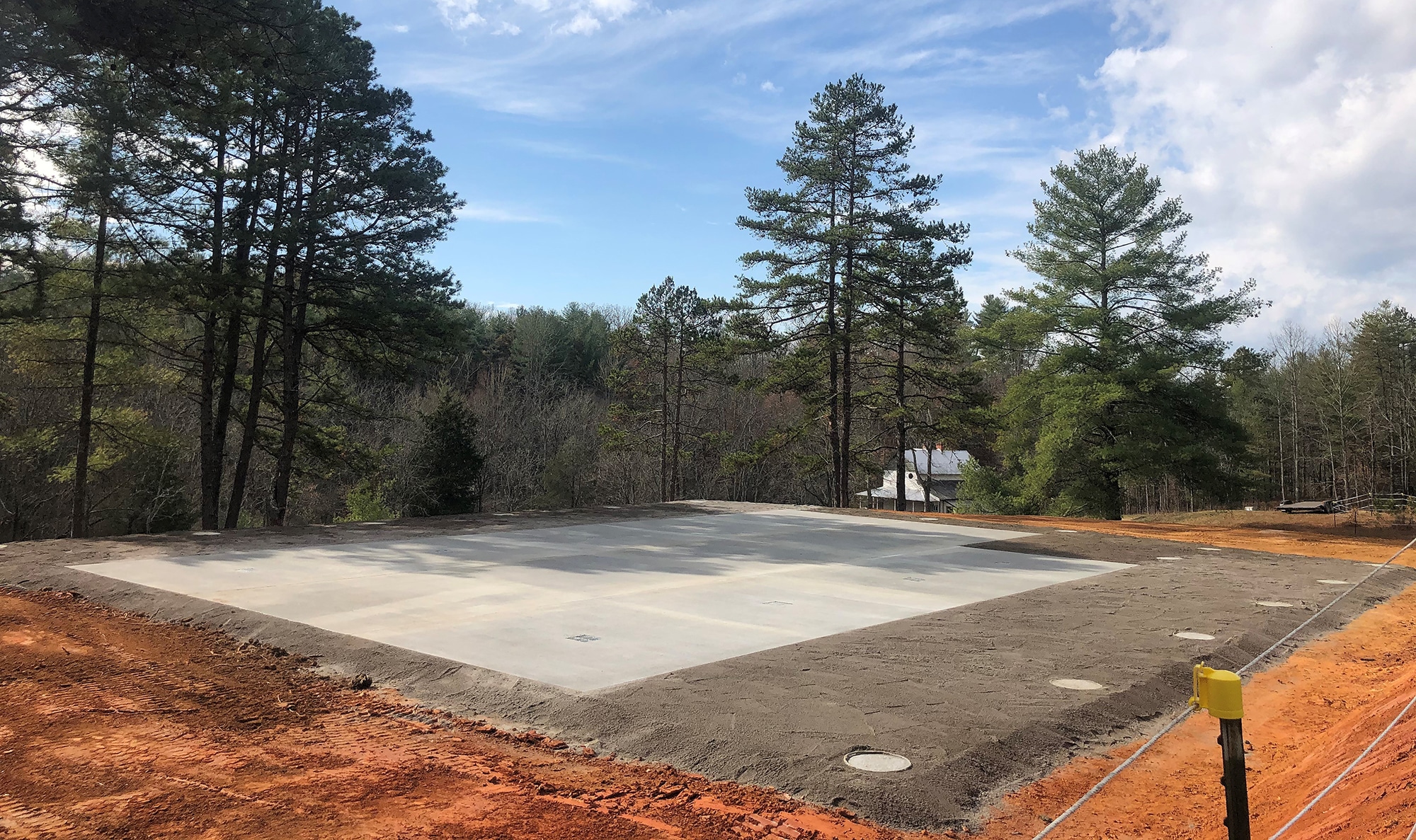
A level concrete slab between 3” – 4” thick and at least a foot larger than the building in length and width, as with the gravel pad.

OR

Cement pillars, with or without tie-downs, are required by some municipalities. Check local regulations for quantity and recommended placement.

NOT RECOMMENDED: Cinder blocks. Inevitably, there will be some "settling" after your shed is delivered and placed on site. Placing a shed up on cinder blocks greatly increases the risk that your shed will settle unevenly. This can create twisting and offset door and window frames. Additionally, delivery and placement of shed can be with more difficult with cinder blocks as a base.

Garages

Please check with your local municipality about the required base for a building housing cars or trucks. Some areas may require the vehicle sit on concrete, rather than a wood floor. Our garages may come with or without the floor, at no extra cost. Also, local codes and practices regarding concrete and foundation requirements may apply.

This information is only intended as a GENERAL GUIDELINE

For a garage WITH a floor: A level pad of ¾" crushed stone, 3" – 4” deep, 1' larger than the size of the garage (for example, a 20’ x 24’ building would require a pad at least 21’ x 25’). This will allow for better drainage around the perimeter of the garage for rain/snow melt dripping off the eaves - especially, if you are not planning on installing rain gutters. Water splashing directly onto the ground will, eventually, create a muddy area and splash up onto the garage walls. The gravel base prevents this to extend the life of the building.
  • To prepare a gravel base, remove the sod from an area slightly larger than the pad, level the site by removing dirt where necessary, and spread the gravel to a depth of about three or four inches. Tamp the gravel down with a piece of 4-by-4 or metal tamper until it is evenly distributed and the site is flat and level.
  • A "frame" of pressure-treated 4x4's or cement block will help keep the stone in place and create a neater appearance; however, it is not required.

For a garage WITHOUT a floor, still delivered in two modular pieces: A level concrete slab at least 4” thick and at least a foot larger than the building in length and width, as with the gravel pad. You may want to consider a 6" thick slab for larger vehicles such as trucks or RVs.

For a garage WITHOUT a floor - BUILT ON SITE: Prepare a level concrete slab at least 4” thick and to the exact, outside, dimensions of your garage. You may want to consider a 6" thick slab for larger vehicles such as trucks or RVs.

Frame out the perimeter with 2” x 4” or 2” x 6” pressure treated lumber, except for where the door will be, and anchor the wood into the concrete. It is very important to prepare your concrete pad, including wood frame, to the exact size of the building because we extend the exterior siding down over the slab, and frame, to prevent water from coming back up into the garage.

Again, we advise soliciting the expertise of a professional contractor
who is familiar with local conditions and requirements to ensure you get the best foundation possible for your garage.

NOT RECOMMENDED: Cinder blocks. Inevitably, there will be some "settling" after your garage is delivered and placed on site. Placing a garage up on cinder blocks greatly increases the risk that it will settle unevenly. This can create twisting and offset door and window frames. Additionally, delivery and placement of the garage can be with more difficult with cinder blocks as a base.

Shed Row Barns and Run-In Sheds

A level pad of stone dust or other fine stone, 3” – 4” deep, 1' larger than the size of the barn/run-in (for example, a 12’ x 36’ building would require a pad at least 13’ x 37’). This will allow for better drainage around the perimeter of the barn for rain/snow melt dripping off the eaves - especially, if you are not planning on installing rain gutters. Water splashing directly onto the ground will, eventually, create a muddy area and splash up onto the barn walls. The stone dust base prevents this to extend the life of the building. We recommend the use of stone dust rather than gravel (as used with the sheds and garages), because stone dust will be easier on your horse’s feet and will shift less as they move around over it.
  • To prepare a stone dust base, remove the sod from an area slightly larger than the pad, level the site by removing dirt where necessary, and spread the stone dust to a depth of about three or four inches. Tamp the stone dust down with a piece of 4-by-4 or metal tamper until it is evenly distributed and the site is flat and level.
  • A "frame" of pressure-treated 4x4's or cement block will help keep the stone in place and create a neater appearance; however, it is not required.
You may then back-fill in your stalls once the barn is delivered – putting down more stone dust, clay, rubber mats, etc.

OR

Because all our buildings have a pressure treated base, they may be set directly on the ground without causing damage to the bottom of the building. Especially with run-in sheds, which do not have the doors and windows which may get off center by an uneven base, you may decide to put it directly on a level area of bare ground. This is useful if you plan on dragging the run-in around to rest different areas of the pasture.
However, if you plan on keeping it stationary, it would still be best to put a stone dust base down, since the horses can churn the run-in space into mud. A stone dust floor is less vulnerable to moisture and is easier to maintain, just by adding and tamping down more material as needed.

OR

Cement pillars, with or without tie-downs, are required by some municipalities. Check local regulations for quantity and recommended placement, or we can provide a diagram showing our placement. See the section on “Barns with Overhangs and Modular Barns” for more information about cement pillars for barns.

Barns or Run-Ins with Overhangs and Modular Barns

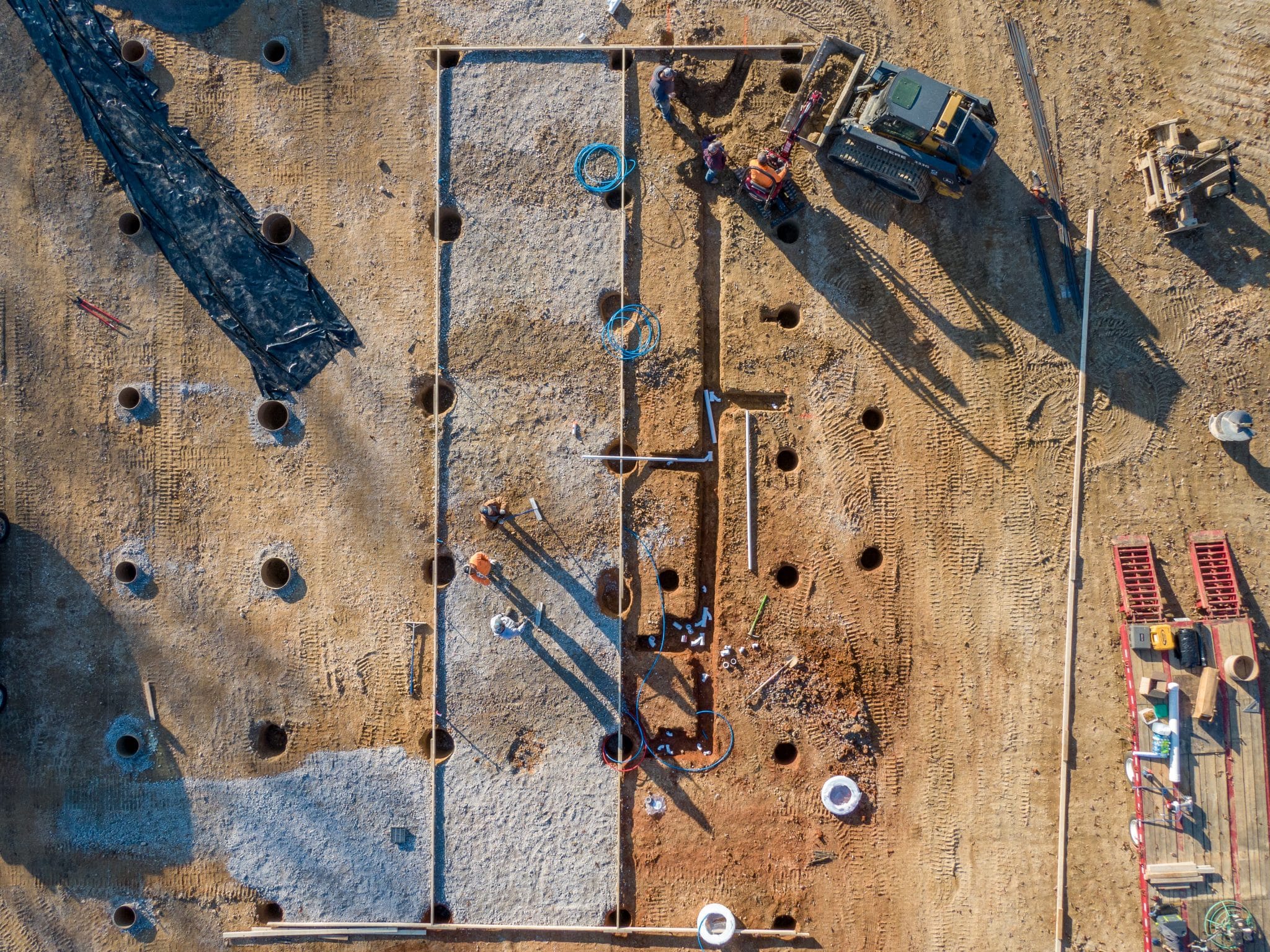
Recommend concrete pillars - 18" in diameter, 3’ – 4’ deep (below the frost line) and 3” – 4” above ground level. This will prevent the building from "settling" unevenly due to ground freezing/thawing cycles which can change the ground level over time. We recommend these footers be placed at the building corners and every 12' under the foundation, around the building's perimeter. We will give you a footer diagram showing exact measurements and placement for your specific barn.
  • After the building is delivered, the area around the barn and under the overhang can then be back filled with stone dust to pillar height. If you desire cement in the center aisle or under the overhang, that can be poured after the barn is delivered as well.
For safety reasons, some townships require that the building be anchored. This is sometimes referred to as a "hurricane kit." Be sure to check with your municipal agency regarding this requirement. Anchoring your building will help stabilize it against side-to-side shifting or vertical lifting in the event of high winds.
  • The easiest way to anchor a barn set on cement pillars is to get a 2' piece of 1" wide steel strapping/banding for each pillar. When pouring the pillar, insert 1' of the strapping into the wet cement allowing 1' to stick out the top. This strap can then be folded over and the barn set on top of it. To avoid any interference with the building's steel re-enforced corners, we recommend that the steel strapping be folded into the barn and bolted on to the 6x6 timber foundation, from the inside, after the barn is set down.
  • Another option would be to use a ¼" steel hurricane bracket. This bracket would be bolted to the concrete footer with concrete screws and then lag bolted to the 6x6 that makes up the base of the building.

Delivery

 
Click Here for more information about horse barn delivery...  

Shed Pad

Check out what's on sale

- at our "instock" page

Custom Search
Share
Advertise Your Business Here for FREE!
Email us or
Call 1-888-44-Sheds

Horizon Structures Shed & Garage Buyer's Guide
Horizon Structures Online Magalog
CLICK HERE

Home | Horse Barns | Garages | Storage Sheds | Chicken Coops | Arenas | Stock Buildings
Hay Feeders| Gazebos | FAQ | Testimonials | Calendar of Events | Ordering Info | Contact Us

Chicken Coop Information

Chicken House | Chicken Coup | Chicken Shed | Chicken Pen | Build A Chicken Coop
Chicken Coop Designs | Chicken Plans | Hen House | Hen Coop | Poultry House
Poultry House For Sale

View Our Guarantee to You | Terms & Conditions | Horizon Structures Sitemap

Horizon Structures - 5075 Lower Valley Road, Atglen, PA 19310
Phone : 1-888-447-4337 - Fax: (610) 593-7701 - info@horizonstructures.com

Copyright © Horizon Structures.
All rights reserved. Reproduction in whole or in part without the written permission of the publisher is prohibited. This includes all text and images both graphics and photographs. Horizon Structures will prosecute all violators for this theft.

This site's web design and hosting provided by EZSolution Corp., Lancaster, PA.