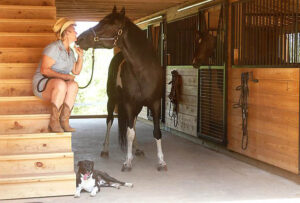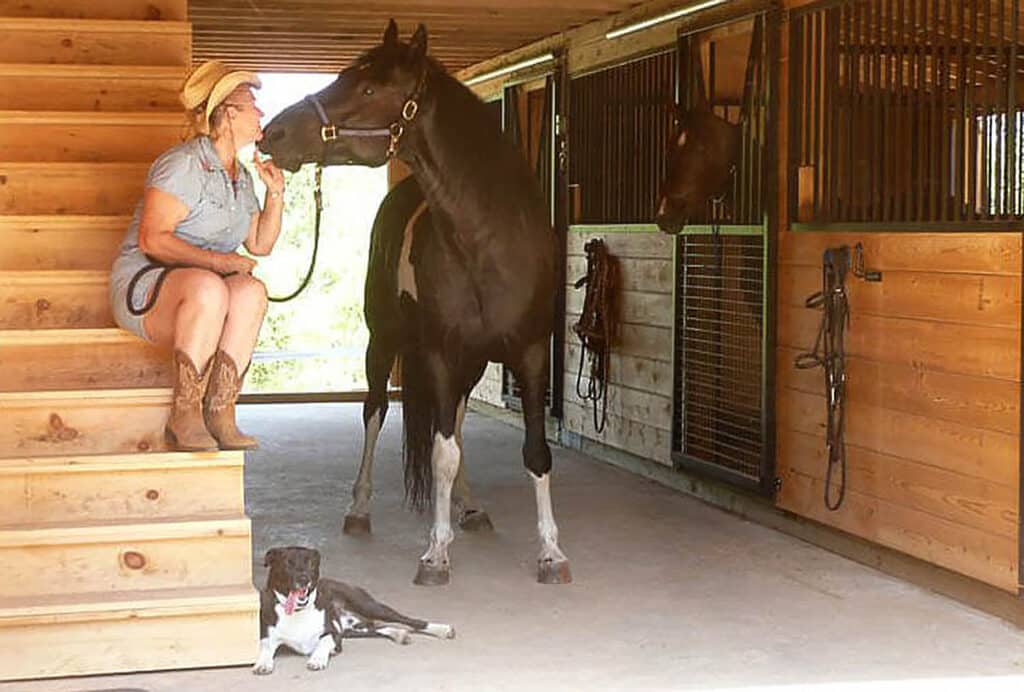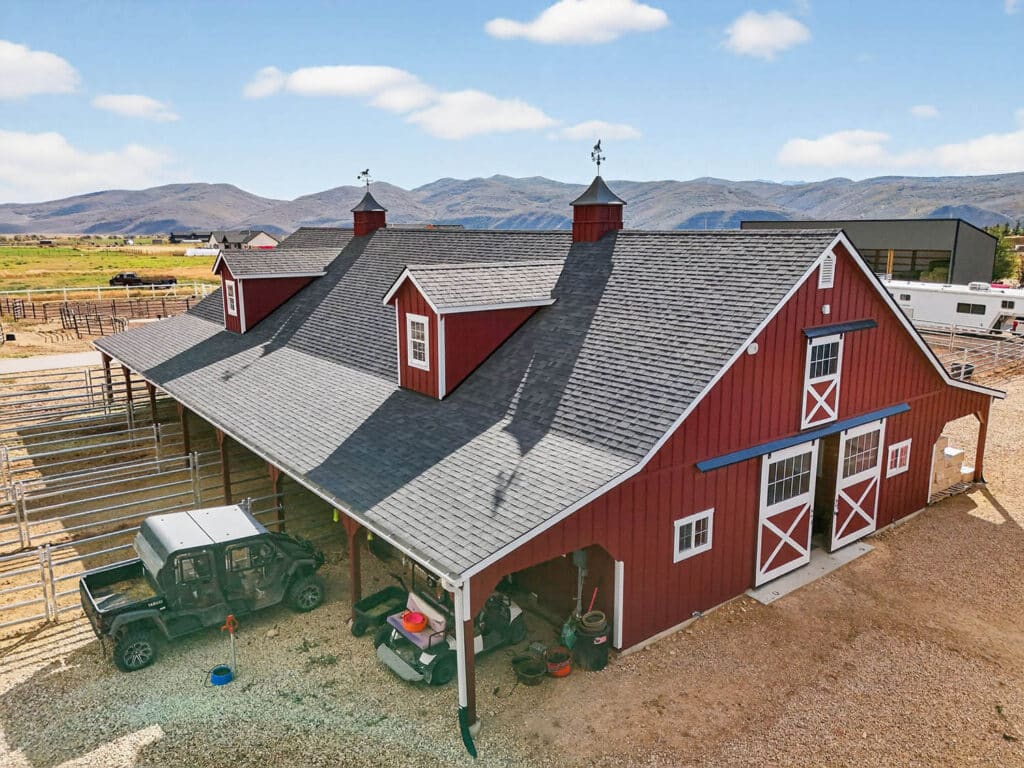

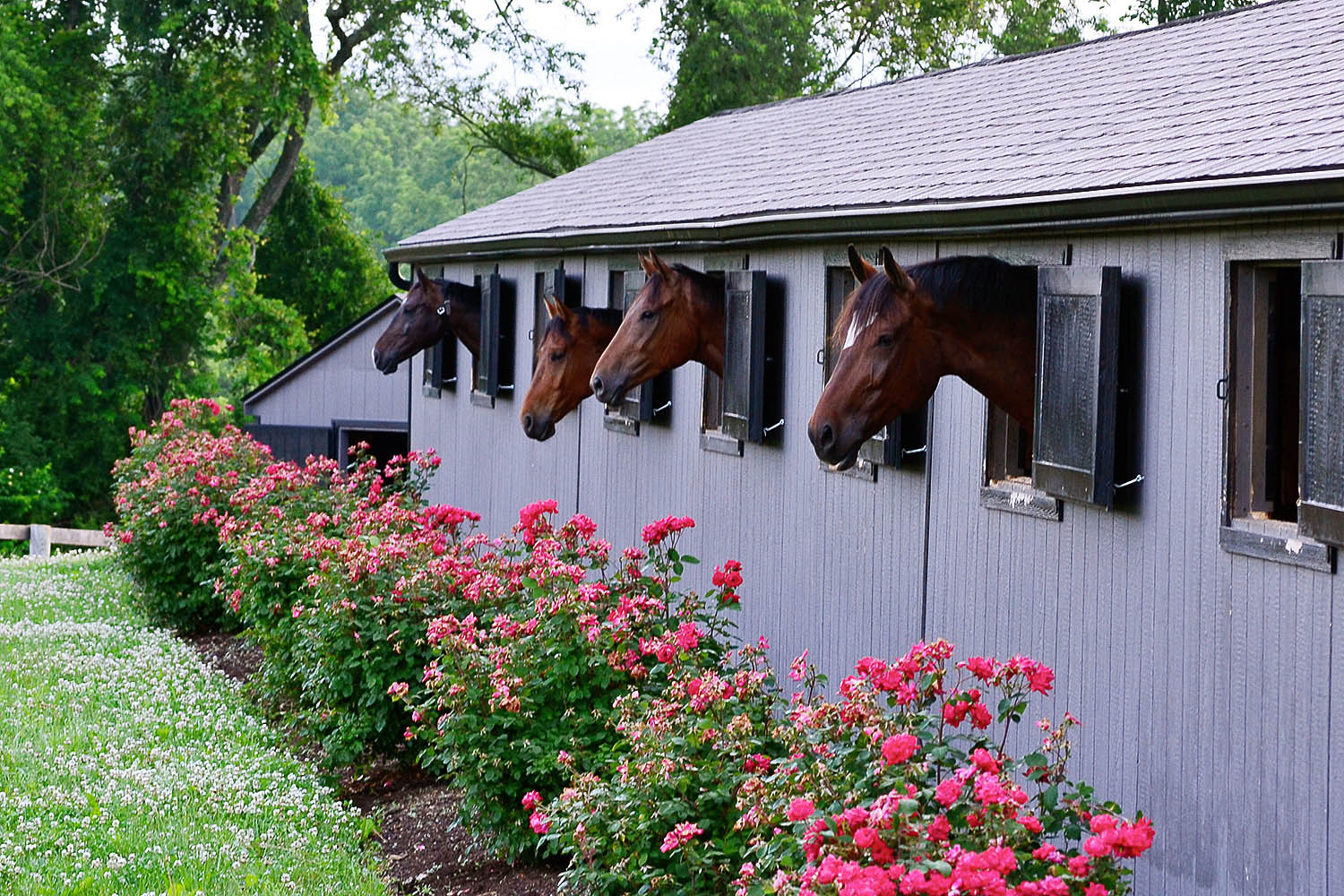
There is something special about a view of horses lined up in a row of stables, their heads out and ears alert watching the world go by and enjoying a room with a view. It is more than just a great view though, if you own those horses this is also a relief to see when you wake up in the morning. Instantly you are aware if any single horse doesn’t look right, is acting ‘off’ or looking downcast. I grew up with it in England – and then repeated it when building my first of many barns here in the North-East U.S.A decades ago.
The shedrow barn is a great horse housing option. And it’s about more than its brilliant affordability. Here’s a break-down of why I love shedrow horse housing and some advice on the best ways to design your equine facility using shedrow barns based on experience both working with them and building them firsthand. By that I mean constructing them in person not hiring someone else to do it.
I handled every phase of the project—from initial design through hands-on construction, including lifting heavy dimensional lumber up ladders for bolting to pressure-treated posts I helped dig, set, and secure in concrete; installing roof shingles with a nail gun; and building kickboard walls and sliding barn doors from scratch.
While keeping horses outside as much as possible, with access to grazing, social interaction with other horses and freedom to move around as they wish is likely an ideal method of horsekeeping from the horses’ POV, there are situations when this just isn’t feasible. That’s the reality of working with performance horses – we need to manage their diets, their social interactions and their physical activities. Some form of stabling for at least part of the day is necessary. The first question you may ask: Does the shedrow suit modern-day horse care programs and is its traditional appeal relevant today?
You may be surprised to learn that in many ways it offers a good midway horse housing option between center-aisle stabling and full-turn out and is a very community-oriented stabling set-up for both horses and humans.
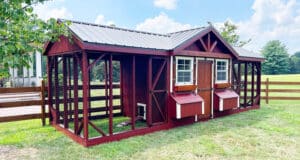
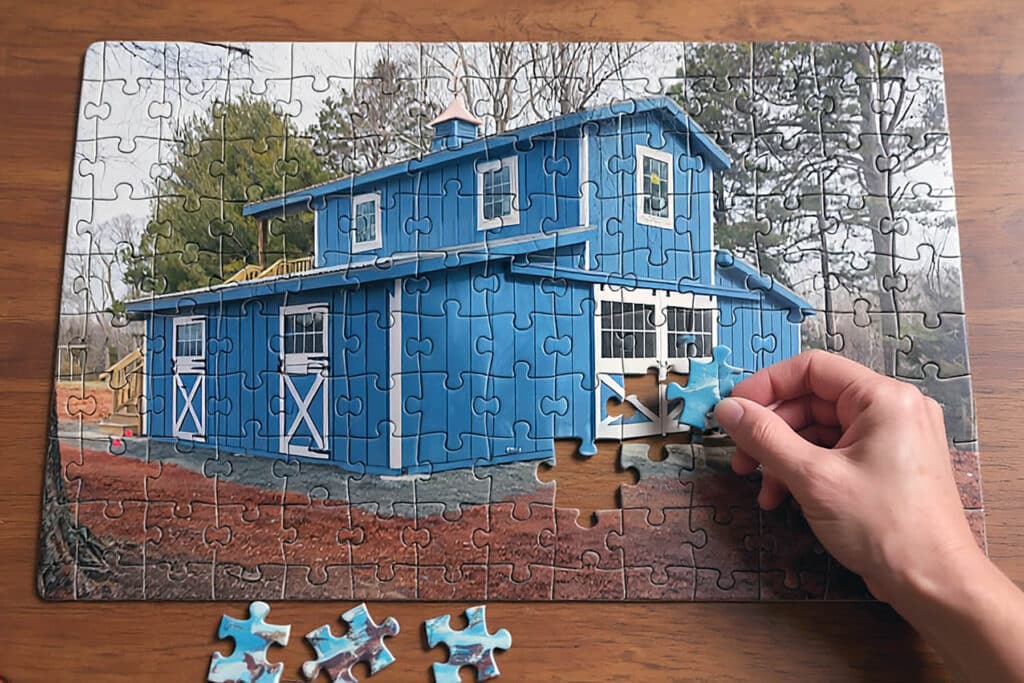
Modular barns offer extensive options in shedrow configurations and design choices. So no, you don’t need to pick up a hammer and nails the way my pioneer self did, you can simply hit ‘submit’ on a ‘BUY’ button and have a ‘to-the-penny’ priced barn constructed, delivered, and set up ready to move in, based on your input. You just supply the horses.
Extensive layout options for the modern day shedrow offer an affordable structural horse housing component that will fit a myriad a sites. Highly functional designs can be created with intelligent planning about how the day-to day tasks can be best accomplished. Thoughtful planning can reduce extra steps for horse caregivers and provide efficient access for large delivery vehicles supplying the stables. Let’s look at creating stalls and stabling by siting the ‘boxes’ for optimal ease of use.
Supermarket Designs
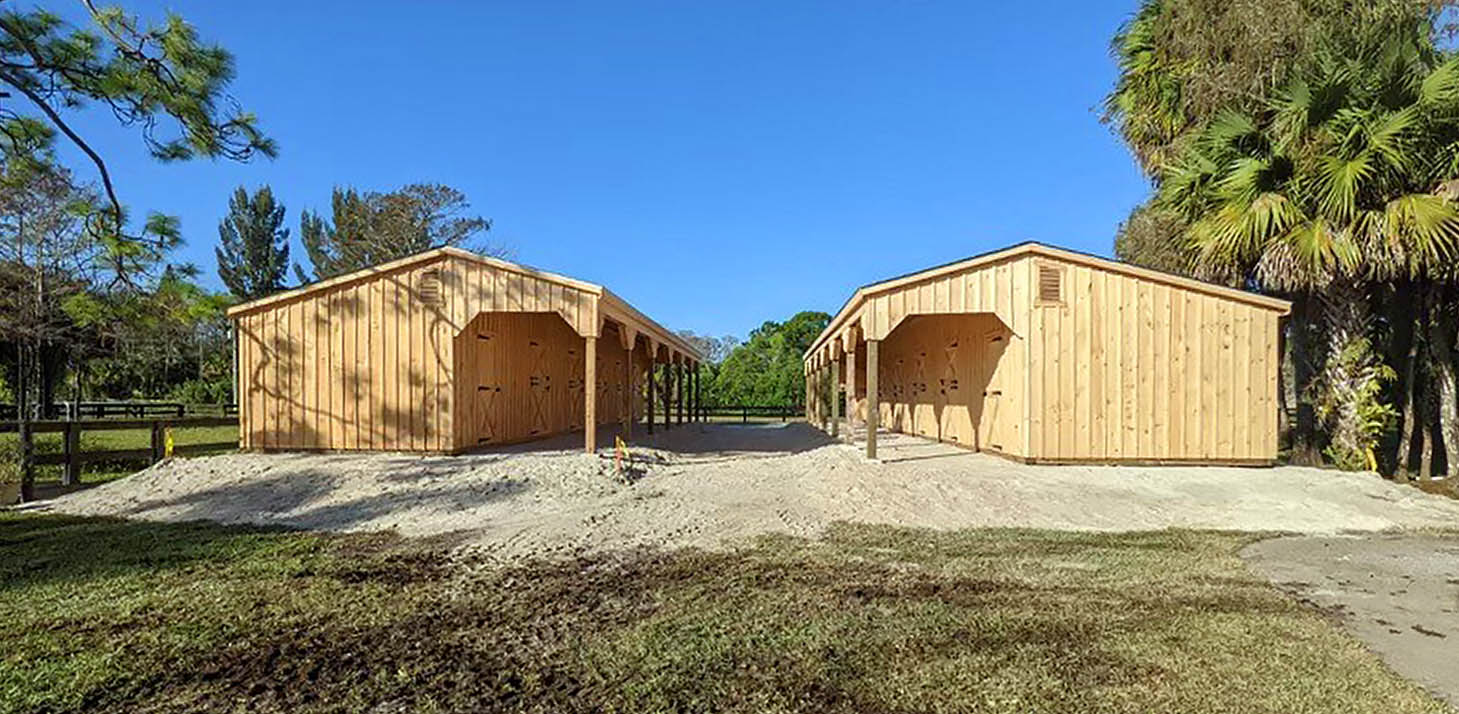
Larger equine facilities benefit from placing shedrow stalls parallel with stall fronts facing each other. Most racetracks operate this design, as it comfortably adapts to meet the needs of the high traffic flow of trainers and their horses. It maintains proximity between units with a natural division between structures that offers a useful working space for moving horses back and forth and accommodates vehicular access when needed.
Going To Great Lengths
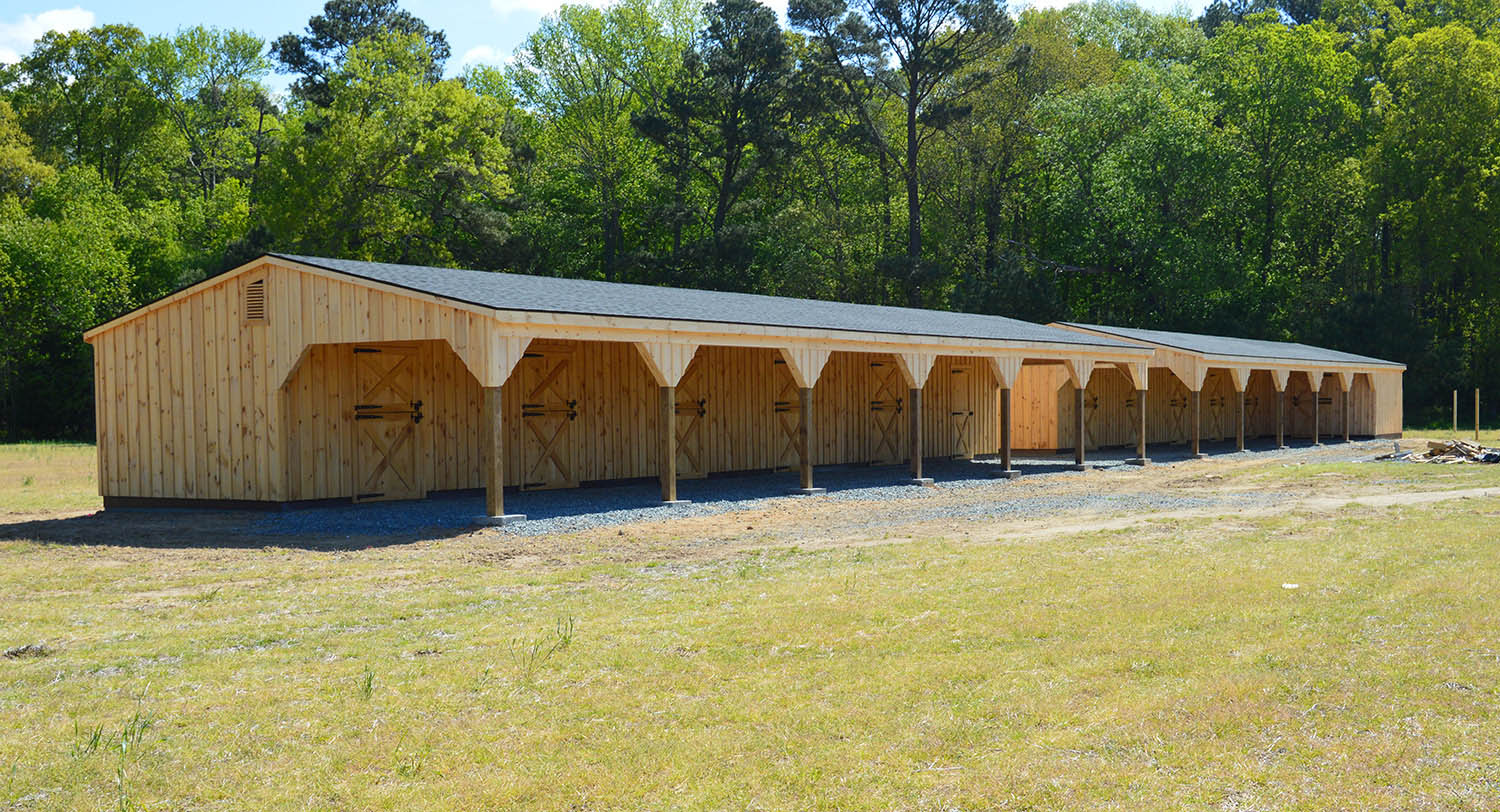
One of the most common mistakes when using a shedrow design is to opt for one continuous length of stalls. Without offering an access point or break between structures, the walk from one end to the other when leading a horse, pushing a wheelbarrow or hauling hay nets can become strenuous.
However, while the long and thin footprint of an extended line of stalls might be hard to work with on a daily basis, the benefits are twofold. It can easily be sited on narrow lots, and it provides a privacy barrier between the horse property and the neighbors.
Traditional Courtyard Design
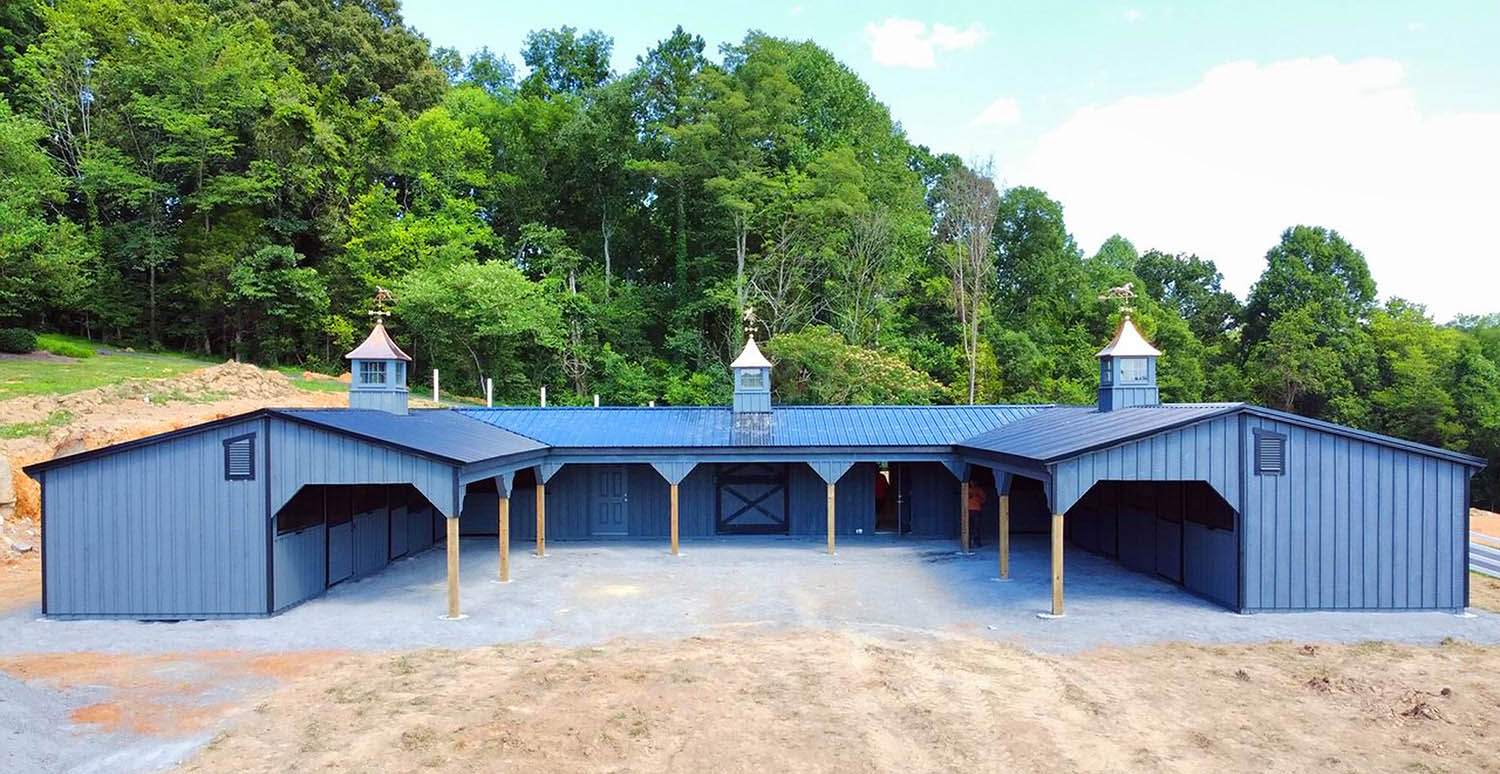
The privacy aspect and shelter from high winds and cold weather provided with the traditional courtyard stabling design was popular back in the day for good reasons.
Horses enjoy viewing each other from their stable doors; supervision of the equine inhabitants and their caregivers is easily accomplished from a central vantage point; the courtyard offers a quiet space where horses can be bathed/groomed, tacked up; and all the services and care needs are centralized.
Downsides to courtyard design:
- The central area can become sunbaked in hot weather as breezes cannot infiltrate the horse structures to reach the interior space.
- Poor access for large equipment with no turning room if center space is too small or entrance ways are too limiting in width and height
- Drainage and snowplowing can be problematic.
- Manure disposal must be addressed.
- Parking issues need to be solved for visitors, and points of access for veterinary and farrier trucks are a must.
Improve flow and accessibility by placing hay and supply storage in each courtyard corner, accessible from both the interior and exterior. This way supplies can be delivered via tractor-trailers or large trucks and stacked for use from one side while allowing access from the interior side when they are required.
Tip: When designing any access point ensure there is sufficient turning room for the larger vehicles and that the horse structure itself, any barn overhang, lean-to, its pillars and supports are protected from accidental impact from vehicles navigating the space. Similarly, ‘look up’ and ensure that the height of roof lines such as gable ends and soffits are clear of standard heights of large equipment (generally 16’-18’ minimums are recommended).
Digging In
Services such as water lines and electric cables are easily dug underground in long straight lines.
Tip: Anywhere these lines are buried where heavy vehicular equipment such as tractor-trailers, dump trucks or large tractors will travel, the lines should be encased in a protective PVC tube and covered with a sand layer before backfilling with unearthed materials. Always install all lines well below the local ‘frost line.’
Fresh Air Everywhere

Performance horse owners/trainers love the advantages that the shedrow design offers health wise for their charges. The significant advantages of fresh air everywhere appeals to everyone from Olympians like Boyd Martin and leading racehorse trainers to horse breeders and amateur backyard owners alike.
While fresh air is good for horses the interior stall spaces can become hot with the passing sun entering the stall at certain times of the day or driving wind pushing rain/snow into the entry area of the stall. The addition of an overhang can provide an inexpensive way to solve these problems and provide extra storage space and a sheltered working area.
Security Factors
In today’s volatile world of crime, keeping your horses secure from both advertent and inadvertent interference from others is an essential factor in keeping them safe.
Shedrow designs set in a courtyard or ‘boomerang’ shape or T-shaped set-up can offer good protection by limiting access to the stall entrances. The addition of a secure fence around the exterior of the stables can add a second perimeter to further secure the stabling.
Centralized security devices can easily be fitted to offer full surveillance of the entire facility.
Barn layouts and exit points should always be designed with an eye to how the horses can be quickly evacuated from their stalls and transported or led to a safe area should a fire erupt either within the complex or be an exterior factor. Fire safety and prevention is essential for any horse facility, large or small. Here are some helpful tips on fire safety measures.
Dress It Up
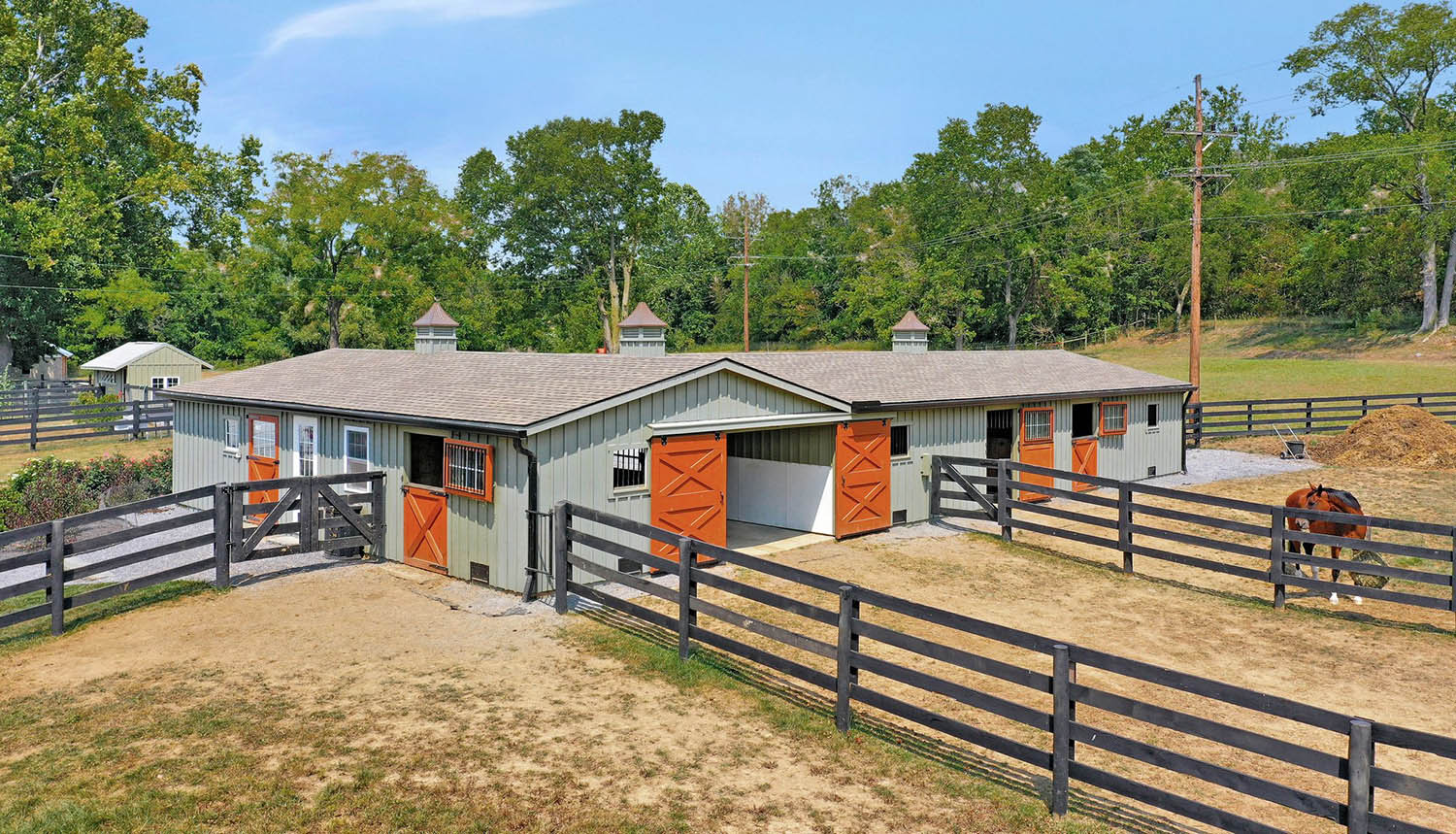
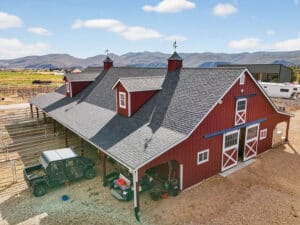
A shedrow barn design can be as elegant as any other barn design with some forethought on colors and materials that are chosen.
Modern day low-maintenance siding options and durable stains and paints mean whether you choose wood or metal siding and roofing, the horse barn can be designed for both beauty and aesthetic appeal.
The low-profile of a shedrow means it can simply blend into the existing landscape by using earthy colors, or color it to complement existing structures such as a residence on the property. Spin that color wheel!
Don’t forget to personalize your barn and dress it up, to express your individual preferences. The hardware used for stall doors and entry doors can be fashioned in horse head designs; add decorative light fixtures; install central fountains in courtyards to cool the air in summer; place flower/plant containers by overhang pillars (filled with colorful, non-toxic plantings), and humor-themed instructional barn signs to direct traffic and barn activities.
The modular shedrow offers much versatility for horse stable needs. As well as the design factor, don’t forget the question of pricing. Shed-row horse barns are less expensive to buy than other equine housing styles, and if you shop the sales lot you can pick up some very good deals.