Put Your New Barn Jigsaw Together – Channel Your Inner Designer
When you approach a significant project like building a new horse barn, perhaps you don’t think about how to simplify the process. But you should. From inception to purchasing to final build and the most exciting moment – leading your horses in for their first night’s stay – there are stress-free and financially secure ways to get the job done. And it might not be how you thought.
Many horse owners take pride in their individuality and prefer customized solutions that align with their personal vision. Particularly when it comes to horse care. Specific preferences and ideas are abundant, whirling around in their heads as they fashion their perfect barn. As such horse owners can draw on their firsthand experience working with horses when planning a new barn, while also tapping into their natural design instincts. This approach not only makes the process more enjoyable, but also creates a smoother and more efficient path to achieving the ideal barn.
The Biggest Jigsaw – 3D Style
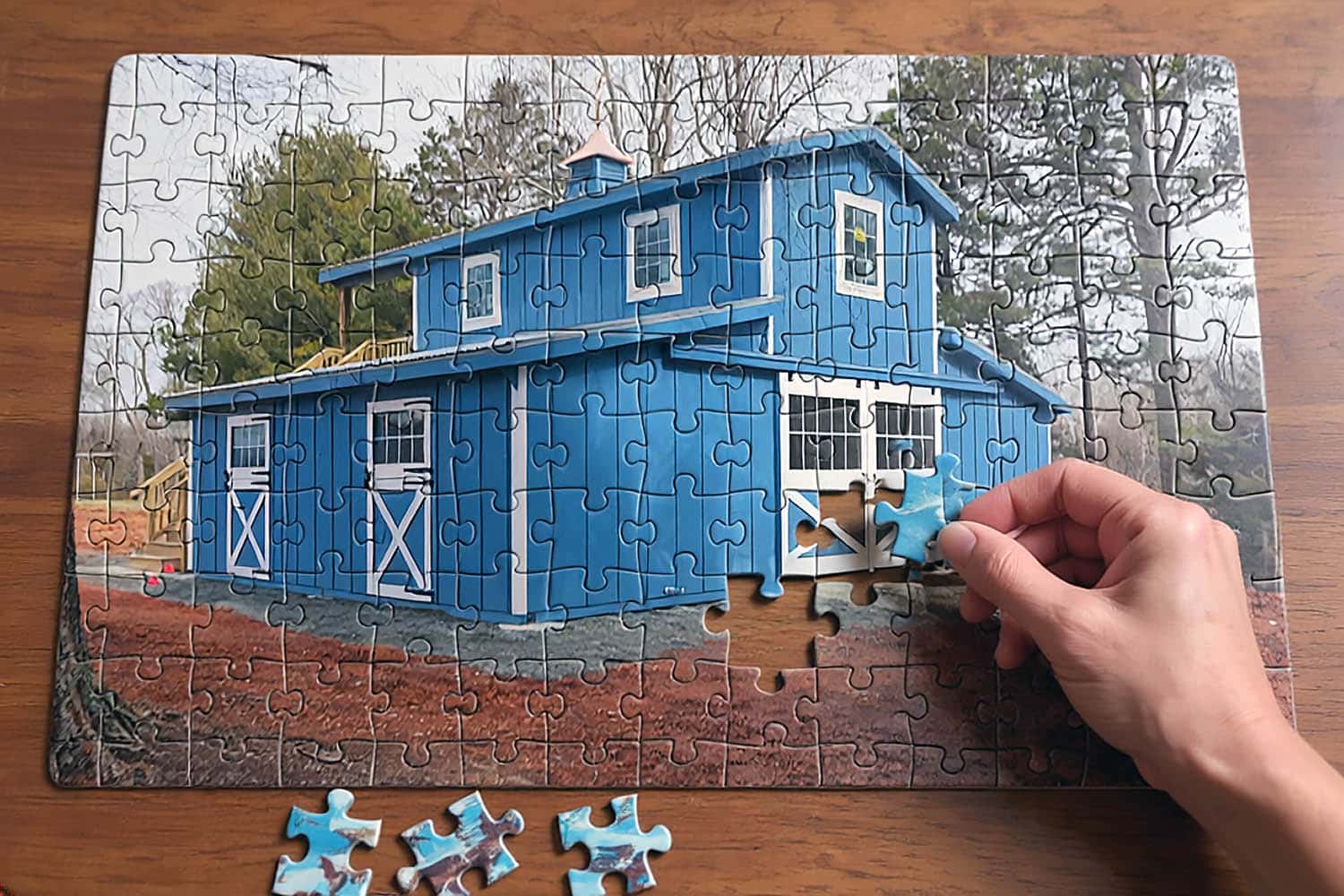
Many of us have spent time helping our kids to piece together a jigsaw and enjoyed watching their joyful faces full of satisfaction when the finished picture is revealed. During holiday times traditions of a family jigsaw project offers a welcome diversion from over-indulging our appetites for food and drink. Completing the jigsaw allows us to spend peaceful time around the table across generational divides, sharing moments and making memories.
But perhaps the biggest jigsaw build in your life is yet to come. Attention to detail will be needed and a focus on the overall picture a must. The magical, almost instant arrival of a new horse barn constructed from the largest jigsaw you will likely ever encounter, is possible with modern modular barn construction techniques.
Design It How You Want
The fabulous factory-built advantages are obvious – known prices and materials; accurate timeline for build; on point craftmanship. But beyond that your carefully selected collaborative construction partner can provide some ingenious ways to customize the new barn build and literally bring your vision to reality, without compromising on building standards.
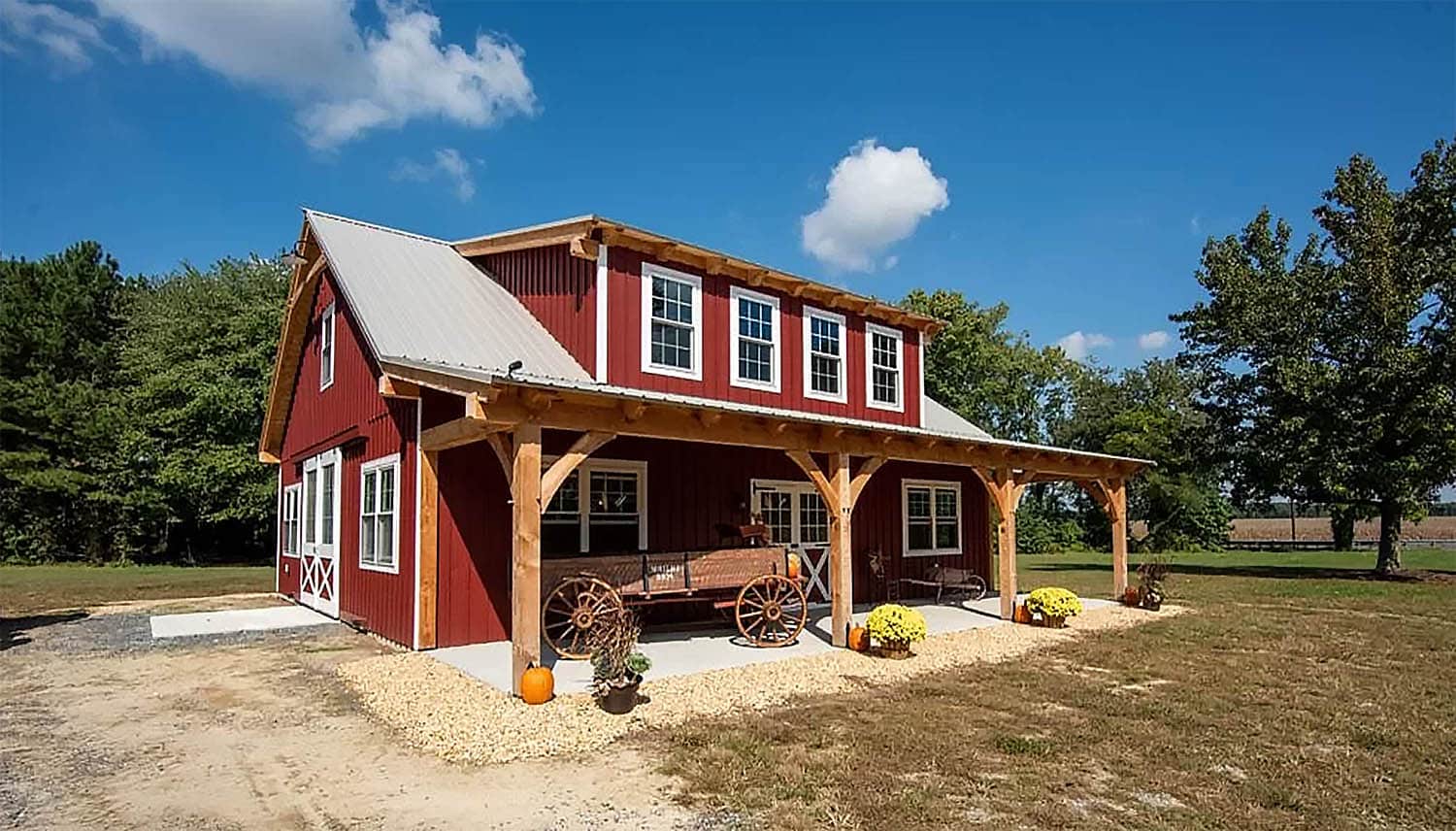
With the advances in construction and professional Amish craftsmanship at hand, today it is very hard to tell the difference between a stick-built barn and a modular horse housing structure. You can even put house and barn together in a beautiful Barndominium (super popular for good reason) or buy an ultra-traditional timber frame barn full of artisan accomplishments and aesthetics, online.
There’s No Trade-Offs
You can now be confident that a modular barn build allows you to achieve your vision without compromising on quality, design, stylistic details, or premium features. Something you may not have considered is that the modular barn option offers extra bonus construction aspects over stick-built or pole-built barns. In fact, a large list of positive aspects exist. All yours for the picking.
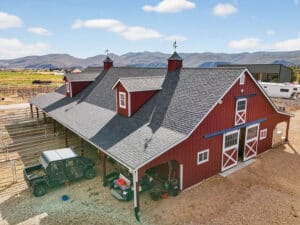
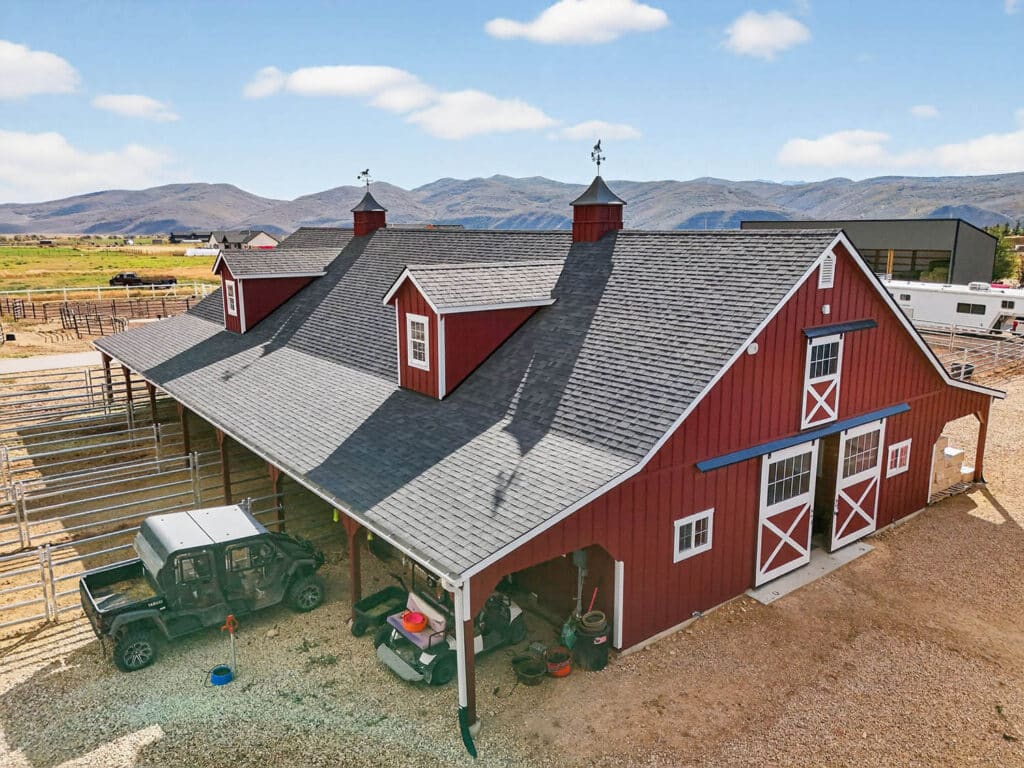
Consider how modular builds can be adapted. The Monitor barn is principally a three-part jigsaw. Usually built in three sections, two are placed alongside each other and a third section lifted on top. There is good reason that the Monitor design has withstood the test of time as its spacious offerings are functional and affordable.
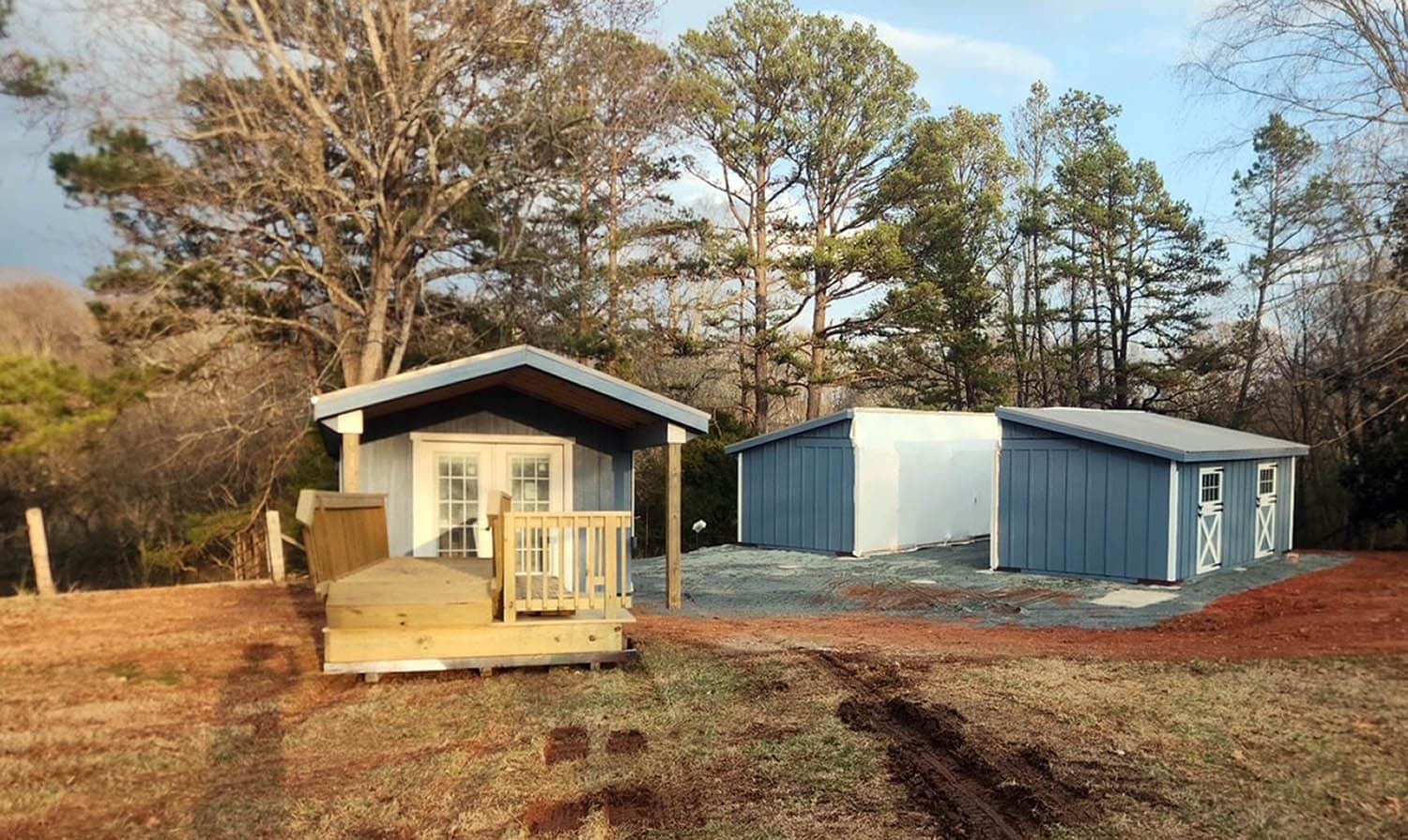
The High-Profile barn is similarly sectioned, and the work done on site for set up so it is ready for use is included in the ‘to-the-penny’ price, so the finishing touches are completed on time and on budget.
Ideally, you will partner with an established barn builder with decades of experience. You have come to the right place. Horizon Structures LLC is a leading modular barn builder, offering nationwide delivery and a wide range of barn styles. Every option can be customized to bring your vision to life, including shedrow, low and high profile, monitor, double wide, timber frame, and barndominiums.
The beauty of working with an experienced construction firm with decades of hands-on Amish craftsmanship in framing, carpentry and design skills, in-house drafting talents and engineered plans produced for every conceivable barn design, is that the horse owner can establish the features they want put together in their own barn jigsaw.
Horse barn purchasers can opt for extra-long runs of stables, place a double-wide in a narrow spot, or utilize the eco-friendly small footprint of a Barndo that houses both horses and humans. Stylistic ideas for balconies, roof and siding colors and materials, staircases, entrance doors etc. can all be incorporated into one design. And if you want to do multiple buildings discounts are available, alongside warranties and financing options.
Keeping It Real
A significant advantage of this jigsaw design is the clarity it offers with pricing. Managing the budget and aligning the dollar spend with what upgrades, extras or special ideas the barn buyer wants is straightforward to accomplish.
Importantly the design and stylistic desires of the barn purchaser also need to be carefully managed, to make sure they are not just functional and viable, but also that the structure meets/exceeds building ordinances for essential needs such as snow and wind load, fire safety and energy efficiency. A highly qualified Project Manager, who is assigned to a client’s project, will provide guidance to ensure that mistakes are not made.
Even minor bad decisions will be something the horse owner will have to live with on a daily basis, so having a partner to collaborate with that has a trained eye and perspective is a real bonus.

The wisdom of the customer service professional on the construction team will be invaluable in helping horse owners not just design a great horse barn that meets their needs and desires but also ensure construction parameters are met.
Technology Aids
The virtual world of technology makes it even easier for the prospective barn buyer to assess the real world feel a barn will encompass. If you are considering buying a new horse housing structure, utilize a company that offers all the modern-day measures and methods that are available to demonstrate your project.
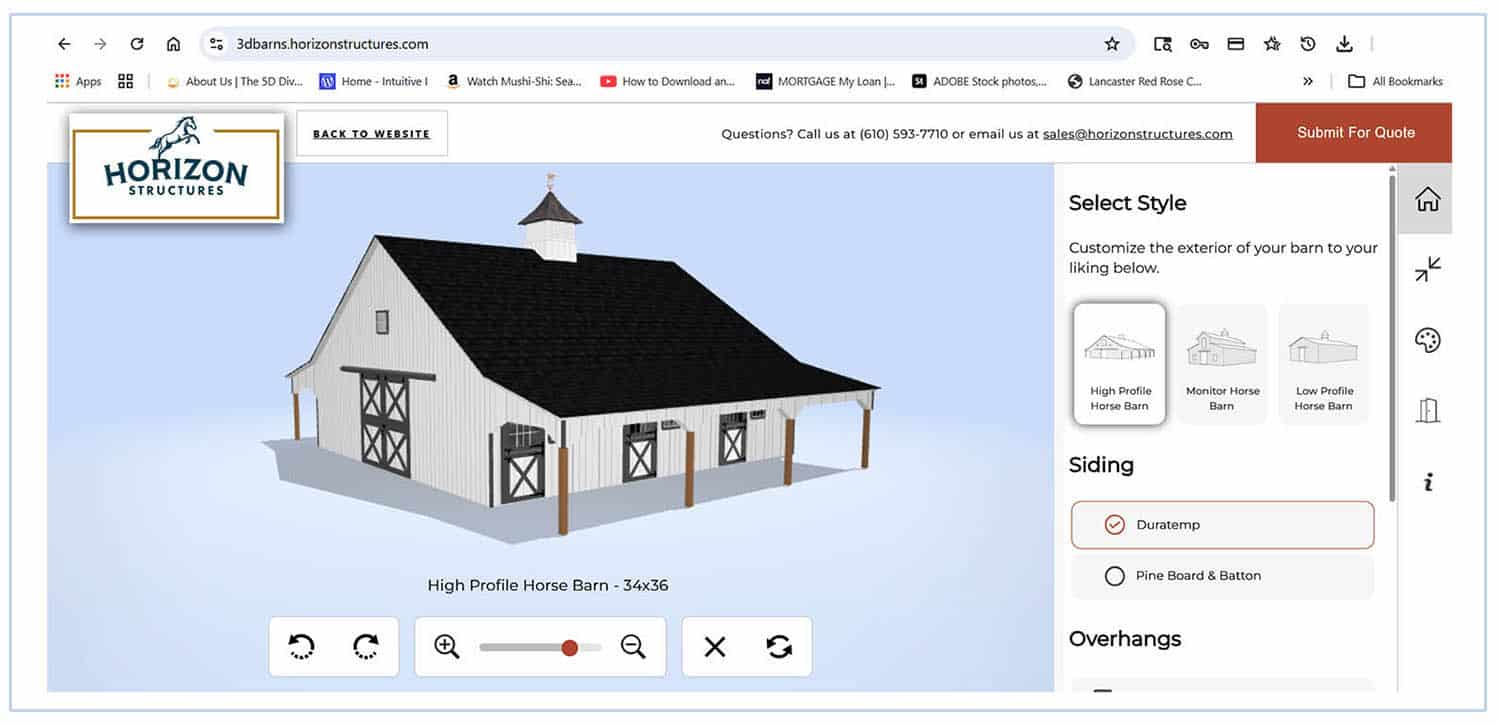
Larger projects certainly benefit from the virtual approach, areas can quickly be identified for improvement or changes made without the expensive on-site work-order change, which would otherwise be needed. Eliminating both the time delay, extra cost and upset that last minute changes to plans incur is always beneficial.
Technology aids are very helpful in discerning the scale of a building too. Today – you don’t need to worry. Ideas and tours abound through technology and are readily and importantly, free, for you to explore.
Get Inspired
Good ideas often come from others, and channeling our own design ideas can always be boosted by discovering all available options. Delving through an up-to-date Project Gallery can deliver brilliant ideas that can be personalized and adapted as you prefer and is well worth a look.
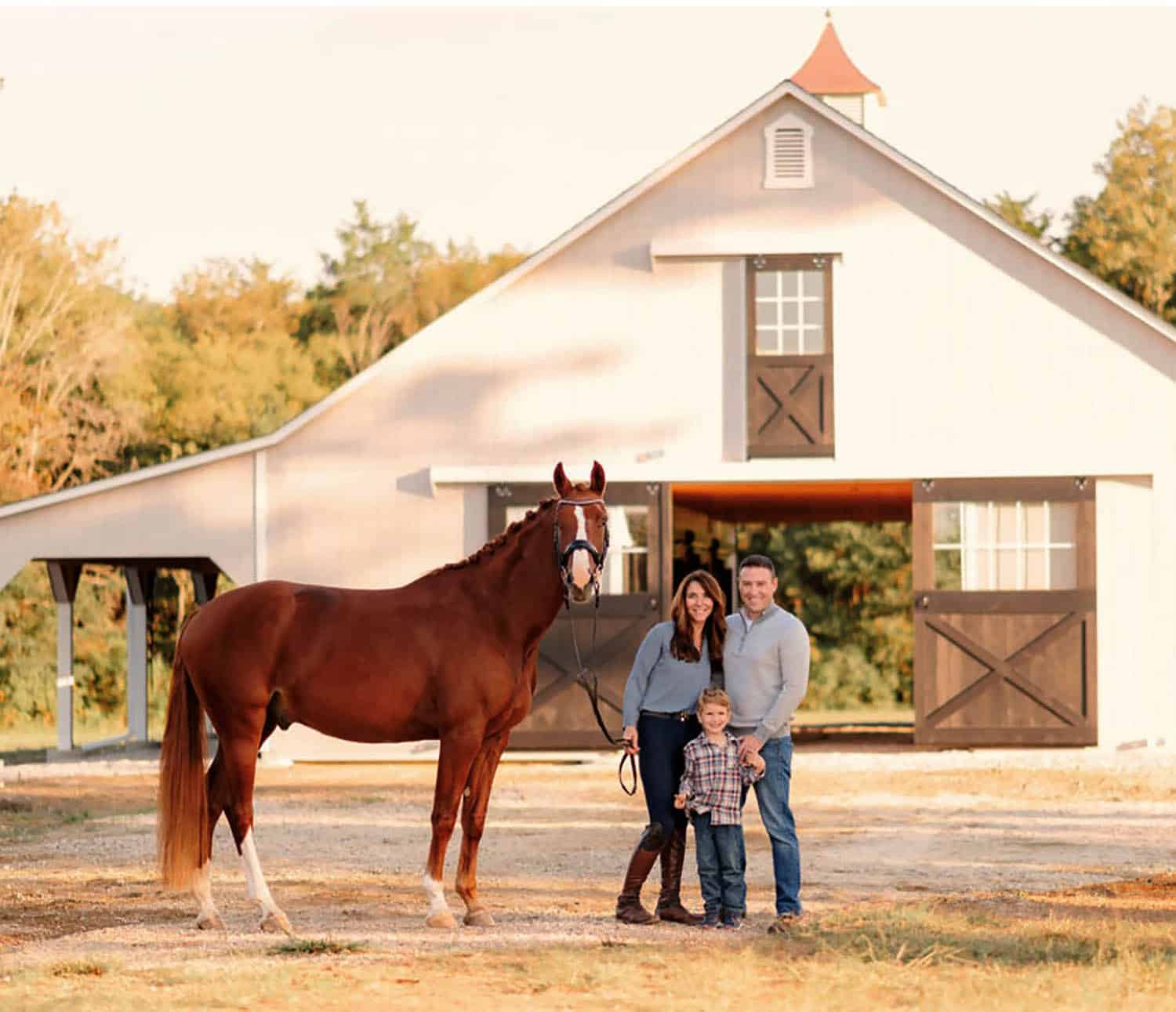
The enjoyment in fulfilling a barn design that you can call your own is not one to be missed. And rather thrillingly, you can do it all from the comfort of your kitchen table or couch, alongside the family jigsaw project. And when you choose the right construction partner in modular structures, you can be assured you’ll have professional help finding all the right pieces that fit together perfectly.
Get Started on Your Barn Project with our ONLINE BARN BUILDER or Explore Our PROJECT SHOWCASE!