Recent outbreak of avian bird flu virus A in the U.S. poultry population has seen over 53 million chickens culled in the State of Iowa alone thus far in 2022. On the East Coast small poultry farmers and homesteaders such as the Monroe County Marsala family in Upstate NY, have also seen their flocks destroyed as a result of the virus. Their cry on You Tube, It’s Real, Cover Your Birds!
Many chicken keepers love to allow their chickens free range access, where their appetite for pecking on pesky bugs, scavenging and scratching around the yard as they fancy for food to eat is part of a healthy lifestyle for the poultry. When chickens remain in an enclosed space there are both advantages and disadvantages to consider, but the change in lifestyle might be something to seriously consider if your chickens are the ‘out on the town’ variety. Knowing how to protect chickens from bird flu is a great step to saving your flocks. Here’s why:
According to the CDC, unless humans come into direct contact with a chicken carrying chicken flu the risks of human contagion are low. Understanding how chickens become infected with the virus is key to avian flu precautions. U Here’s what the CDC explains
“Wild water birds (like ducks and geese) can be infected with avian (bird) influenza (flu) viruses, but usually do not get sick. Infected birds have virus in their saliva, mucous and droppings (feces). Bird flu viruses can spread easily between birds. Some of these viruses can cause serious illness and death in domestic poultry (like chickens, ducks, and turkeys).
Domesticated birds (chickens, turkeys, ducks, etc.) can become infected with bird flu A viruses through direct contact with infected waterfowl or other infected poultry, or through contact with surfaces that have been contaminated with the viruses. Bird Flu is a serious poultry disease and requires rapid response because it is highly contagious and can be fatal to chickens. Animal and Plant Health Inspection Service (APHIS) works with its federal, state, local and industry partners to quickly respond to any bird flu findings. Bird flu A(H5) or A(H7) virus outbreaks in poultry, where depopulation (or culling, also called “stamping out”) of infected flocks is usually carried out.
Provision of a covered chicken run or space adjoining the coop can mitigate the risk of the poultry running ‘afowl’ of infected feces/droppings or mucous surfaces where infected wildlife has brought the virus to roost.
Loss of your chicken flock is not something to joke about, and is extremely upsetting, as the Marsala family indicate in their video. Chickens become more than just an investment in egg production, they are often a part of family life and each chicken has its own individual personality which endears some of them more to us than others.
Options for chicken runs do run the gamut in square footage, size and roof styles. Large or small is probably better than none at all. And the covered area provided protection from overhead predators and neighborhood dogs and roaming wildlife.
Selection of the best chicken coop includes consideration for the outdoor activities of its residents.
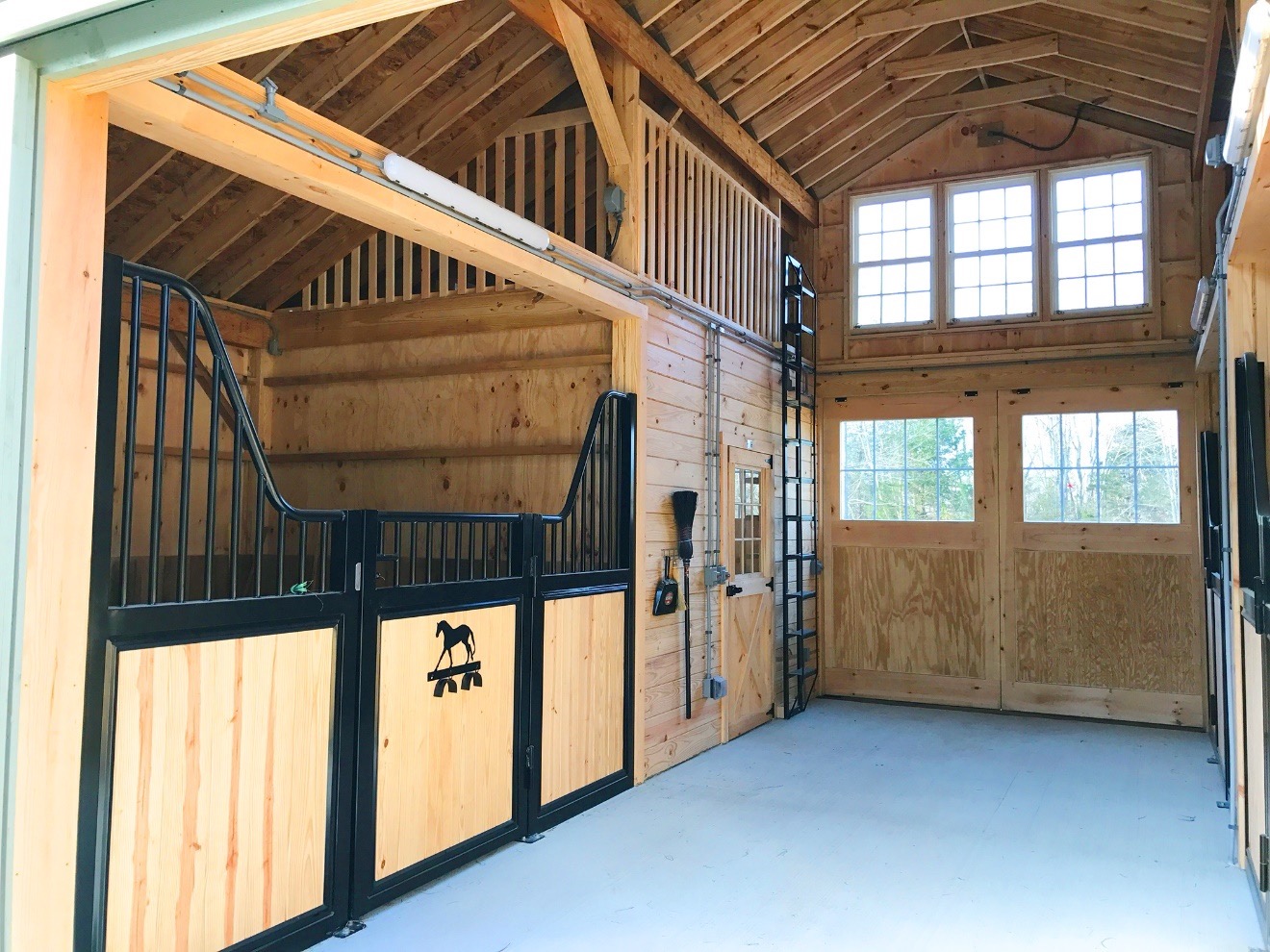
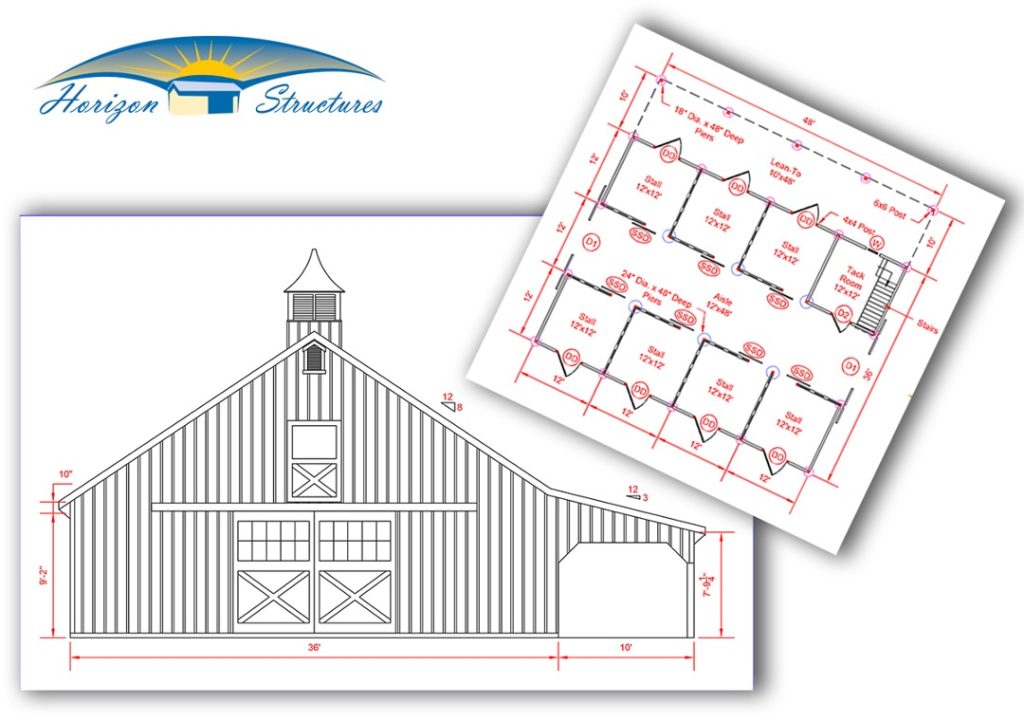
Full customization of a chicken coop that includes a built-in run is available at Horizon Structures. From human height access doors for easy caregiving duties to large (4’, 5’ or 6’) to wire floor runs and color options to ensure the coop complements existing structures on the property, the array of choices is mind-boggling.
Interaction with wild birds is much less likely when the chickens are secure in their own run. They are also less likely to have an unwanted interaction with a car or other motorized vehicle or wander off to lay eggs where they won’t be found during egg collection time by the caregiver.
With the increasing prevalence of avian flu in the U.S, it may be time to consider a coop with a build in run. You can shop the lot if you want one right way, or place and order and have it delivered to just the right spot in your backyard.
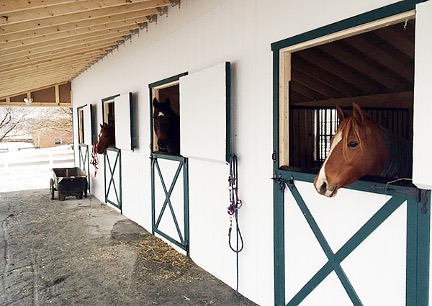
The care, custody and control responsibilities of working with horses usually includes handling the noble beasts in confined spaces. Daily duties often include leading the horses to and from pastures to the shelter of a stable or horse barn. Whatever the design or style of horse housing utilized, there are many opportunities for accidents to happen that can result in minor or major injuries to horse or human.
Accidents are defined as unexpected events that are not intended but that cause damage or injury. Horses are large, unpredictable creatures of flight so horse trainers/owners/handlers should truly learn to ‘expect the unexpected’ and be proactive in accident prevention.
Sadly, every year many injuries occur that could easily have been prevented with the use of a few simple training techniques for horse and handler. It is not just the neophyte horse owners or caregivers that cause preventable injuries. Often knowledgeable and experienced horse people are lulled into bad practices and become casual in their handling habits regarding their equine charges.
Remember every time you are in a horse’s presence you are teaching it something. Make sure it is something you want it to learn.
The practice of opening the pasture gate and allowing horses to move freely to their barn stalls either ‘en masse’ or individually may seem fun and be quicker to do than taking the time to halter the horse(s) and lead them to the barn, but such actions can also result in horses becoming injured.
Arguments can occur between horses as to who has which stall, inadvertent kicks can cause injury to horses/humans and damage to property, horses can hit their hips entering the stall in a rush etc.
Additionally haltering and leading a horse is a valuable training opportunity.
Here are 5 safe horse handling tips that when consistently implemented may help mitigate the risk for injury to horse and human:
The Simple Stop
It may seem simple but the ‘stop’ offers a significant safety benefit when leading the horse in and out of the barn. Teaching your horse to halt when being led on a halter with the rope is easy to do. Safety caveats include:
Never wrap the rope around the hand or fingers or drape it over your shoulder as a sudden movement from the horse could cause significant injury.
The habit of throwing the lead rope over the horse’s back as it enters the stall alone while the handler stands back can cause injuries such as rope burns to the horse should the rope fall to the floor and the horse step on it.
Ensure the horse’s halter is properly fitted. The noseband should be placed 1” below the cheek bone. Both the noseband and the throat latch should be a snug enough fit to ensure the halter won’t come forward and over the horse’s ears should he back up or come off under the horse’s chin if he rears up or pulls back.
If a lead shank is used instead of a rope, it should not be looped through the halter and clipped back to itself. This could result on a horse stepping a hoof through the loop in the chain if grazing or dropping its head and cause the horse to panic and thus result in serious injury.
Training Tips:
Voice commands should always be used in addition to rope tugs that exert pressure on the noseband of the halter.
The use of the word halt, or whoa, given in a commanding voice in a low tone combined with a light pull and release of the rope is all that should be needed to halt the horse. Remember it is the release that teaches the horse not the application of pressure.
The handler is at the shoulder of the horse and stops alongside the horse at the same time. The horse can be rewarded with praise and a pat on the shoulder and then asked to ‘step up’ or ‘walk on’.
After training test the horse’s understanding of this very basic task by using just the verbal command i.e., the handler walks forward a few steps after issuing the halt command and stands still while asking the horse to step up or walk on.
Eye contact made at the time of the halt and then released when asking the horse to step forward can also be employed.
Should the horse not understand or respond to the halt command it is important not to start a tug of war on the rope. Simply walk forward a few steps and ask again. Eventually the horse will ascertain how easy it is to comply and seek the positive reinforcement reward.
The horse should always be halted before being led into a barn, before being led into or out of a stall or through a doorway to an indoor arena.
This gives the handler the opportunity to ensure there are no obstacles such as tack boxes, skips etc. other horses, pets, children, adults or vehicles blocking or impeding the safe passage of both horse and handler through the door, along an aisleway, or in the stall space.
Horses’ vision is not the same as human vision and does not adapt from light to dark in seconds. It can take more than 30 minutes for a horse to transition to full vision when going from bright outdoor light to the relative darkness of a barn.
During snowy winter months, halting a horse before entering the barn also gives the handler time to garner help to pick snow from the horse’s hooves that may have balled up during cold weather.
Removal of these ‘snow angels’ on barefoot horses or ice/snow packed in shod horses’ feet before attempting to traverse a rubber matted or concrete aisleway will help prevent the horse slipping thus minimizing the chance for soft tissue injury that is especially likely when making a sharp turn into a stall. This precaution may even prevent a horse from going down altogether and fracturing bones such as the pelvis.
Handling Hack: As a seasoned horse trainer I additionally train my horses to mimic my ‘walk like a penguin’ action inside and outside the barn when a covering of snow or ice is on the ground. Taking these ‘little steps’ lessens the likelihood of the horse and myself skating around.
The use of the halt also enables the handler to ensure they are safely placed in optimal position just in front of the horse’s shoulder to step into a stall in advance of the horse and guide the animal through the center of the door entrance. This will help ensure the horse does not bang his hip on a side post which can cause injury or even permanent damage and reduces the risk of a blanket catching on a door frame or stall door latch.
When leading a horse into a stall or paddock it is always wise to take the time to turn the horse around so that it is facing the entrance with the handler at its head. Not only does this eliminate the opportunity for the horse to duck through a door or gate and escape the pasture or stall, but it also minimizes the risk of injury for the handler at the time the horse is released.
It is usual to remain on the inside of the horse and turn him around the handler keeping his head toward the handler as this swings his hind legs away from the human and makes it easier to maintain control. Remember wherever a horse’s head is pointed he will most likely follow.
Horses may also be taught to turn around or move over in the stall when the stall is being mucked out. The use of an intermittent tap on the horse’s girth area together with a verbal cue of ‘move over’ and praise reward when the horse complies, (especially when the horse may be eating), should be trained in the horse from an early age.
Move the horse’s feet to control its mind.
Halter Head Drop
Horses of many breeds tower above humans particularly when they are excited such as when being turned out, feed times etc.
Whenever the horse is to be released either by unclipping the rope and leaving the halter on the horse or by removing the halter, it is more easily and certainly more safely completed if the horse is taught to drop its head for the process and to wait for a verbal cue before turning away or leaving.
Safety note: Always remove halters for turnout if equine hay feeders are present in the pasture to prevent the halter becoming hung up on unnoticed protrusions. Water buckets and hooks in a stall and blanket hardware incorrectly adjusted with the outer edges of clips facing outward, can pose a similar hazard.
Handling Hack:
Food rewards should be carefully used in training so as not to teach the horse to nip or search for treats every time he is handled. I use carrots as a healthy treat whenever placing a halter on a horse or removing it. The carrot is easy to see and smell from the horse’s perspective and is unlikely to be dropped. For safety, if it does end up on the ground don’t reach down to get it, let the horse pick it up.
I give the thinner half of the carrot as a reward for dropping the head after the horse has patiently waited for me to buckle up the halter and clip on the rope, and the second half after the halter is safely removed.
The time it takes the horse to chow down on the carrot allows extra time for the handler to leave the paddock or stall safely and its size minimizes the risk of the horse finding my fingers instead of the treat if it is excited.
Bubbles and Backing Up
All horses should be taught to respect the ‘bubble’ or immediate space around their human handlers. A horse should also be trained to back up on command. The latter facilitates more control for all sorts of life events, such as trailering and transport, extricating a horse from a hazardous situation such as entanglement in a fence or gateway etc.
Backing up a horse is also used to instill in the horse who is in charge. Horses in a herd will back up away from the leader if challenged, and similarly the human handler can use backing up to teach the horse who is ‘the boss’ without ever needing to touch the horse.
Whenever a caregiver enters a stall, the resident equine should immediately turn to face them and then back away on a verbal cue to allow space for the handler to enter the stall.
Training Tips:
Use of a whip acts as an extension of the handler’s arm when training. Train the horse to be unafraid of the whip before beginning, by passing it along his shoulders and flanks. The additional distance from the horse that a whip provides offers more safety to the handler during the exercise.
As with all training cues keep them consistent and allow time for the horse to comply. Begin with a physical touch to the horse’s nose pushing it back toward its chest with the hand and tapping the point of the horse’s shoulder with the whip asking it to ‘step back.’ Reward compliance with a praise reward.
Rhythm is important in all horse training. Taps given in a predictable rhythm will relax the horse. If the horse overreacts then the impact of the tap was too much, if he does not react at all then the tap was not hard enough. Don’t be aggressive, be assertive.
Stop tapping and offer the praise reward immediately the horse positively responds, but don’t stop tapping until some effort in the right direction has been made.
Reward even the tiniest of movements or efforts from the horse in the right direction. Backing up is a hard task for a horse to accept as he cannot see directly behind him.
If the horse doesn’t immediately comply you can tap the near front hoof with your foot to tell it to move the hoof back.
Always stand to the side of the front of the horse, not directly in front when training unless you are an experienced professional.
Once the horse understands the instruction, you can migrate the cue to holding your hand up as a ‘stop’ sign while still using the verbal cue and moving your hand toward the horse as if pushing an invisible wall, or you can simply use your arm to point and direct the horse using it like a whip.
Tying and Cross Ties
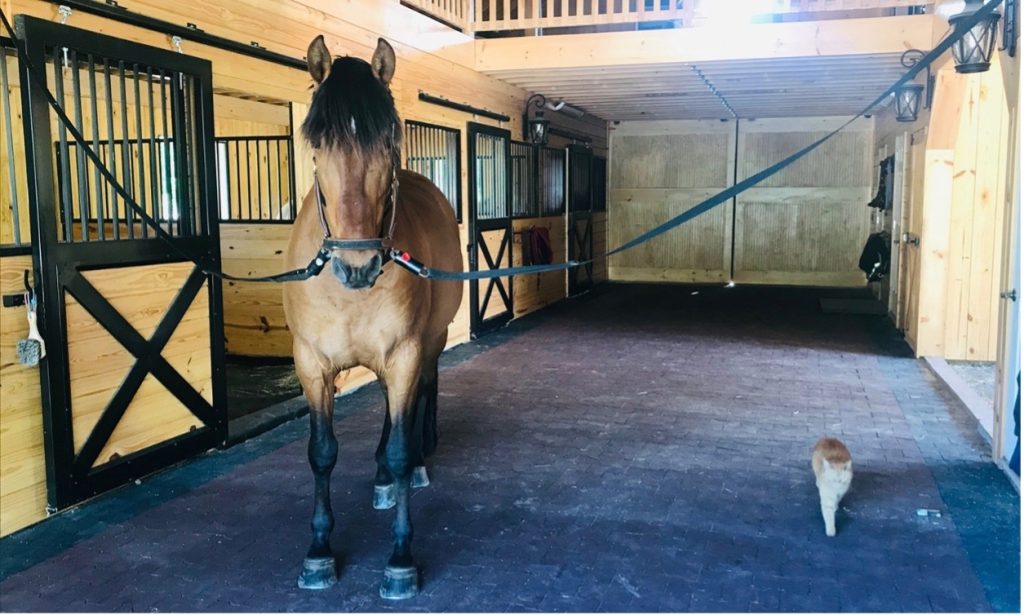
There are many different methods utilized to teach the horse to stand tied up or on cross ties. Whichever method is chosen, it all begins with teaching the horse to stand still.
During a horse’s life it is inevitable that it will need to be restrained at some juncture by being tied up. Trailer transport, cross ties utilized for tacking up and grooming, standing tied to a trailer at a horse show etc.
Horses that pull back when tied can easily panic and injure themselves or others. It is important that the horse has been trained to step forward when pressure is applied to the halter rather than step back, before teaching the horse to tie up.
As with any other training of the horse it is the release of pressure that teaches the horse the best course of action, not its application.
Be aware that foals are particularly prone to damage to the cervical area of their spines (this is one of the reasons most horse breeders choose to use pressure from a rope behind the foal as well as a halter rope in front when teaching them to lead), so special care should be taken to train the foal. Tying up is one of the last things to teach a foal, and it should not be done until the horse is at least 6 months old and weaned.
Patience poles/snubbing posts are mostly used as a punishment, and I do not personally advocate their use.
Whatever method is employed, opt for ones that are kind, safe and offer a positive experience for the horse.
Remember to always stay out of the kick zone when training a horse to any task.
Take Home Message
Horses are amazing creatures. Their noble natures and smart intellects make them great partners in life. Keeping both horses and humans as happy and safe from injury and damage as possible is always the goal.
The horse’s amiable disposition allows it to trust its human counterpart, but this also exposes it to risk of abuse. Always honor the bond of trust and do everything to ensure it is built upon every day.
To quote one of my husband Paul’s (who is also a GP trainer/clinician/competitor) favorite expressions when teaching students to train their horses:
“Just Because You Live In The Sticks Doesn’t Mean Your Barn Has To Be Stick-Built.”
While the advent of Spring is the perfect time to get busy with plans laid dormant through winter months for a new horse barn the reality is any time of year is a good time to get busy with the new horse barn project.
The trouble is no matter what the season it is hard to find the time it takes to visit prospective barn builders, sit down to discuss all the upgrades and available options and gain a perspective on all the choices and price points out there for a brand-new beautiful horse barn. Horse owners are often juggling busy lives with multiple demands on their time and energy hitting them from all directions.
Add to the time management issue the cost of fuel to undertake the seemingly necessary drive time and make these trips, and the dream of the new barn may seem a long way away.
Thankfully, modern technology offers a viable alternative scenario where the prospective barn buyer can choose the perfect barn to fit their needs, wants, and budget from the comfort of their own home and on their own schedule.
Just because you live in the sticks, doesn’t mean you have to buy a stick-built barn with all the hidden costs, budget overruns and blind trust that the result of the spend of your hard-earned money will meet or exceed expectations.
The advent of 3D building technology offers the buyer a visual opportunity to enjoy a ‘real feel’ of the horse barn with 3D renderings that can be customized to suit any individual’s taste.
Utilizing 3D technology, buying decisions can be made in peace and quiet with opinions for all parties involved in the new barn project heard. Conflicts in time schedules for different family members or business partners to weigh in on the topic are negated, and the buying experience is fun and exciting. No more need for dreary drives with tired young children arguing in the back of the car or rushing home to feed the waiting horses or pets. No more need for missed rides or income earning lesson opportunities. No more need for barn buying decisions made blind with the only visualization of the final barn on paper or in the mind’s eye of one person.
Another useful tool that offers great insight into the ‘feel’ of a horse barn are virtual tours. Once you have taken a few virtual tours of different styles of barns, you may find yourself rethinking the design of barn you want. For example, a virtual horse barn tour of a high profile barn that is 36’ x 26’ may perfectly fit your present needs, but if you take a virtual tour of a low profile 36’ x 24’ barn you may find that for much less spend you would be very happy and a compromise could make the difference in buying now and having your horse home now. Especially as low profile barns can commonly be purchased straight off the sales lot and can be delivered right away, saving you livery expenses.
Yes, everyone is aware that construction company websites commonly offer a myriad of photo galleys and embedded video promotions of their business profile and building upgrade features. Keen resources exist online to answer general questions on barn building experiences and offer suggestions. Great options and a grand place to start.
However, if the ultimate choice of a new barn is to meet both their demands in functionality and aesthetic appeal prospective buyers truly need to do a ‘walk-through’ of barn designs and explore a wide world of barn styles, upgrade features, colors and construction methods such as timber frame versus modular.
Thus, in addition to the armchair planning options of sometimes mundane websites and social media promotions, it is wise for the prospective barn purchaser to seek additional methods of ascertaining just what they are buying and how the structure will work for daily use.
Spatial awareness is a huge part of architectural design. How a building is engineered, how it looks up-close, and how different structures will transform the atmosphere in a particular site or environment need not be left to chance.
Details of barn construction are easy to overlook if you are not experienced in the variety of engineering and carpentry applications are available. When you enjoy a virtual tour, you can see what makes one barn construction method different to the next. For example, you may not know what a timber frame barn looks like and what makes it so special, aside from hearing tell of traditional mortise and tenon joinery and how it is the strongest form of joinery carpenters use, even in this modern world. A quick tour of a timber frame barn will show you how the beams look. You will see almost first-hand how aesthetically pleasing the timber frame option actually is, and if you are trying to be sensitive to the historical charter of the property you own the timber frame will certainly fit right in.
Visualization of what the new barn will look like is an important part of the buying equation. It creates confidence in the ultimate decision making and allows flexibility in budget by addressing optional upgrades and changes in size and style without the expense of a ‘work order’ and changes on site.
Buyers should seek a construction company that encompasses a large variety of barn style and feature choices, siding and roofing options plus can deliver on the smaller details such as copper weathervanes and European stall fronts and any other facets of individualization that will make the barn unique. The 3D technology should offer measurements, good quality video resolution, and be easy to navigate and the Project Team Manager at the company should be fluent in making all adjustments to the program to accurately showcase changes and requests of the buyer.
The opportunity to save the drive and use 3D building technology to ‘build the barn’ from layout to loft heights, siding to stall size, color to cupolas and everything in-between is not to be missed. It is a great way to take control of the new barn building project and eliminate any unhappy surprises.
Guilty as charged! As a veteran horse owner, I am guilty of being a hoarder of equine tack and paraphernalia, inside the house and inside the barn and even the horse trailer dressing room has invited a permanent storage solution at times.
Just as handbags, jackets and shoes seem to have a magical attraction to many of us gals when shopping, saddle pads, bits, bridles, blankets and breeches also seem to inexplicably find their way home.
I confess that as a lifetime horse crazed person the accumulation of a ‘bit of a boneyard’ when it comes to everything equine-related may have occurred. If you have ever moved ‘farm’ you will likely have realized a similar situation.
Luckily, my hubbie is also an equestrian so the piles of neatly stacked saddle pads hidden in closets, drawers full of bits and spurs and cupboards full of every imaginable color of polo wraps goes for the most part anyway, without comment or complaint.
That ‘extra stall’ in the barn is commonly abused in use as a storage resource that was always planned to be temporary but inevitably becomes a permanent home for a litany of tools and equipment. Stuff that can be placed safely behind a bolted door beyond the reach of inquiring equine noses and pets’ investigations.
Horse stuff isn’t limited to locations in the tack room/office or barn aisleway either, our house is adorned with horse brasses, books and equestrian art, expressive horse themed rugs and even a hunting horn decorates the wall of the mud room. Brasses that require regular time-consuming polishing I might add. But I wouldn’t have it any other way.
As the renowned American interior designer Bunnie Williams would advise, your house should reflect your interests and passions. No problem there where most of us horse loving folks are concerned.
But in interior design and antique collection, there is another edict:
“Curate don’t collate”.
Good thinking. Following along with the interior design theme, to quote the then radical creative 19th Century anti-maximalist William Morris:
The same could be said of the horses’ house.
Stacks of old hay could be sold to a local cow or pig farmer; unused tack trunks and collapsible saddle racks could be removed; aged health care products could be discarded; and more than likely equine tack and equestrian apparel supplies will yield a horde of horsey stuff for sale.
Spring cleaning the barn is a great opportunity to take a hard look at the hoarding habit. Make the decision to stop wasting time all season long sorting through masses of old ‘just in case I get a new horse’ paraphernalia, cleaning leather tack that you will likely never use again and turn unused ‘stuff’ into hard cash that could be productively used for further horsey pursuits.
Proceeds from the sale of ‘stuff’ could fund the fees for a show or clinic event, pay for your daily use saddle to be restuffed or refitted to properly fit your horse or even buy a new run-in shed.
Here are some thoughts to help inspire your barn and stable cleaning and a few hacks to help the process along:
Don’t Clean Old Tack Before Selling
It goes against every rule of horsemanship to leave tack dirty. Weird as it might seem, buyers often prefer to ‘recover’ items to their previously pristine condition rather than purchase them looking ‘as new.’ Antique buyers are commonly similarly afflicted with the notion that they have made a ‘find’ if the object of their attention is in ‘weathered’ condition.
Regarding equestrian clothing, you would expect that unwashed clothes, stained shirts or bleach marked breeches would be unloved. In the ‘second-hand’ market of recycling, the usual marketing techniques for presentation simply don’t seem to apply. All manner of wrinkled, unkempt apparel items appear across Facebook Marketplace and similar venues and sell well.
For some of us the notion of presenting any uncleaned item or one in poor condition is understandably abhorrent. The best rule is to consider where the item is being marketed and the target audience of the product.
The Perfect Price
There is no such thing as the perfect price. You will know if the price is right however, because the product will sell. The dynamics of the free marketplace do not lie.
Many of us become emotionally attached to a late horse’s bridle or equipment, or a horsey gift that a beloved relative bestowed upon us. This often translates into asking an unrealistic price for the object. Options such as donating rather than selling the item can make us feel better and even taking a photo to remember the item can help alleviate the angst we feel at parting with it.
The reality is, that Arts and Crafts designer Morris’ advice holds true throughout our curation of horse tack, tools and equine and equestrian apparel.
A great example is the saddle pad collection. Over time technology has changed the saddle pad from a simple piece of cloth designed to keep the underside of the saddle clean to fabrics with special features such as anti-sweat, compression and shock resistant components and a myriad of other improvements. Through increased attention and knowledge of equine anatomy and saddle fit for both horse and rider, the design and purpose of the saddle pad has evolved.
While natural sheepskin and other ‘older’ favorites such as 100% cotton, may still be preferred by the die-hard traditionalists, and bright colors and bling be dismissed from the wardrobe of the more reserved horse person, the likelihood is that many of the saddle pads stashed in the stable yard go unused and are unlikely to feel the warmth of your horse’s back again.
Remember, the perfect price is the one that someone will pay for the item.
Expect to discount the price especially if the item does not sell quickly. Just as retailers offer markdowns as time progresses and the products sit unsold, it is smart to discount the pricing to save your valuable time and effort relisting.
Curating the stack of saddle pads into those you really use and selling off those that you don’t is more than a good fiscal idea. A good clean out is good for the brain.
The less ‘stuff’ you have impeding your visual cortex the more organized you will feel. This does not mean it’s a grand idea to just ‘stuff the stuff’ away in a cupboard. You know it’s there and its presence makes finding something you need more time consuming.
Humans feel more rested and more in harmony with their surroundings when the environment is clean and organized. I’m not sure what our horses think on the stable cleaning subject but I do know that when we are happier so are they.
Don’t Get Taken For A Ride
Scammers and con artists abound. Use common sense when marketing your horsey stuff for sale. If an offer sounds too good to be true it probably is and it is essential you do your due diligence and are aware of the common scams that are present, especially online.
Wildlife management in and around the horse barn is easier to address than might be thought at first glance. Horse housing offers a safe haven for snakes and skunks, squirrels and mice, birds and bats, bees and bears, possums and porcupines, chipmunks, and woodchucks, plus rats, rabbits and raccoons and many other wildlife families. All are happy to share life at the barn with Equidae.
Horse barns offer wildlife shelter from adverse weather and predators, and often provide a handy source of food and water. Limit the attractions available and you can limit the amount of wildlife cohabiting with the horse.
It is prudent to keep horses and wildlife apart as the latter can transmit diseases such as Rabies, West Nile Disease and Potomac Horse Fever to equines.
Remember it is much easier to prevent wildlife from taking up residence in the barn in the first place, than having to remove its presence once it has set up house.
If in any doubt as to how to safely handle the removal of a species from the environment, always consult a pest control professional. Certain species are protected by law from eradication and require special needs for rehabilitating and re-homing.
Number 1 Attraction ~ Food
It comes as no big surprise that dropped grain from feed buckets, poorly stored grain supplies and stacks of soft 2nd cut hay offer fine dining delights to a myriad of critters.
Animals big and small can pose a hazard to horses not only through their ability to spread disease. Wildlife visitors can also wreak havoc chewing through wood and metal and digging channels under barn walls and stall floors. From black bears coming out of hibernation to rascally rabbits setting up house in the haystack, the best way to manage the wildlife is by to avoid provision of an available food source for their enjoyment.
In the case of hay storage it is always difficult to limit access to a haystack, especially if hay is stored in a loft space above the stables. If hay is stacked in a stall and the floor is either concrete or compacted stonedust with mats, keeping the stall door closed will help mitigate unwanted visitors. If possible, store your hay supplies a distance away from the horse barn.
To help deter discovery grain storage should be in heavy gauge metal or plastic with sealable (even lockable) lid or cover. Keeping the barn doors closed at night may be necessary to help defray the number of nighttime wildlife visitors. Especially during Spring when critters are looking for places to nest or catch up on their food needs after a long winter sleep.
The food chain is a necessary component for all life. It is wise to remember that food sources are not just grain and hay in the horse barn. For example, a rodent infestation provides and attractive meal for snakes. You may start off with a minor mouse problem and end up with snakes nesting in the neighborhood.
Don’t forget that garbage left in the barn also invites investigation and consumption by wildlife. Keep the barn free of open garbage containers and don’t leave sugary soda cans/beverages and food leftovers in the barn.
Another food source around the barn is manure. Manure can not only provide a meal treat for wildlife in and around the barn, when piled up it can also be utilized as a living space. The warmth that emanates from within a manure pile make it a particularly attractive abode for snakes and other reptilian species in addition to amphibians.
Manure and compost piles can also attract the attention of mammals such as bears, rats, raccoons, skunks and opossums. It is wise to site manure and compost piles away from the barn for these reasons as well as the possibility a manure/compost pile may catch fire.
Manure spreaders are a good option for recycling this nutritional resource but take care not to spread manure on grazing pastures that are actively being utilized. Manure and pasture management are an important facet of horse keeping.
Number 2 ~ Water
The best way to encourage snakes to visit or mice to inadvertently fall into a water bucket is to set the bucket on the ground. Most barns will hang buckets on the wall at a height suitable for the resident Equus to drink, but this is not ideal for the purposes of deterring wildlife from sharing the water supply.
Birds can perch on the rim of the bucket to drink and if bird nests are built in the barn chicks may even fall into the buckets when learning to fly or if pushed out of the nest.
Automatic watering systems are the preferred way to water horses from the standpoint of prevention of other wildlife ingesting water from the same source.
Cleaning up puddles and spills can also eliminate a handy water supply for wildlife
Provide the Predator
Cats and dogs can be mousers and ratters and can effectively deter and catch a bounty of vermin and other wildlife in and around the barn including snakes. However, it is important to also consider that vermin can transmit diseases to cats and dogs.
Re-homing a cat from a rescue as a farm cat can be an efficient way to keep down the vermin and snake population. Dogs such as terriers and hounds can hunt down their fair share of wildlife fare too.
Be especially diligent about how you manage any other methods of wildlife deterrents if you have a resident ‘predator’ in the barn. Mouse/rat traps or mothballs (these are poisonous) placed in cubbies or small spaces around the barn in an attempt to manage wildlife should not be used around cats and dogs. These products can also pose a hazard to children.
Smart Horse Barn Design and Select Siting Can Help
Horse barn design smarts measure highly in the fight to mitigate the number of myriad migrant wildlife invaders that can spread disease and cause damage at an equine abode.
Here are some useful ideas to consider in your barn building plans (some of which can be added after the horse barn is erected if overlooked at time of construction) that will help deter wildlife:
Doors should be installed to the ground surface without gaps beneath. This will help deter possums, rabbits and rodents from entering the barn.
The barn site should be compacted both beneath and around the barn apron area with effective covered drainage methods installed to mitigate standing water and provide a hard surface that will deter digging critters such as woodchucks.
Site the barn away from standing water such as ponds that will provide a natural attraction to wildlife.
Flashing or netting around the perimeter of the structure that is buried to 1” below the ground surface can negate animal intruders under the building.
Site the barn away from foliage such as tree cover and bushes that will harbor wildlife and/or provide an entry way to roofs and soffits. Flying squirrels, chipmunks and raccoons like nothing better than jumping off a bough to a roof.
Wire mesh or net all soffits, gable vents, roof ridge vents to help defray birds and bats from gaining access to the barn.
Screen all windows and doors to protect the interior of the building from flying insects. Mosquitoes, pesky flies, biting bugs and stinging insects like bees, wasps and hornets can easily be kept at bay with the inexpensive provision of screens.
Deter nesting by birds by eliminating any high flat surface. For example, the top surface of a 6”x 6”post is the perfect setting for a swallow nest. The simple addition of a piece of tent shaped or angled wood secured to the top of the post can provide a permanent solution to deter birdlife from nesting.
Be Vigilant
Don’t doze on the job when it comes to tracking and managing wildlife activity in your horse barn. It is much easier to manage wildlife invaders if you take action the minute you see evidence of intrusion.
Be sure to research non-poisonous options for wildlife management. There are many wildlife management options available and some work better than others. A bevy of online suggestions are available with novel ideas. Some examples include spreading sulphur around the perimeter of a barn to deter snakes and placement of dried potato flakes in piles to attract mice to ingest the dry product that may then die when they cannot locate water.
There are many ‘villainous’ methods of wildlife control. Remember that poisoned critters that go off to die in a barn wall or under a stall or tack room floor can pose a health hazard to horse, human and even to other animals that may ingest them. At best their decay can provide awful aromas for long periods of time.
Good barn management practices such as keeping the barn clean and tidy by sweeping or vacuuming aisles and feed rooms, prompt pick up of spillage of food and water sources and regular emptying of garbage containers can all help keep wildlife away.
Wildlife presence in the horse barn can be effectively managed in a myriad of ways. Don’t be shy to reach out for professional help from your local Dept. Of Agriculture Extension personnel or pest control service.
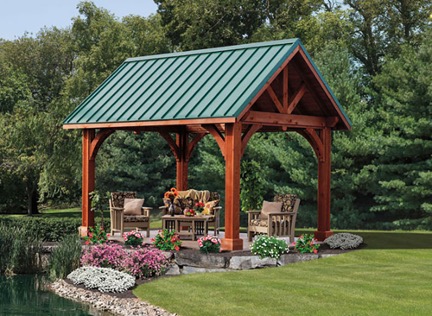
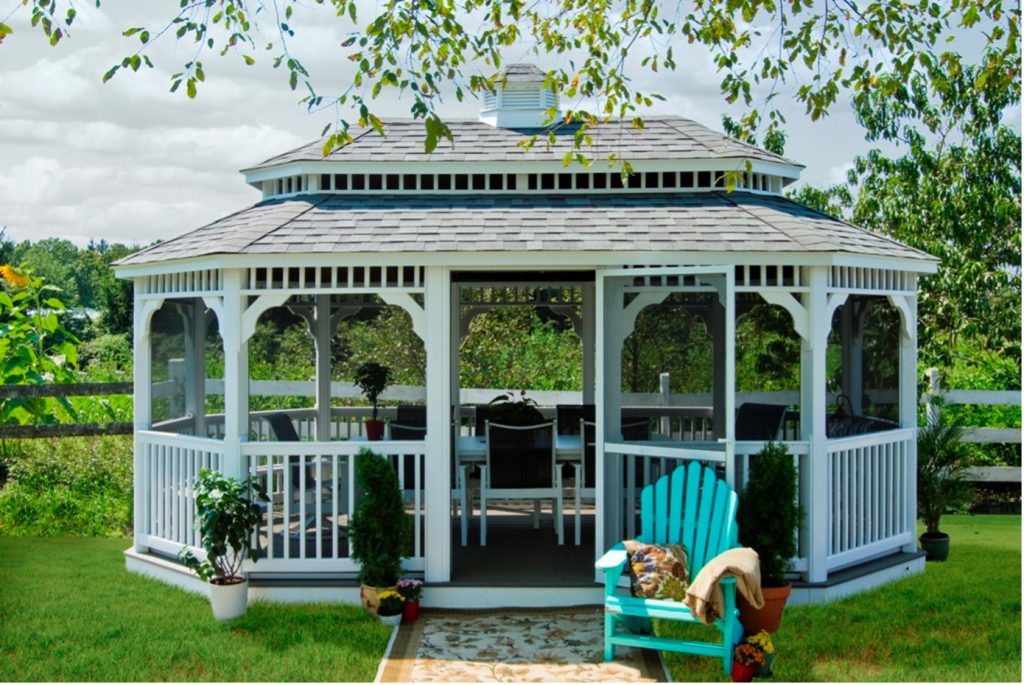
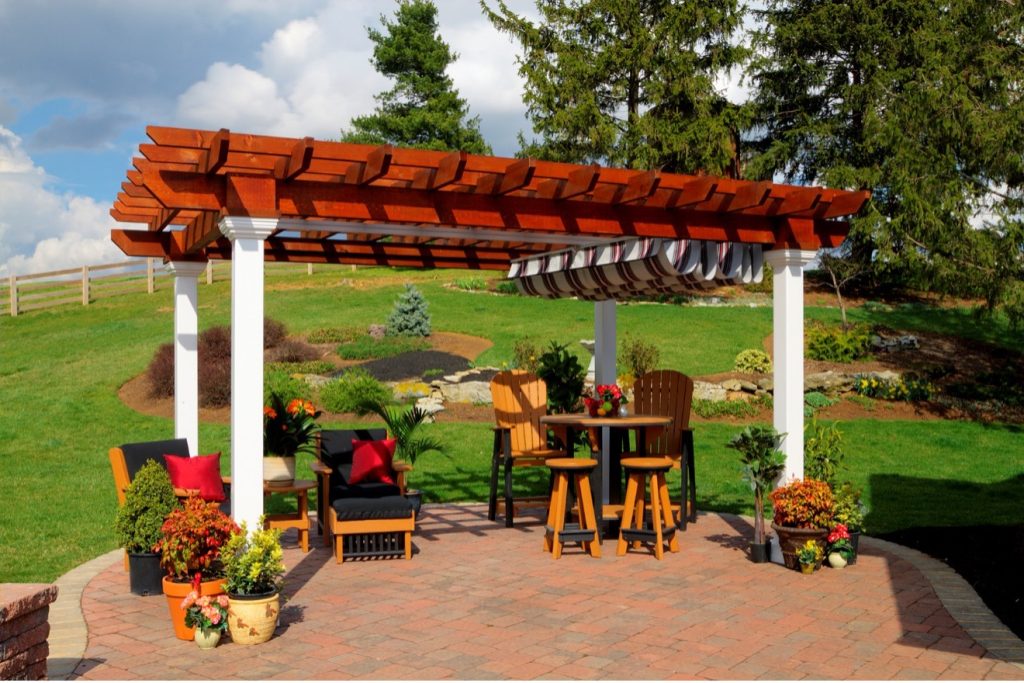
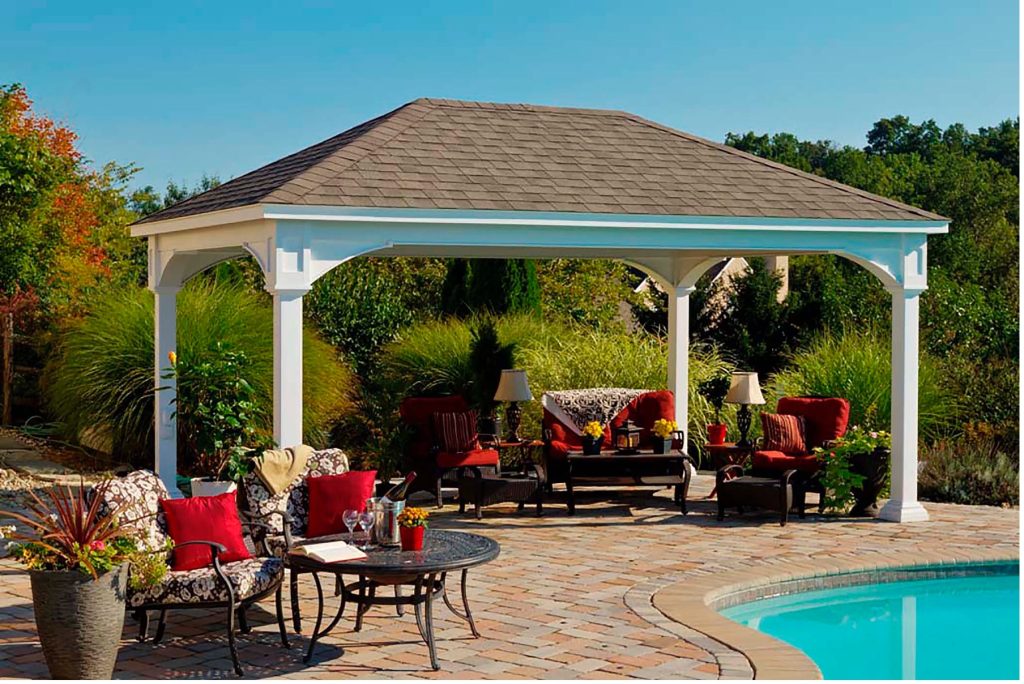
The trending popularity of adding an outdoor living structure to the patio, garden or backyard is born from the sincere benefits of adding a pavilion, pergola or gazebo can provide to any lifestyle.
When it comes to making a choice between a pavilion, pergola or gazebo, the amazing variety of options makes it a truly mind-boggling decision. You can choose to party hearty with an elaborate pavilion that offers flexibility in the size of the gathering and a solid ‘ceiling’ of protection from adverse weather; opt for a garden destination retreat that offers privacy from the prying eyes of neighbors with a graceful gazebo that reflects the peace and quiet of a bygone era; or channel your inner gardener and lounge in a scented wisteria or honeysuckle vined pergola.
Boundless options come with the pergola and pavilion, as size and height can be adjusted to match a roof eave to truly extend indoor/outdoor living, or simply stand alone in a solitary setting to provide an architectural focal point. The gazebo necessarily provides more privacy and the ultimate in shelter from wind, rain showers and glaring sun.
If you prefer a quieter lifestyle and would enjoy a spot to gaze at your garden, converse away from others or seek a spot to retreat to reflect on the day, then the gazebo might be your best choice. The space can easily be screened to remedy any pesky buzzing insects from upsetting your tranquil environment, and it can also be large enough to enclose the perfect dining location.
Size does matter when it comes to seating and set up of a dining space. Ideally any side of the dining table selected would be 36 inches from the side of the structure to allow for people to get up and down from the table and for folks to pass behind them to serve or pass by. Seating wise the rectangular table offers the most seating space, so if choosing a gazebo as a dining location consider how a rectangular shape will fit into the design. Figure that family seating might be comfortable at 20-24 inches apart but for formal occasions a large distance might be better. Oval tables, round tables and the most limited, square tables, are also dining space options.
Obviously with a pergola or pavilion the lack of exterior walls is blessing when it comes to sizing the seating arrangements. But it is prudent to allow enough floor space of the same floor covering that is laid under the structure to surround the table for 36 inches or more all around, to mitigate the likelihood of people tripping up or taking a bad step and falling when coming and going to the space.
While gazebos can be purchased with or without floors, (the latter requiring a 4” concrete pad be poured as a base rather than the usual simple compaction of a gravel surface that is level), the pergola or pavilion will require some sort of stone, gravel, tile, concrete other surface be laid in the interior space, rather than left as grass which will quickly become dusty at best and muddy at worst during high traffic use.
All 3 structures can be purchased as kits and assembled by a handy do-it-yourselfer or bought as kits and delivered and assembled by the manufacturer’s crew. Be careful of companies that employ 3rd parties for delivery and assembly as they may not be experienced and familiar enough with the product to do a good job of construction on site.
Smaller gazebos offer the opportunity to be shipped assembled and trucked over the road. Utilizing a company that offers its own nationwide delivery and assembly option is a great idea.
You may love to host large family and friend gatherings. Your lifestyle may include a love of cooking and an outdoor kitchen and dining space may be your dream outside living space. The addition of BBQ’s, full outdoor kitchens, hot tubs, swing sets, are all possibilities when you construct a pavilion structure. You can add shade/sun curtains and blinds for the sides, or even metal shutters to secure the space from inclement weather when not in use.
The flexibility of a pavilion means there is shelter from rain showers and the heat of the sun from above, and the area can be set up in advance with buffet style or formal dining that can accommodate larger numbers and variant numbers of people. This makes a pavilion the perfect choice for hosting family events such as weddings, graduations, birthdays and wedding anniversaries as well as holiday get togethers with neighbors and friends.
The Money Factor
The main factor in the decision of which of the 3 options to choose is the matter of cost. As you might expect, in general terms the most budget friendly is the simplest to build, the pergola. Followed by the gazebo with the pavilion option generally being the most expensive. However, there are so many options to choose from in size, style and materials (traditional wood or maintenance free vinyl, shingle or metal roofs) plus add-ons such as cupolas and weathervanes, it is easy to manipulate the price point between the three options to favor the individual’s budget.
A major consideration in the decision-making process should be the planned use of the structure. Remember to consider both your present and possible future lifestyle needs and preferences when making your selection.
Here is a quick look at the pros and cons of each structure:
Gazebo Pros
Reasonably budget friendly (when ordered with floor minimal site preparation required)
Portable (especially useful for varietal placement within a competition jumping area)
Aesthetic appeal of traditional design
Full shade and shelter from rain
Can be screened to provide bug-free environment
Offers privacy
Less distraction to horses from the movements from occupants
Optimal 360-degree view
Enclosed space secures safe space for children and pets
Gazebo Cons
Size restriction of the enclosed space limits size of gatherings
Permanent concrete pad required if ordered without floor
Hard to keep clean of dust and dirt
Site must be level and well drained
Pergola Pros
Cost effective
Myriad of options regarding size and shape
Can be built adjacent to existing structures for ease of access
Offers benefit of ‘green’ living with climbing vines and scented plants
Can be easily combined with pavilion to extend covered space
Easy to keep clean
Minimal site preparation needed
Pergola Cons
Offers some shade but no protection from rain
Limited options on roof style
EZ Shade or some other blind or shade curtain may be needed to defray sun glare on sides
No protection from pesky bugs – may encourage nesting of wasps/hornets or other unwanted visitors
No protection from wind
Must be permanently sited
Lack of privacy
Pavilion Pros
Large choice of styles, sizes and roof shapes available
Superior protection from rain and sun, but not from wind.
Easy to add cooking fixtures/TVs/hot tubs under cover and easy to clean
Sides can be sealed with overhead style doors for all season weather protection and security of contents
Supports multiple size gatherings and pergolas can easily be added to each side for more space
Effective extension of living space when placed adjacent to existing building’s entry points
Pavilion Cons
Requires permanent siting
May require shades or blinds to protect interior from sun glare or driving rain
No protection from flying bugs or nesting insects
Generally considered a more expensive option than its counterparts
Requires careful choice of location in areas where high winds are common and/or additional engineered securing of rafters/roof to supporting members.
Lack of privacy
Ask A Professional
There are so many variables in the world of outdoor living structures that affect the price. It is wise to resource a professional company that offers a complete selection of all types of structures in a myriad of materials. Don’t be tempted to just buy something you see down the road. It pays dividends to explore all your options and if buying multiple structures a discount is often available.
Here are some of the important factors that Horizon Structures offers:
High quality builds that utilize first class materials and offer a huge variety of options
Clear ‘to the penny‘ written quote (not estimate), that includes set up (if not a kit) and delivery
Clearly written, easy to understand contracts with reasonable deposit requirements
A specific timeline for delivery
Informative website that is interactive and quickly provides options
Friendly customer service that addresses your concerns and offers solutions
No 3rd party delivery services/set up. Work with a professional entity that has ‘hands-on’ product knowledge and will both deliver and assemble on site.
5 year manufacturer’s warranty
Good references and unedited/tamed reviews
Financing options
Remember it is not always the cheapest initial price you find that should dictate the decision-making process. A good quality product that is properly installed will offer better longevity, lower maintenance expenses and more enjoyment than a poorly constructed or conceived structure.
Interior design is not just for your outdoor living home extension or new kitchen. A horse barn can be constructed at the outset (or renovated at a later date) to offer aesthetic appeal as well as be designed for easy care and daily use.
Are the plans for your new horse barn the magnificent creation you envisioned? Did you choose to dress up the interior design of your horse barn with a hard look at hardware options for stall fronts, stable doors and dividers?
Design is about more than creating curved lines and inviting aisleways in light and airy barns. The choice of materials and their construction must be carefully weighed against budget constraints and safety issues and the ergonomics of the space must be front and center in the decision making process.
For example, selection of the right gauge high quality cold rolled steel provides the best option for both safety (due to its innate strength) and clean finish when paint or powder applications are added. The downside is its expense.
The longevity of the beautiful initial appearance should be considered when choosing the materials to be incorporated into the building. Metals should be powder coated/galvanized or otherwise protected from rust. There are choices of pre-galvanized or hot-dip galvanizing methods, powder coating and paint. Know the difference and know what you are buying.
While standard features such as grilled sliding stall doors and kick-boarded walls may come without upgrade fees, the addition of some personal design touches can make your new horse barn a true reflection of your taste and give it a unique feel.
It is a fallacy that modular and prefabricated horse barn manufacturers don’t offer all the high-end style stall fronts, metal work and full customization options that on site construction companies may offer.
Leading modular construction companies encompass a litany of customization options in hardware design and the purchaser can still enjoy the sincere advantage of a ‘to the penny’ quoted bottom line that includes both delivery and set up on a pre-ordained timeline.
In reality the majority of clientele of leading modular horse barn producers opt in for customization of some sort. Metalwork and hardware are key components when it comes to creation of a visually appealing and highly functional horse barn.
While functional and simple designs offer a ‘plain Jane’ option that is affordable, the addition of customization features can truly make the barn unique. Colors, curves and design styles that mix wood and metal can all be blended to create a special feel that individualizes the horse barn.
More Than Just A Pretty Face
Savvy shopping for horse stalls and their design requires diligent research. Stall walls and all barn doors both interior and exterior, take a lot of punishment over the years. For safety’s sake be careful that the materials and construction methods chosen for any aspect of barn building are up to the task, including the weakest points such as latches, hinges and rails.
It is also prudent to look for seamless welds including on all connection points on crosshatch and grilled framework. It is essential that wherever metal is welded together it is compatible. For example, spot welding an aluminum mesh grill or crosshatch sheet to an iron frame on a door will easily break at the weld points if a horse lands a kick on its surface. Such accidents can cause severe injury to the horse.
Stall doors in particular are prone to damage and need to do more than just present a pretty face or façade to the horse barn. Certain styles of mesh and metal materials are not suited to the abuse a 1500 pound animal can bestow upon them.
Mesh, grill or crosshatch gates designed for goats and sheep might suffice as a visual barrier but may not be of a low enough gauge metal or good enough construction method to stand up to an errant kick from a horse as noted above. Styles such as low cut front stall walls may invite equine occupants to lean, rear up over the top of attempt to jump out of the stall.
The bars on all grillwork should be safely distanced to eliminate the possibility of hooves being caught between the space and horses’ not being able to bite or nip each other through the bars. Injuries may otherwise occur such as one horse biting another horse’s tongue or a foal’s tiny hooves becoming hung between bars.
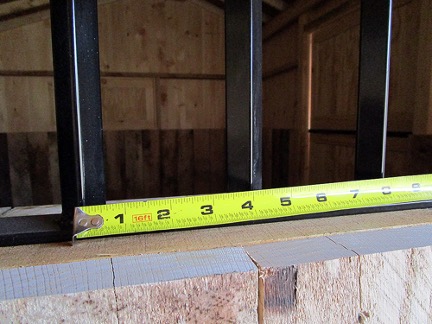
Industry standard is for bars to placed 3” on-center. This allows for a 2 ¼” gap between bars for ¾-inch grills, and 2” gap between bars for 1” grills.
Here are some custom features to consider when designing your new horse barn:
Freestanding Stalls
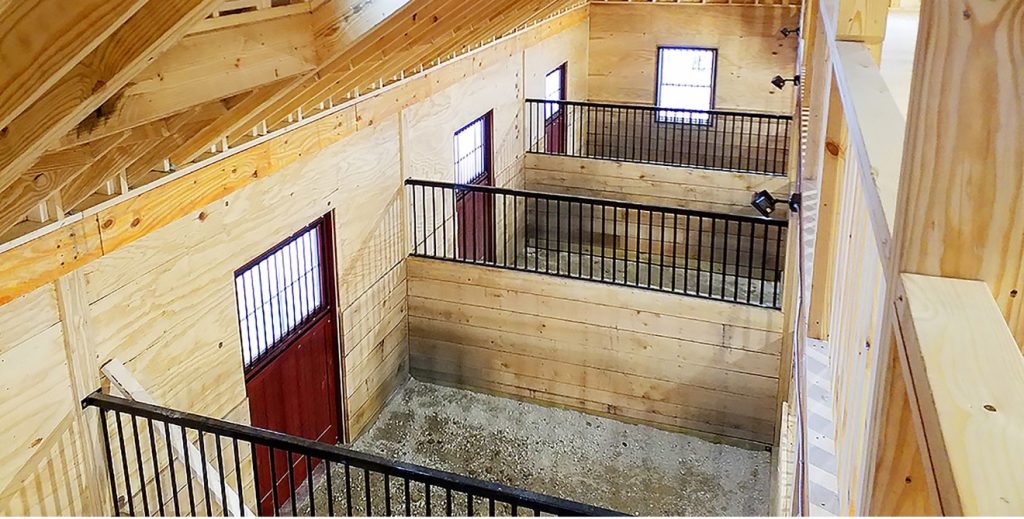
The self-supporting nature of a freestanding stall makes the design perfect for large width span buildings with multiple aisles or corner stalls at the ends of stall lines.
Many stall designs require the support of the posts and pillars that provide the integral strength to the framework of the building as these components offer substantial capacity to withstand undue force and bear the weight of the doors and walls.
Semi-freestanding stall designs are also available that rely on minimal structural support from framing members.
Front Wall Stall Design Options
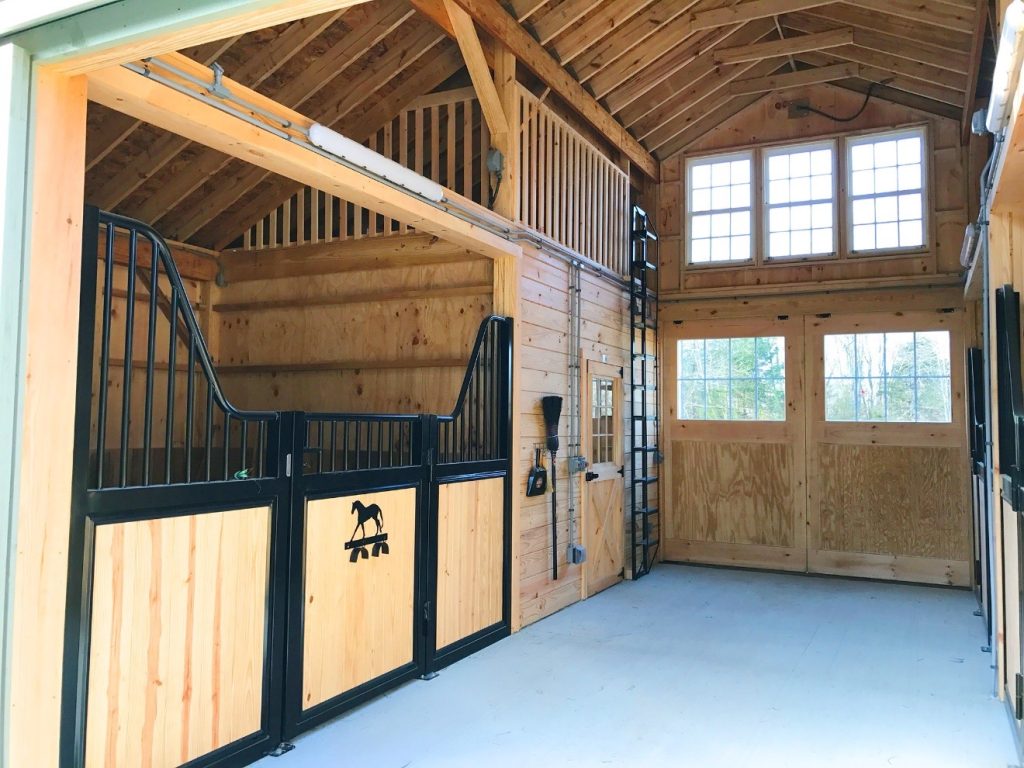
Custom arched tops to the front stall wall can lend a European polish to the style of a freestanding stall and can include brass finials, V-Yoke doors, fold up blanket bars all made from heavy tubing.
Low cut stall fronts add even more opportunity for horses to interact with activities in the barn and facilitate great views of the stabled horses for the visitor or caregivers. Be aware that as mentioned above, these front stall walls can allow stabled equine inhabitants too much access to the aisleway in times of excitement or unruly behavior.
Front Stall Door Designs
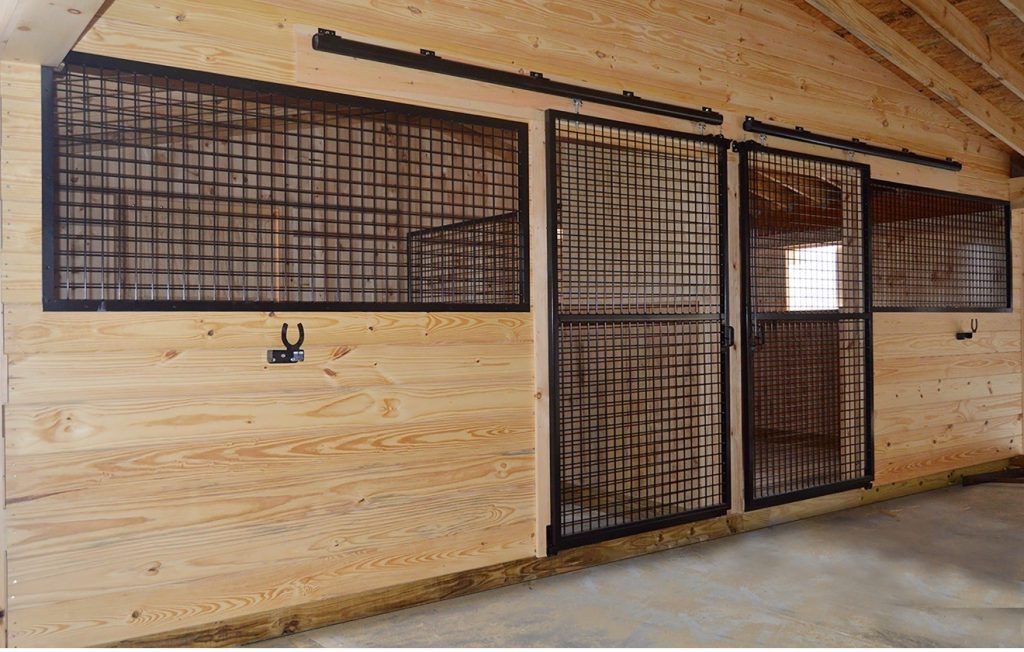
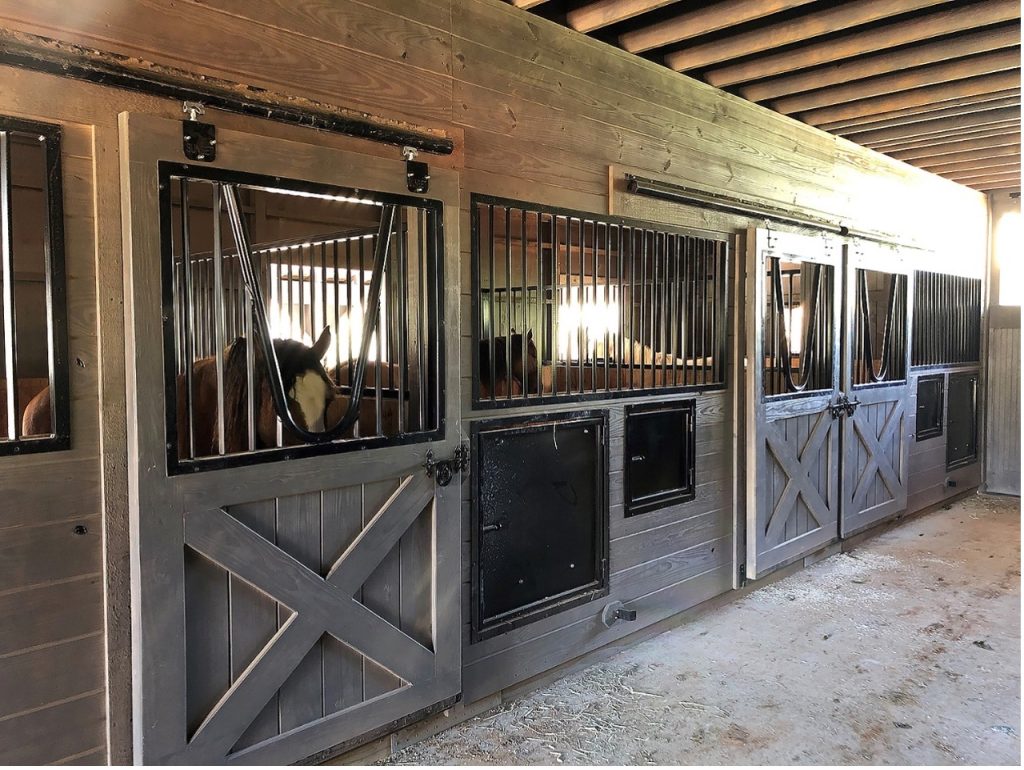
Sliding stall doors are a popular choice for center aisle barns for good reason. Many manufacturers offer a variety of styles that can feature a wooden “X’ design, a metal “X” design and grilled front stall doors can have a v-yoke option.
V-yoke stall doors with a drop yoke invite the horse to interact more fully with his surroundings. The barn posts may be used to support the modular stall construction. The front stall wall is technically not freestanding in this case as it does require the barn posts to hold it together.
Consider adding feed corner cut-outs in the stall front grille for easy feeding that saves the time required to open and close front stall doors.
All doors should have stops and guides both top and bottom to ensure horses are not able to kick out the door and that sliding doors cannot be run off their tracks.
Substituting hinged doors for sliding doors is also an option, and may be required if you opt for a low cut front stall wall design. Ensure that the quality of the hardware and support structure used for the hinged doors have the capacity to support the weight of the door, especially if the doors are made of wood.
Dividing Walls
The more mesh/crosshatch or grilled surfaces between horses the better the ventilation and the greater the opportunity for contact both physical and visual for the stabled horses on each side of the wall.
It is wise to consider future use of the barn may include visiting horses, sale horses or horses that simply don’t get along and intimidate each other.
To avoid mealtime stress always place feed rations on the same side of each stall to ensure maximum distance between horses when they are eating.
Quick-take down systems for dividing walls that facilitate doubling up a stall space for use for rehabilitation of a horse, for foaling out mares and for use with mares with foals at foot are also an option.
Other types of partitions such as swinging dividing walls are also sometimes available, but consider carefully how these will operate on a daily basis and how safe they will be for use around horses. If the barn is being utilized as multi-purpose for horses and livestock such as cows, goats or sheep the swinging door option can be very useful for corralling the herd when a caregiver is working alone.
Dividing walls may require additional bracing to prevent warping or damage due to leaning or rubbing on their surfaces by the equine occupant.
Exterior Door Options
Plain wood works well for both stall Dutch doors and barn entry doors but wood by its very nature can be heavy and it requires strong hardware to both hang the doors and support the swing or slide of the doors when opened. There are other options that are more user friendly.
Pressure-treated plywood coated with a panel of galvanized metal that is painted to a color preference is a budget friendly way to introduce color to the barn design.
Doors can also be made of more than one panel and have a tongue and groove beaded aluminum panel that can be made of solid wood rather than a laminate like plywood. A variety of wood choices including exotic woods from a sustainable resource are available.
The use of aluminum alloy can provide a strength equal to steel that requires no maintenance and is a lightweight option that makes the doors easy to operate.
Aluminum doors can be made in any color and offer rust and rot protection. Special hardware is required and should be included with the pre-hung doors.
Many features within the barn can be changed from the ‘usual’ specifications. Always ask if there is a cost saving involved. Changes to barn design do not necessarily cost more money. In fact, some can actually save you money. For example, removing Dutch doors from the exterior stall walls or building an entry door of wood versus having a mullioned glass window incorporated.
If your dream barn build is coming in over budget, don’t be shy to ask where you can save costs.
Door Shape Counts
Door shapes run the gamut from fancy arched entry doors to one-piece sliding entry doors and customizable window designs and panel sizing.
The addition of windows with or without mullions to entry doors provides a great deal of natural light.
Spin The Color Wheel
Most manufacturers will offer a vast array of color options but custom paint and stain choices are also often available.
Don’t be shy to add color to the interior as well as the exterior of a horse barn. Color choices made with the aid of a color wheel help mitigate the chances of making a blunder in the color choice that might be regretted later.
Look for durable finishes for all surfaces that are UV and weather resistant.
Finishing Touches ~ Details Count
Interior designers know that small details that show the property owner’s personality can add much to the enjoyment and appeal of a space.
The addition of hand-polished or lacquered brass finials to the top of posts can provide a beautiful classic touch to the horse stall.
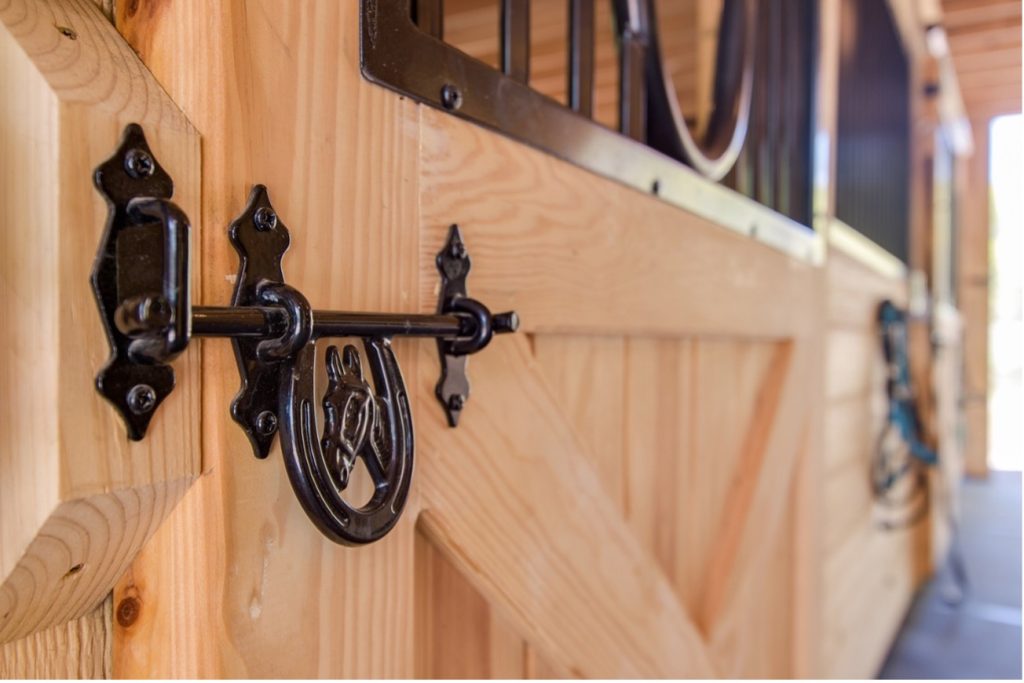
Door latches with extra style such as horseshoe shaped handles can add a neat detail to a line of stall doors. Special twist latches and ‘Houdini’ defeating latches are also something to consider especially if the horse inhabitant of the stall will have access to the stall door latch.
Don’t forget to add a metal chew guard to any wood surface a horse may be able to reach. Gnawed wood is not only unsightly, wood can be ingested by an equine and cause colic or other health issues. Chewable wood corners also invite bad habits such as windsucking and cribbing when a stabled horse becomes stressed or bored. Most modular barn building companies include chew guard with their standard barn designs or charge a small upgrade fee to cover its installation. It is well worth having!
Bridle/halter hooks, tie hooks, fold down blanket bars, saddle racks and hay racks can all be added to improve functionality.
Take Home Message
Don’t be shy to be adventurous when it comes to color palettes and changing up stall styles when it comes to the interior design of a horse barn. Always make your selection based on safety with ergonomic design in mind as a priority.
Design the space with a keen eye to your own preferences but also to the possibility of resale of the property too.
Remember, a barn can quickly become obsolete to service the horse housing needs if some forethought doesn’t go into the design. For example, kids will outgrow ponies and suddenly a 10’ x 10’ stall with no grills and half walls may not be sufficient to safely house a full-size horse.
The stronger the color palette chosen for the barn the higher the likelihood you may tire of the color. Light and dark colors affect the light, feeling of space and atmosphere within the barn significantly. It is well worth reading up on the topic for both interior and exterior color selection.
No horse owner wants to enter a dark and dreary horse barn to visit their equine partner and work around their beloved beast. Horses are often reluctant to walk into a dark barn too. They become suspicious of what they cannot see and are reliant on their sense of smell to detect danger in the form of predators. Our four-footed friends’ instincts used to preserve their lives in the wild.
Did you know horses eyesight is poor when it comes to transitioning between bright light and poor light? Unlike our eyes their vision takes a long time to adjust to significant changes in light. It can take as long as 30 minutes to an hour for the horse to regain his full vision when moving from light to dark environments. This equine visual impediment is why event horses galloping into a shaded forest area to jump an obstacle will have trouble determining distances to the fence or its height. Mounted hunter/jumper riders in the know, collect inside indoor facilities when riding in from outside to compete rather than wait outside if possible, to facilitate their horses having time to adjust to the change in light and see the fences.
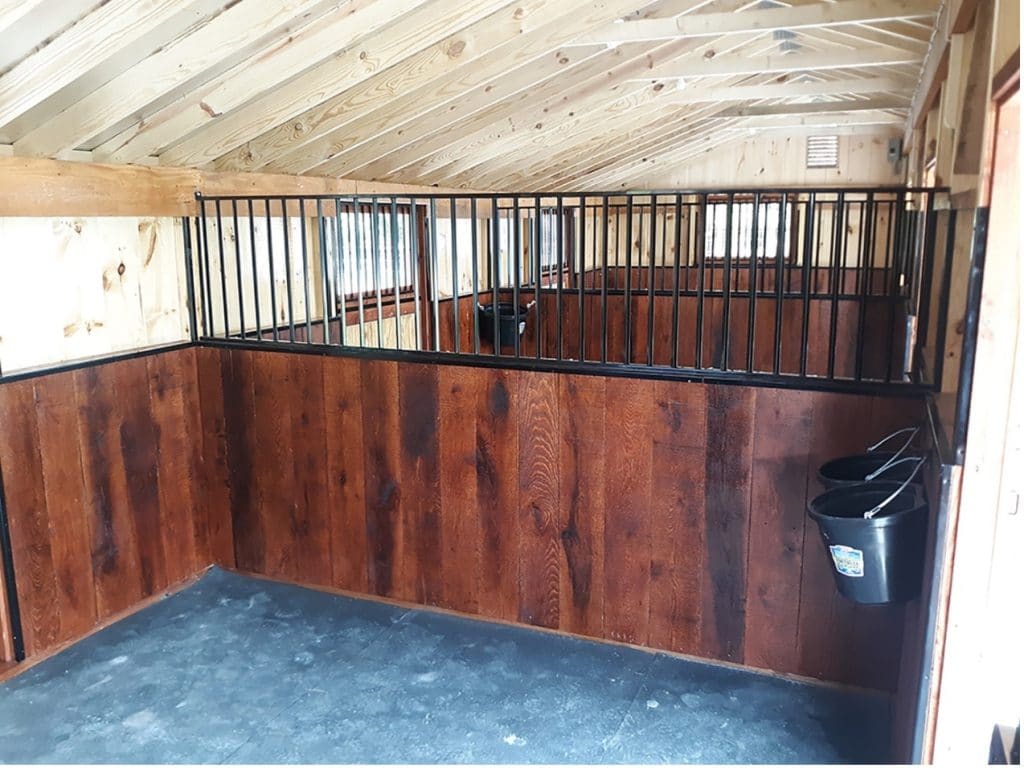
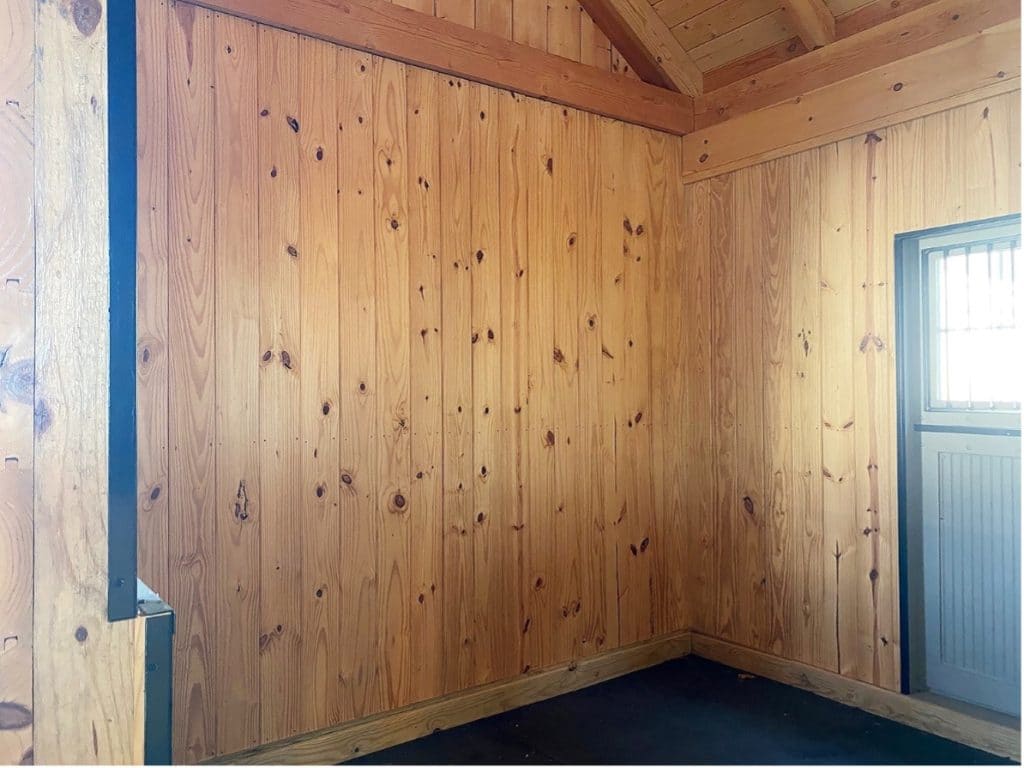
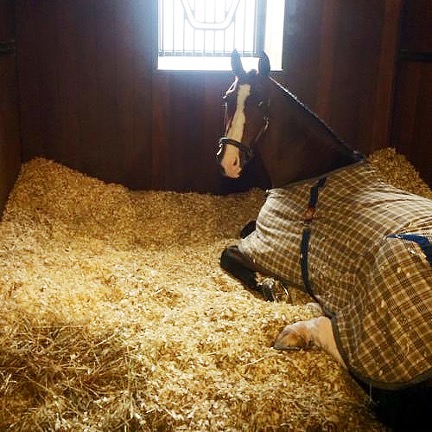
In the domesticated horse’s modern lifestyle, a light airy barn makes much sense. The addition of a window to each stall in a horse barn offers your equine partner a room with a view. The benefits of including windows in horse barn design go beyond keeping your horse mentally occupied with the opportunity to see what is going on outside the barn.
Barn windows provide natural light that can save on lighting costs and kill harmful bacteria within the stall. They also offer a valuable resource for passive airflow that can keep horses cooler in hot temperatures and dish up plenty of fresh air to improve the air quality for the horse’s respiratory health.
Fresh air everywhere, can of course be provided by specific horse barn designs such as shedrow barns, a style favored for advanced level performance horses by their astute competitive riders.
Dutch doors that open to the exterior of the horse barn can also improve the quality of life for the stabled horse for some of the same reasons a window offers. Run-in sheds can also incorporate windows in the back wall to improve ventilation and increase light within the interior.
Windows Are a Vital Component of Building Design
Windows also add an aesthetic appeal to the view of the exterior of the horse barn. They can be decorated with window boxes for added color and personal style. Certain herbs can even be planted in window boxes to deter insect activity and provide desirable scents/smells during late evening and early morning hours.
In high profile barns where a loft space is added, windows can be architecturally significant. For example, Palladian style windows (3 segmented arched windows often called a Venetian or Serlian window) placed at the second story level in the gable ends of the structure, can enhance the appearance of the building in addition to providing a valuable light and air resource.
The practice of decorating buildings with windows dates back many centuries. The relief provided from an open space in a wall is shown in drawings as far back in time as in the reliefs in Assyria, Egypt.
Today either translucent plastic or glass, the latter often in 2/3 layers for extra insulation is most common as a cover to the open window space, but in times gone by matting, mica and paper was used.
Windows have long been recognized as an important component of construction for the health of a structure’s occupants. The 1746 British glass tax was a hefty 300% excise tax placed on the value of the glass based on how it was then sold, by its weight. This meant only the wealthy could afford glass windows. Theoretically, the more glass a building displayed the wealthier its owners were deemed to be so large windows quickly established themselves as a ‘must have’ in houses commissioned for construction by the populace in the upper echelons of society. Hence the inclusion of glass conservatories and greenhouses in house construction was prestigious in architectural design during the Victorian era.
Sadly, until the tax was abolished in 1845, the use of glass in cities for low-income housing was limited. The British medical journal The Lancet, even noted the absence of glass in city housing had a deleterious effect on the populations’ health.
“ The deficiency of light in town habitations, in a great measure caused by the enormous cost of glass, is universally admitted to be one of the principal causes of the unhealthiness of cities.”
Thankfully glass tax is not a current issue so window size can be designed for horse barns without consideration for excessive taxation.
The inclusion of a window in each stall is standard when purchasing a modular or prefabricated horse barn, but special window styles or sizing may require an upgrade. On site pole and stick built construction firms may charge extra for each window so be certain to ascertain these extra costs before retaining a construction company for a horse barn build.
What Window Style Works Best in Horse Barns?
Common window styles such as single or double hung windows are not well designed for horse barns. These styles are difficult to open when located behind a grill and are better left to house design rather than horse barn design.
The ideal horse barn window will be easy to open and to clean.
For this reason, picture windows or transom style windows are not favored for use within a stall. Their benefits are that both styles offer a lot of light. Transom windows in particular can provide a lot of natural light when placed along exterior walls of the barn 10’ or more above the height of the stalls in high sided buildings.
However, like any window transoms can quickly become unsightly if not regularly cleaned. If placed high in a building the use of a ladder or long pole window-cleaning product will be required for the task. As vacuums are often used to clean stall windows before glass cleaning begins, high window options should be carefully evaluated.
Skylights above a stall can provide an exceptional quantity of light to the interior of the barn. These must be carefully installed to prevent leaks. Certain manufacturers offer ‘no clean’ glass treatments and provision to open the skylights. The closing and opening of skylights can be an onerous chore.
Within the stall a simple slider window design is a good option. It offers excellent access and is easy to clean with its large area surfaces unimpeded by metal or mullions. The disadvantage is that this style of window must be carefully managed to prevent drafts during winter months, or wind, water and snow entering the stall space during stormy weather.
The jalousie style window offers good ventilation. Airflow can be easily adjusted, and they can be left open during wet weather without the worry of water entering the stall. Additionally, the jalousie style window can also block direct sunlight from entering in the interior space.
However, jalousies offer poor security. The large glass slats are easily removed from the exterior side and are laborious to clean.
Another factor to consider in the choice of window is that of the effects of wind. Casement and awning style windows that open to the exterior of the building with a latch system are prone to damage from high winds and are generally not suitable for horse barn stalls. These styles of windows can also extrude from the exterior wall of the building and pose a hazard to passing equipment, horses and humans.
The Humble Window
The humble window offers a secure method for providing fresh air when the barn is closed for the night especially during cold weather. Grills or bars should obviously be fixed to the interior side of stall windows to protect the glass from damage/breakage occurring as a result of a horse’s antics. Ideally grills or bars should be placed 4” or more from the surface of the glass to safeguard its integrity.
Grills should be substantially constructed and if made of a type of metal prone to moisture damage it should be treated to prevent deterioration from rust.
Remember to consider how windows will be cleaned from the inside when the bars or grills are installed. While it is essential the grills are secure it is also important that they can be easily removed to facilitate cleaning of the glass and removal of the inevitable detritus of dead flies/cobwebs that will accumulate. A spring action lever that allows the entire grill to be dropped down works well. Don’t forget to screen the windows to help prevent the ingress of pesky flies and biting insects.
The interior framing in which a window is installed offers the perfect dining-in option for a bored horse with their 90-degree angle surfaces. The best option to prevent unsightly and possible harmful repercussions to the horse from chewing of the wood or plastic framework of the window is to install metal edging.
Keep Size and Style Selection in Perspective
The size of the stall window must be viewed from both the interior and exterior perspective. Proportionate size windows are essential to the aesthetic of the horse barn.
The windows should generally not be so large to present as a window wall due to the dangers this might present to a 1500-pound horse stabled inside the stall domain. Specially engineered window walled stalls do exist in high-end designer barns and are occasionally constructed in elite yards. The practicality of large glass windows in horse barn construction is generally beyond the budget of most horse owners even if it was desired.
Whatever size window is chosen, the window should be large enough for horse to enjoy the view. Tiny windows will not only look silly they will also serve little purpose.
Window placement at the eye height of the intended equine inhabitant when standing is common practice. Specially designed ‘diddy’ barns for minis, mules, donkeys, goats or other smaller livestock can similarly be constructed with windows at anticipated eye level for the animals housed within the confines of the structure.
Don’t forget at whatever height the windows are installed cleaning them will be a regular ritual. It is also useful though not essential, for the human caregiver to also be able to see out of the window when working in the stall to assess activity outside the barn.
Keeping your horse(s) in your own backyard offers many benefits over boarding elsewhere but it can have drawbacks when it comes time to take a vacation. An opportunity to take a break from your beloved horses and horse farm for the holidays probably doesn’t pop up very often. When it does the decision to step away from home is often fraught with anxiety.
When horse owners contemplate relinquishing control over their precious equines’ care and custody to others, for even a limited period of time, it is inevitable that a certain amount of apprehension will exist.
Commercial horse farm operations are usually staffed with trained equine care givers ready to step in and take over the well-being of horses kept on the property when the barn owner heads out of town. The backyard horsekeeper does not usually have a team of equestrian professionals well-versed in the equine inhabitants and their needs at hand to take over the reins in their absence. Even on a temporary basis.
Here are some tips on how to best set up your horses and their temporary caregiver(s) for success when you need to leave the farm for whatever reason, family emergencies, planned vacations or days away at clinics/competition. While obviously having a family member or trusted friend ‘farm sit’ and stay at your home for the duration of your absence, sometimes that is not possible. This advice is based on my 25+ years of experience owning and operating a small horse breeding farm and dressage yard.
Make A List And Check It Twice
Most things in life go a lot smoother if you have the opportunity to instigate procedures with forward planning. Think of your list as a “Standard Operating Protocol”, an SOP. Simply put this is a set of written instructions that document a repetitive activity or routine with guidelines as to how that task is to be completed.
These guidelines should encompass the regular procedure that will be conducted in a hopefully normal situation and also what to do should the ’situation’ not appear or be ‘normal’. Naturally, with neophyte horse caregivers recognizing what is ‘not normal’ needs to be addressed.
With animal care there is usually a mandated timeline for the activity to be put into action within a 24-hour timeframe. Activities such as grain feeding hours; check in times for visits to the farm to ensure water level status in outside tanks; ensuring appropriate hay supplies are available.
The list will obviously detail emergency contact information for all relevant resources such as veterinarians, fire/EMS and police. Plus an evacuation plan if the property is located in an area of high risk for hurricanes, fires or floods. Also include a provision/contact information for snow removal services if unpredictable winter weather is likely to occur.
Don’t forget to also include on the list your own contact information for emergency or daily check in contact and those of your next of kin in case anything dastardly happens to you while you are absent.
There is truly no better piece of mind than having a caregiver take a quick video of your horses when visits are made and forward it to you via smartphone. These videos are automatically date stamped and give you a quick personal check in and assure you that your caregiver is in attendance on schedule.
This is especially helpful if during travel your access to Wifi may be intermittent. Security cameras may be active on the property and back up automatically at a later time to the ‘cloud’ after temporary Wifi failures. But there is nothing quite as good as knowing first hand that your nominated caregiver has visited in person and provided human contact with the horse(s), even if that video is not viewable until you are in a location where Wifi service is available.
If you expect to be out of WiFi service areas for extended periods of time, consider asking a family member or trusted friend to receive the data transmitted from your farm security system and add as an additional party on the network.
As you become more experienced leaving your horses in the care of others the specifics of your list will change. Adaptations may need to be made for a horse that needs special attention due to age. Whether rambunctious youngsters or senior equines, gestating mares or mares with foals at foot, or injured/chronically ill horses at the farm, many horses will require special attention.
Whatever the routines you expect your caregiver to follow during their visits, ensure your horses are already established in such routines before you leave. This will lessen any stress they may experience due to the absence of you, their primary and known caregiver. Horses take comfort and security from a regular schedule of events. For example, don’t decide on the day you are leaving that now is a good time to switch a horse to a different field or stop graining or bringing the horse in at night.
Don’t be afraid to include a list of Do’s and Don’ts. This list can be an FAQ guide to your wishes and indicate personal preferences that may not readily occur in the mind of even the most trusted friend or relative that knows you well and steps in to help.
Some examples on the Do’s and Don’ts list might be:
Don’t enter paddocks with turned out horses unless medically necessary
Don’t move horses from one paddock to another or mix horses from their existing herds
Don’t offer more feed rations than indicated
Don’t bring guests to the farm in your absence (especially unsupervised children and dogs off leash)
Do check the electric fence(s) is working (provide an electric fence tester and show the caregiver how to use it)
Do check all gates are locked and all fencing intact and all horses present and correct
Do check all barn/house doors/windows are closed and locked as appropriate
How to Source Caregivers
Reliability and attention to detail are key traits the caregiver should exhibit, and some knowledge of horses is of course helpful. That being said an over zealous horse knowledgeable caregiver that oversteps the instructions with all good intentions, can be at best annoying and at worst end up inadvertently causing problems at the farm.
Make it clear that you don’t want your caregiver to exercise their judgment without checking in with you first if that is an option. The list of possibilities of how a caregiver can overstep is endless: perhaps it is raining and the horses are consequently wet so the caregiver decides to bring them all into the barn, unsettling horses that are used to living outside 24/7; the weather turns colder and the help decided its best to feed the horses a larger ration of grain; the caregiver determines that it would be a good idea to ride a particular horse to keep it exercised.
Make it clear in your SOP that instructions need to be precisely followed, without adaptations based on the help’s personal preferences. Concerns can be usually be addressed by phone.
It is a good idea to have a back up caregiver in place just in case the first choice lets you down at the last minute or for whatever reason (vehicle breakdown/bad weather/illness etc.) and can’t attend.
Personally I have two different people check in on the farm/horses during my absence, at separate times of day. The primary caregiver is responsible for the care of the horses and the second person simply checks the farm is secure and that all looks well. It is a good idea to have both parties meet in advance of your departure, so each knows clearly what their role is during your absence and everyone is on the same page. This avoids confusion and also doubles up the certainty that the horses’ care will be well attended to while you are away.
Options for holiday horse care can be professional sub-contracted pet-sitting services, a family member or friend, a neighbor. Whoever you choose, don’t be shy to check out their references and do a background check if they are not known to you personally.
If you opt for utilizing a professional service, ensure liability insurance is in place to cover their employees while conducting their tasks on your property. The company should provide you with a Certificate of Insurance that names you as an insured, defines policy limits and indicates the coverage is current and in force.
What To Leave Behind
Here is a general list of things to leave behind when you depart from your backyard horse farm. Obviously each situation is different and the list will need some personalization.
Supplies for fence repairs including tools
A dry, secure space to house a horse requiring medical treatment (if not leaving access to the barn, consider leaving a key to the building with a trusted person for emergency use. Tack rooms and offices within the barn can always be kept locked with a separate key or system).
Halters and ropes
A basic medical kit for horse and human
Spare blankets
A spare water hose
Add trail cams or security cameras if none on site.
Access to horse trailer/transport if appropriate
Don’t Second Guess Yourself
It is not easy to leave your horses behind when you leave home, but it is also not good to miss out on opportunities for family gatherings/events, relaxing vacations and travel. When you take time out away from horse care and farm duties it provides a chance for you to reboot, recharge and refresh yourself.
The most important thing to leave behind when you head off down the driveway is guilt.
Everything will most likely go smoothly in your absence and if anything does go awry most issues can be easily addressed. In the unlikely event a major trauma occurs know that you have done everything possible to mitigate the chances of it happening and in all likelihood it would have happened anyway.
Thoughtful preparations enable you to relax, knowing you have done all that you can do.
The interior design of a horse barn involves more than where to put the stalls, windows and doors. There are many safety facts to consider throughout the barn build and one of them is how the walls are finished.
The addition of horse stall kickboards to the interior walls offers protection to the equine inhabitant from causing injury to himself and damage to the barn structure.
While not typically a structural component themselves, kickboards can be constructed from a variety of materials. Choices include rubber matted walls, waterproof heavy-duty plastic usually laid over plywood or other wood wall, large dimensional lumber, tongue and groove timber or even breezeblock or stone.
Horses are large, unpredictable animals. If they decide to throw their weight around when confined to a stall, significant damage can occur as a result of their antics.
Horses may rear, buck, kick etc. when excited or anxious, and some learn to clamber up a wall to visit over the dividing wall to visit with a neighbor. Horses roll in their stalls and can become cast. This is when a horse inadvertently rolls over and finds itself without the leg room between the stall wall and its body to get up. As the horse is a flight animal it will consequently panic when finding itself in this vulnerable predicament, and kick out repeatedly pushing off the walls attempting to stand.
There are many options when it comes to barn siding and each offers its own benefits. Metal-sided buildings may be particularly hazardous to horses that are either pastured alongside their walls or stabled within, unless there is some form of barrier to access between the equines and the metal sheathing. An inadvertent kick by a horse can easily puncture the metal and cause serious and even life threatening injury if the horse’s hoof penetrates the tin.
Wood sided buildings can similarly be damaged or cause injury if the sheathing only a thin layer of material.
The potential vet bill and the costs for the repair of the siding of the building easily negate the impact of the additional cost required for installation of horse barn surfacing.
Kickboards Equal Wainscoting
The aesthetic improvement of adding kickwalls to stalls should not be overlooked. It could be considered the horse barn version of wainscoting. The latter was a practice adopted in Europe in the 18th Century, where the base several feet of interior walls were coated in wood (usually oak) paneling to cover the rising damp that emanated from the ground into the stone walls of the building.
The wainscoting provided additional insulation as well as hiding the ugly appearance of the dampness climbing the wall. The use of wainscoting continues today, as a decorative adjunct in design that offers protection to the wall surface from scuffing in high traffic areas such as corridors and dining rooms. Just as in wainscoting, kickboards can be applied partially or full-length to the height of the wall.
In certain climates insulation may be added between the kickwall and the exterior wall to help mitigate temperature changes in both hot and cold weather. If insulation is installed it is often a non-toxic spray form that is suitable for use in agricultural environments. Whatever method of insulation is chosen, it is best to utilize a product that is as vermin resistant as possible.
Pros and Cons of Different Kickboarded Wall Heights
Obviously the higher the height of the wall that is covered with protective kickboards the higher the cost for materials and installation. So a half wall height is a plus on the money saving front.
The cons of not going full wall height are that horses that can chew the top surface of the wall unless it is protected by a metal edging, and that metal edging itself could cause injury if hit at the wrong angle by a flying equine leg.
Additionally, a partial wall of horse stall kick panels does not offer protection from a rearing or clambering horse. In fact, a horse can use the partially kickboarded wall for leverage to climb the wall or hang a hoof up on its surface when attempting such naughty behavior.
On the other side of the ‘wall’ equation a full height kickboarded wall can block passive airflow between stalls and block light. The likelihood that a horse will argue with his equine neighbor and launch an attack directly at a partition wall with both hind feet is more likely than a horse kicking a front stall wall or back wall.
During feeding time horses may become excited and rear at a front wall, so a grilled front above a solid front wall is a good idea especially if stallions or youngstock are to be housed in the barn.
Kickboard Wall Materials and Construction
One of the cheapest and most substantial ways to kickboard a stall wall is the addition of rough cut lumber with substantial dimension, such as 2”x 8” planks.
As this type of lumber is not tongue and groove construction, large spans may require additional bracing to prevent warping of the wall caused by temperature fluctuations or by a horse rubbing his substantial rear end or shoulder against the surface. Walls that bow out between boards can present foals and small equines whose smaller hoof size can become stuck in the gap.
The wall support may be in the form of a curved steel rod placed vertically in the center of the wall or flat aluminum brackets placed on top of each timber member that join each plank together with low profile screws or nails keeping them in place.
However the wall us supported it is advisable that its support placement offer a horse friendly curved surface to help avoid injury if it is used as a rubbing post or preferably is a flat design that does not stand proud from the surface of the wall.
Stall partition walls must always be well-secured on each side to ensure that if a horse leans heavily on the wall, kicks out or launches itself against the wall, it will be strong enough to stand firm.
Breeding farm operators may wish to consider the option of quick take down partition stall walls that can be easily adapted to larger sized foaling stalls when required.
Ideally walls that are of tongue and groove construction should be made of hardwood. If a softwood such as pine is used, its board thickness should be significant to avoid cracking or splintering under impact.
Certain pine wood species such as Southern Yellow Pine, Douglas Fir or Cypress are commonly used in barn construction. As long as sufficient thickness of the material is used these offer a budget-friendly product that is readily available on the market.
Whatever type of wood is used for the kickboards it is important to consider the grade or quality of the wood as this affects its strength. The lower the grade of wood the more knots it will possess. This factor directly affects its strength and durability as well as its aesthetic appeal.
Horses may chew or gnaw on wood, and it can be difficult to clean. It is advisable to coat any wood surface with a non-toxic sealant to both protect the wood from moisture and to ensure hygiene can be maintained when it is hosed or sprayed down with a disinfectant solution.
Sealing the wall surface is best done before the horse is introduced to the stall while the walls are clean and offer good adherence for the sealant.
Breezeblock construction is another option for wall protection, though it does not yield on impact to the force of a well-landed kick. This can result in more damage to the horse. It is however, easy to clean, especially if painted or sealed with a non-toxic, non-porous product.
Rubber can also be used on stall walls, and offers the highest level of protection from injury to the equine occupant. A padded cell style construction is often used in surgical recovery stalls or rehabilitation facilities. Rubber is usually applied over a smooth wood surface.
Don’t Forget The Aisleways & Wash Stalls
High traffic areas such as aisleways are usually located between stalls on either side so the front stall walls. In horse barn designs that include a tack room/office/bathroom/feed room or washstall there will necessarily be areas that may not be constructed of the same heavy duty lumber.
Washstalls are often sheathed with a waterproof plastic based product for easy clean down. It is a good idea to install such sheathing over a solid base layer if it is thin or flimsy in nature.
For the facing walls of other rooms it is tempting to place cabinets, shelving (lots of cleaning!), message boards etc. A solid wood wall is a good option that will provide a durable surface to attach the varietal equestrian ‘accoutrements’ that are often found in a horse barn.
Wherever such items are placed, ensure that there are no sharp corners within the reach of where a horse may be led or cross-tied that may cause eye or shoulder injury. Consider horse friendly bendable rubber hooks versus metal ones for hanging coats/bridles/halters and avoid cluttering the aisle with obstacles such as wheelbarrows, tools or tack trunks that may pose a hazard to a horse passing by.
Tips For Extra Comfy, Cozy Equine Quarters
The addition of rubber matting or interlocking floor made of composite materials and backfilled with stonedust laid over the surface of the stall can save on labor and bedding costs as well as improve the comfort and health of the horse.
A textured floor surface can provide traction for the horse when standing up after laying down for a nap or roll, as well as offer a barrier to dampness and cold that emanates from a concrete or dirt floor.
Horses suffer arthritis the same as humans do, and their joints benefit from cushioning and protection from cold surfaces. A horse that stands for long periods on a hard surface such as concrete, will also be less comfortable than a horse standing on a soft rubber matted surface that offers some shock absorption. There are many stall floor-matting options on the market. It is prudent to utilize a design that does not become slippery when wet.
CLICK HERE to Request Horizon Structures’ FREE Barn Buyer’s Guide and Price List
Bedding materials such as shavings or straw may be ‘banked’ around the sides of the stall to mitigate the chances of a horse becoming cast as well as offer protection from cold drafts of air with its additional insulation.
A Dutch door and/or grilled window offers the stabled horse a room with a view. This access can decrease boredom and provides emergency access to the barn and offers fresh air/passive ventilation for its occupants. Keeping your horse physically well includes keeping him mentally stable when confined.


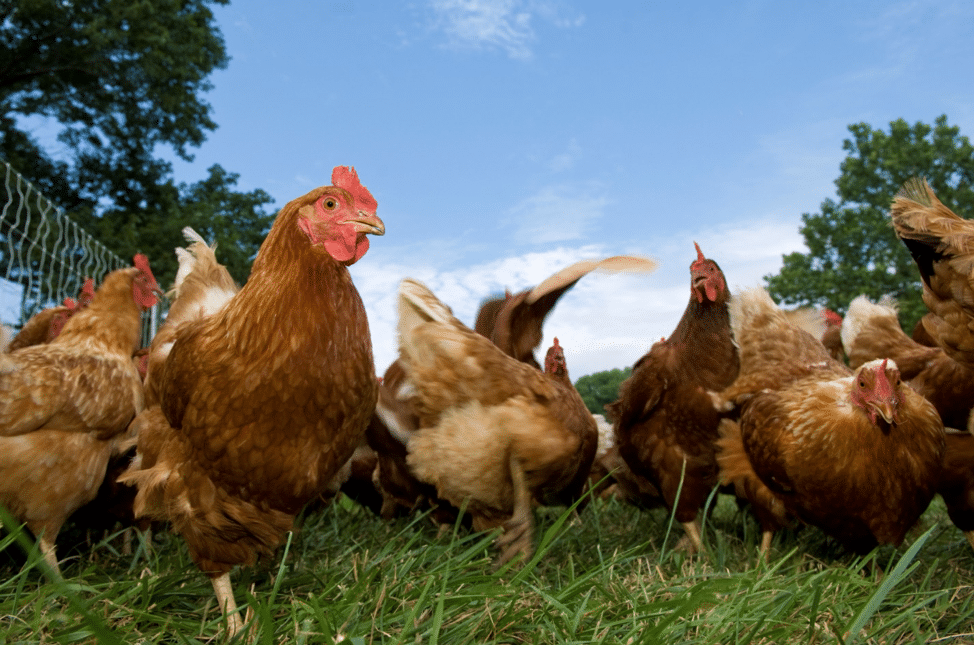
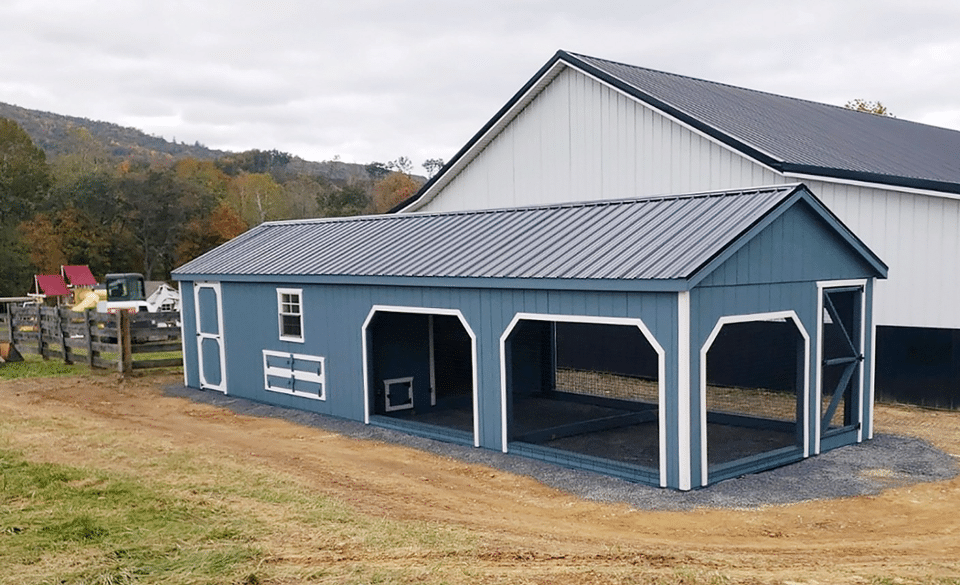
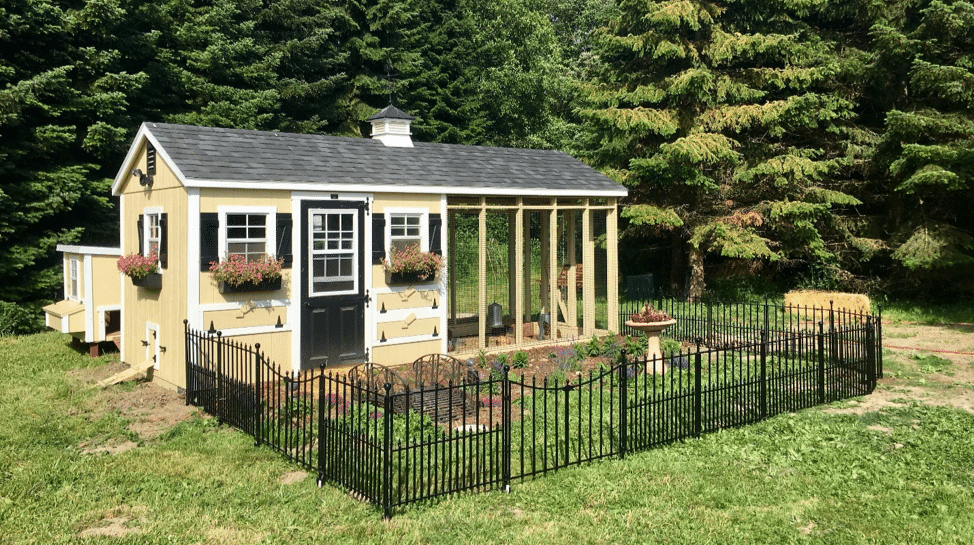
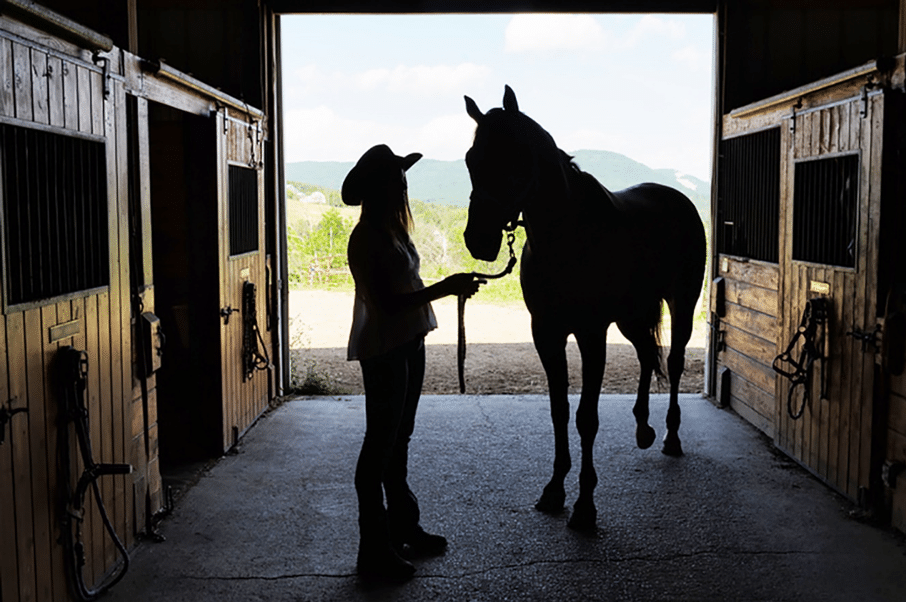
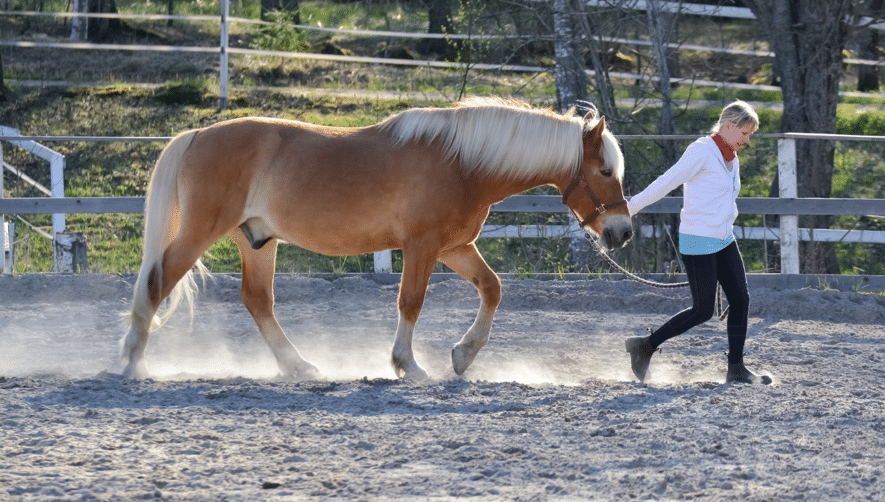
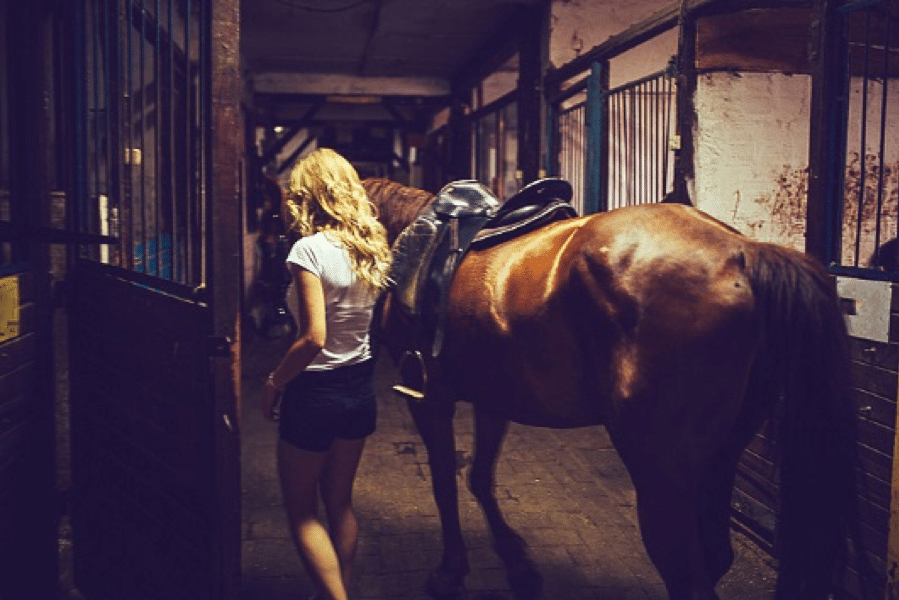
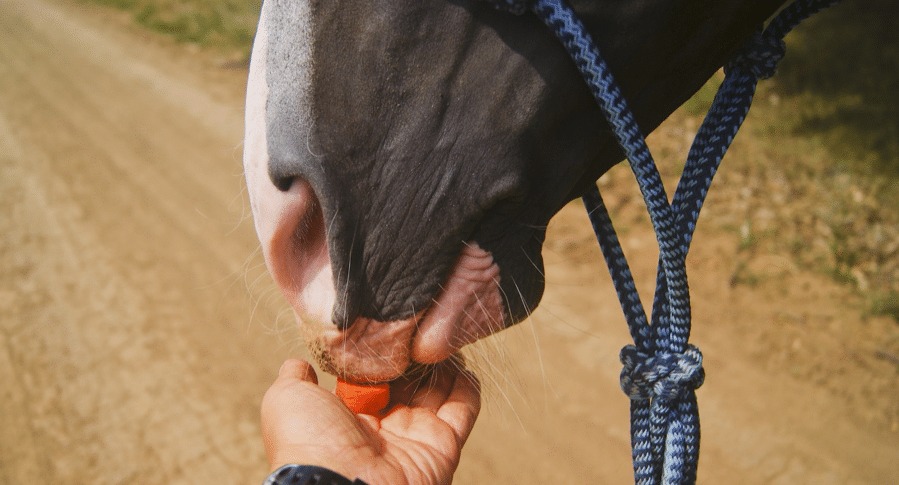
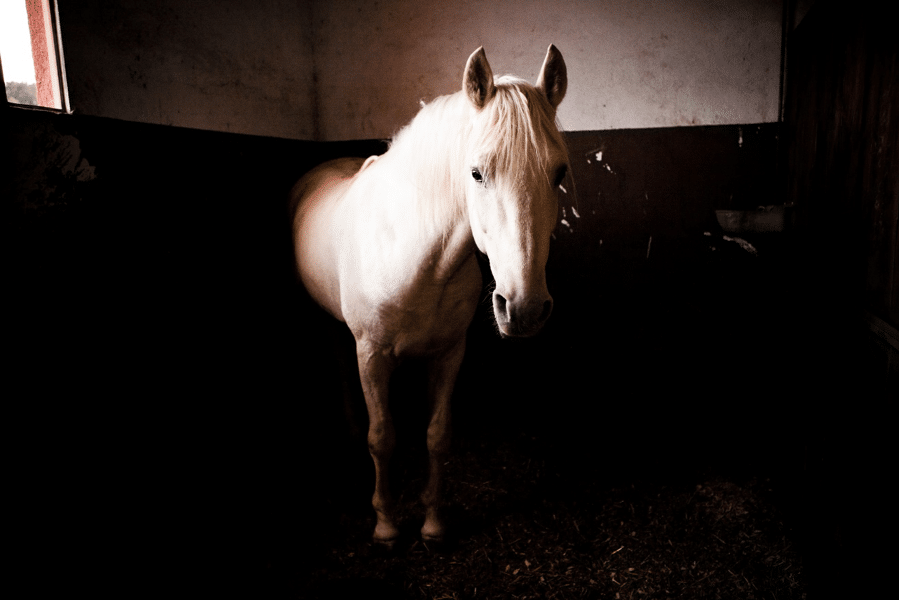
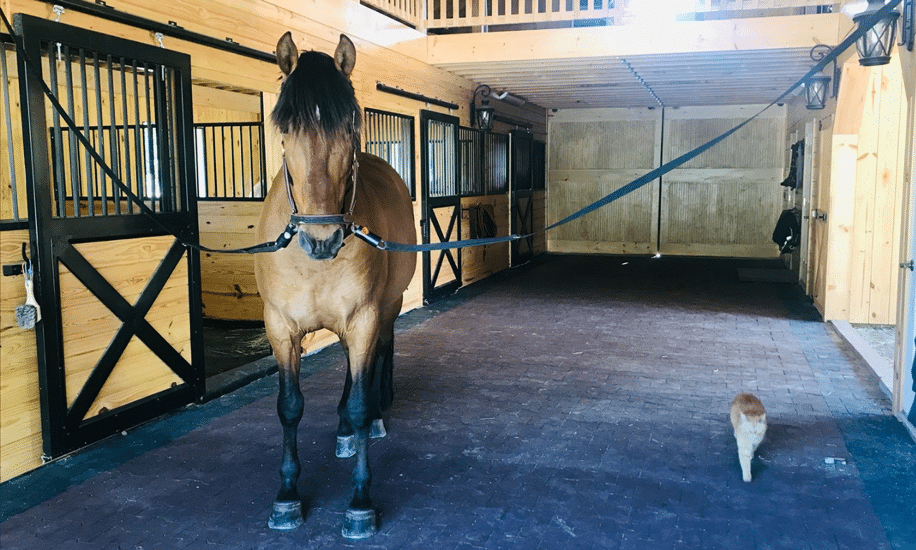
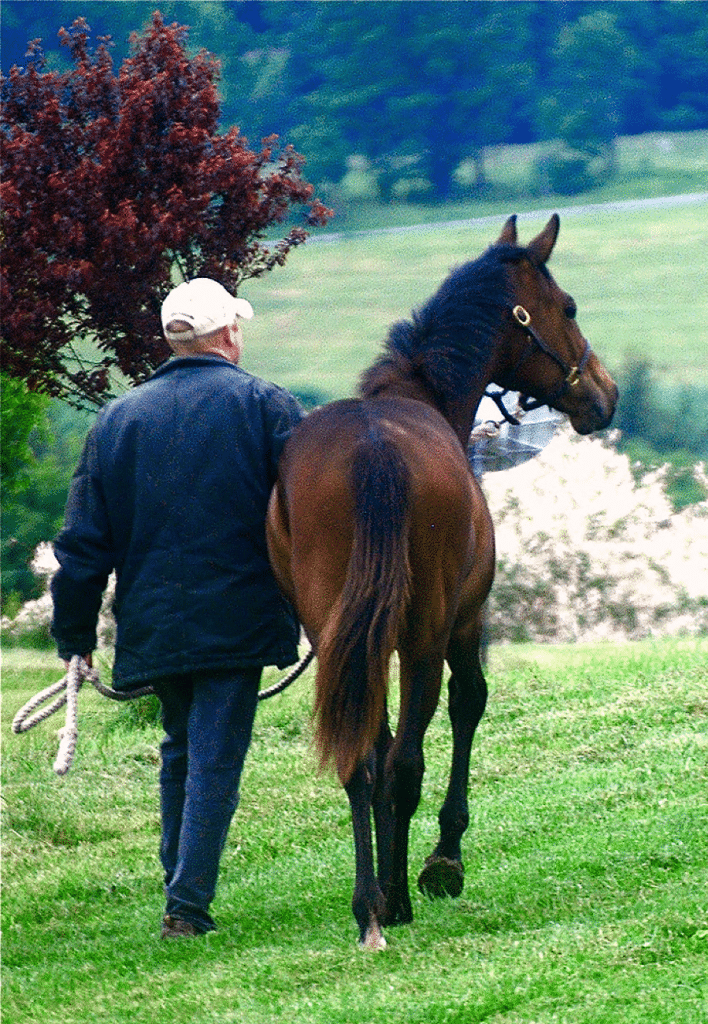
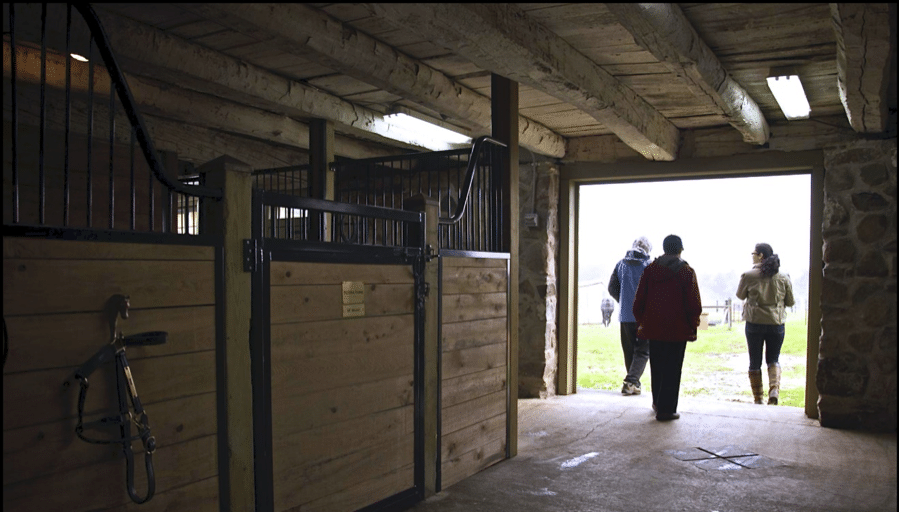
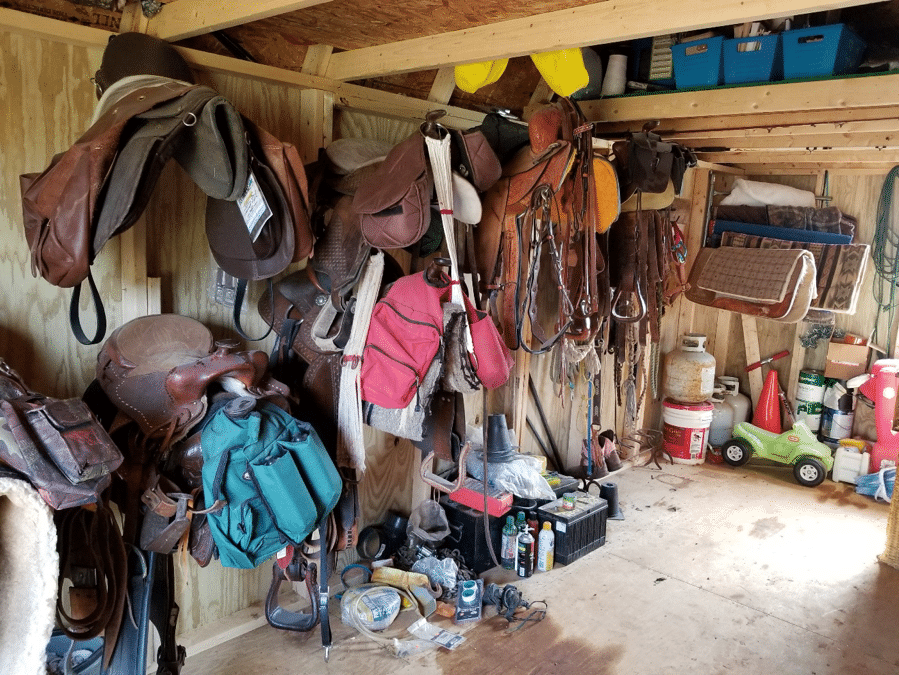
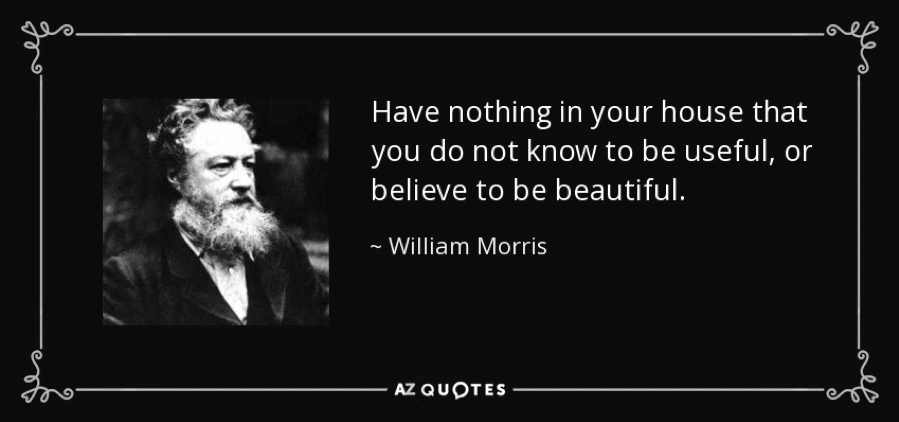
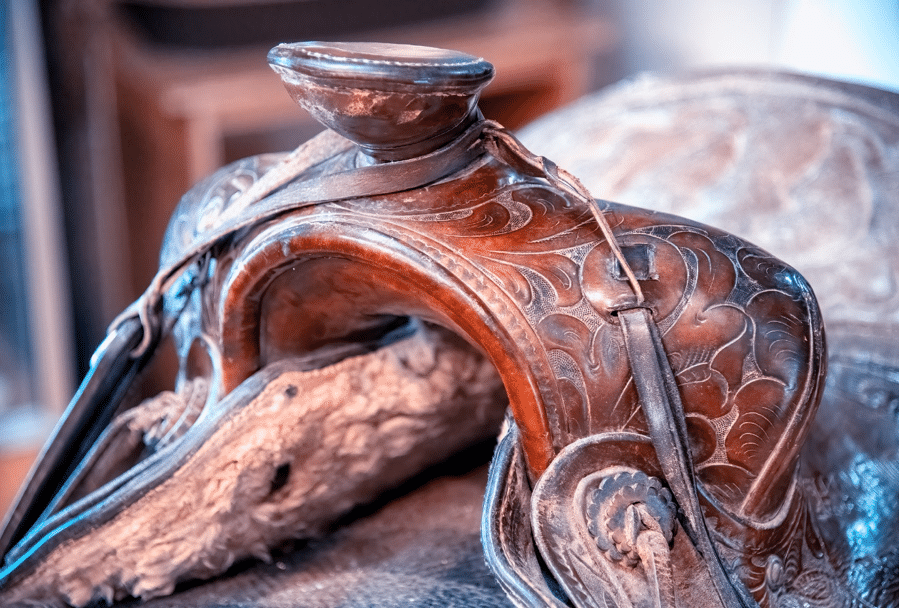
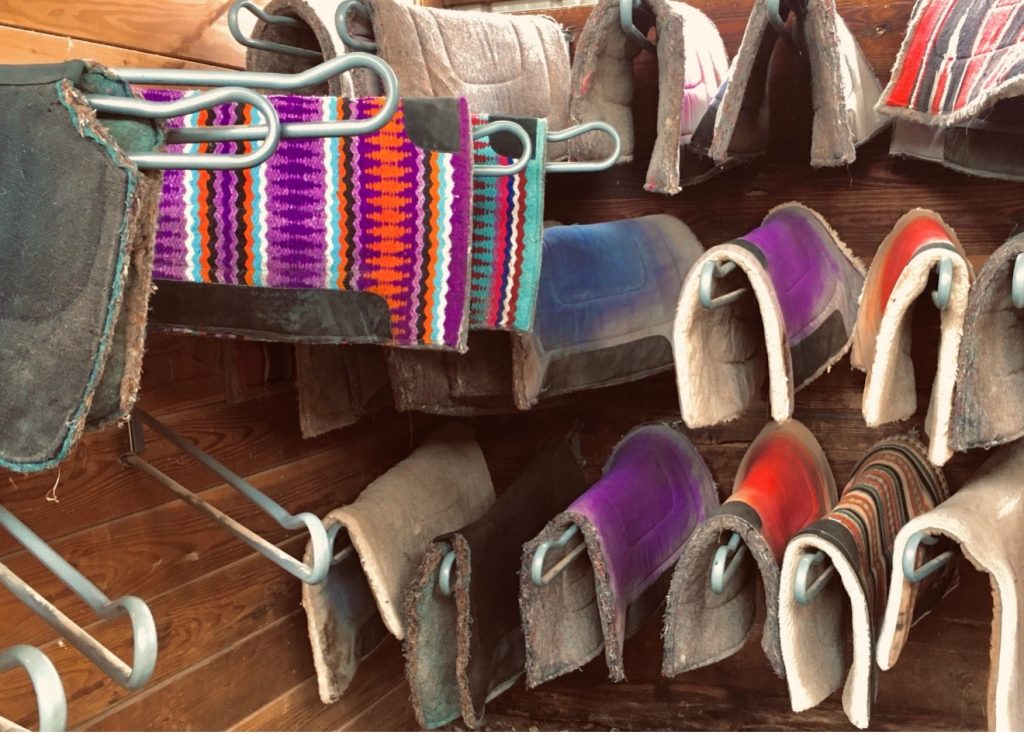

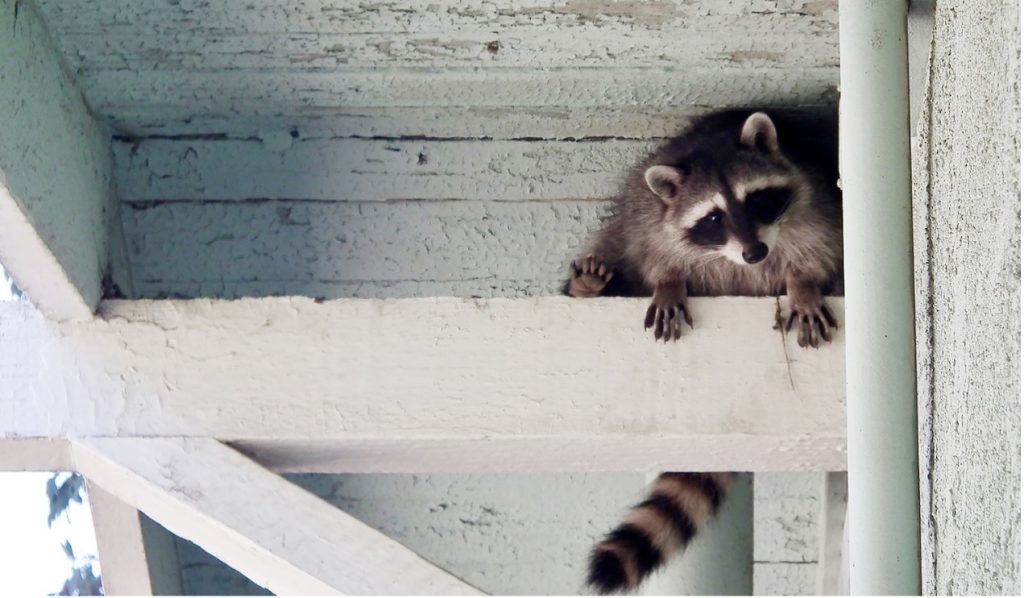
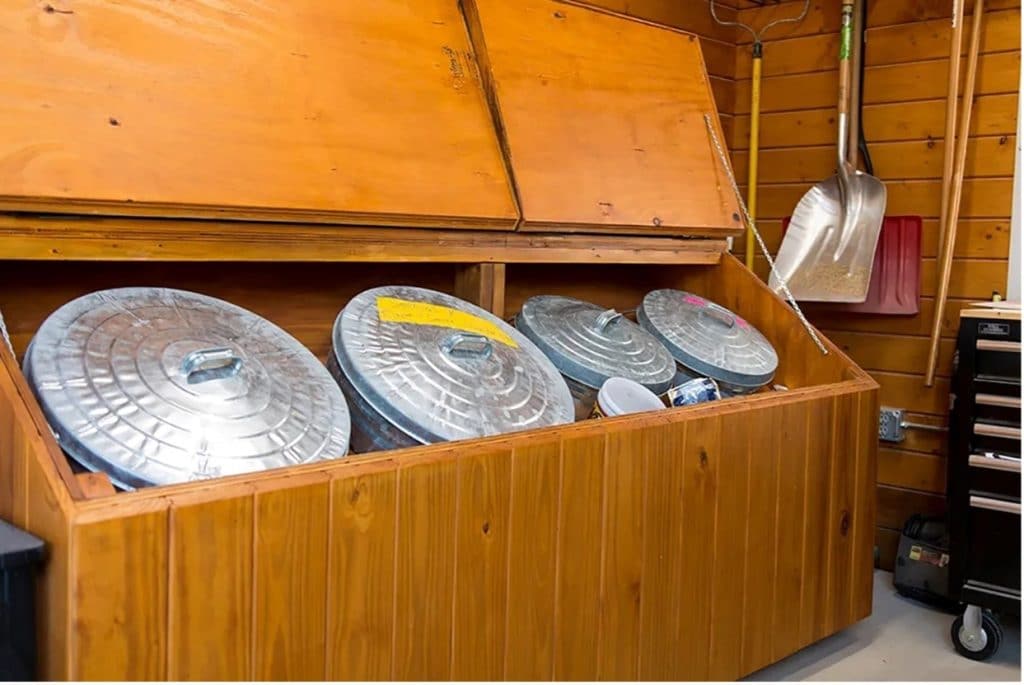 Photo Credit
 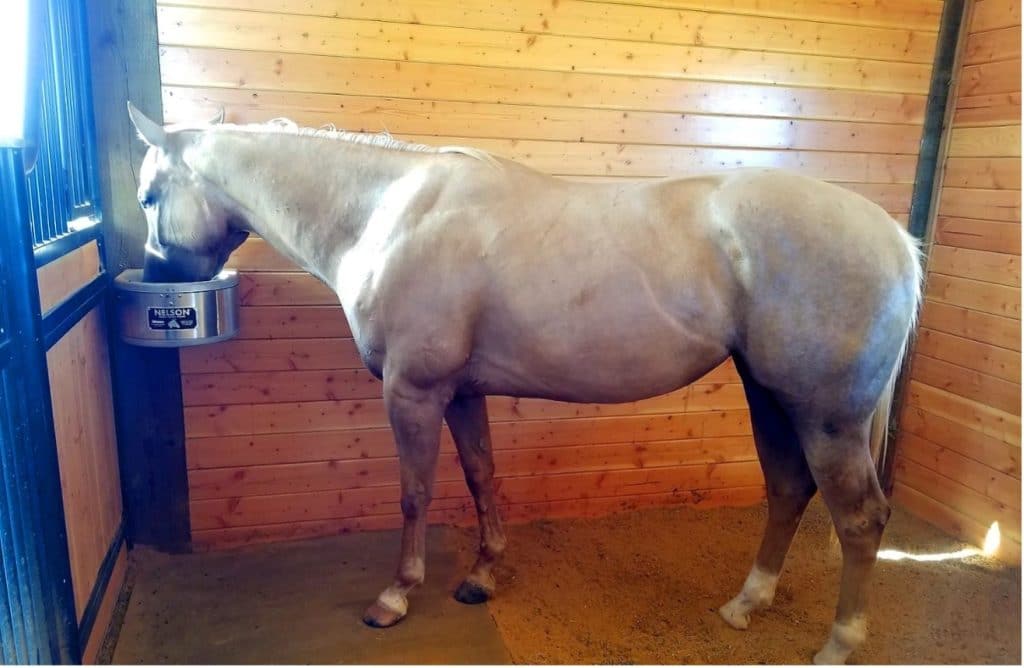 Photo Credit